
Our readers speak out.
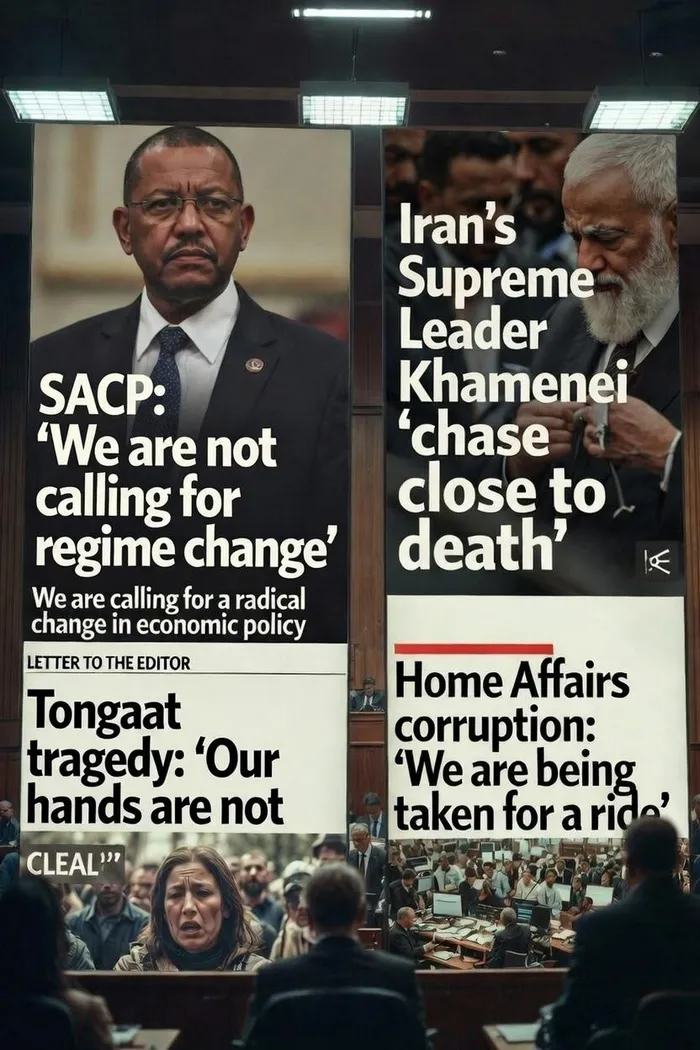
Image: Grok.ai
Although press statements by the SA Communist Party are unworthy of comment, the letter by the SACP’s head of communication is particularly amusing because of its obvious self-contradiction.
In 11 instances in its statement, the SACP condemns the ‘imperialism’ of the US-Israeli military action in Iran. That is ironic because communists have no right to be critical of imperialism when, since the dawn of communism’s tyranny in Russia, imperialism has been the modus operandi and strategy of Marxism-Leninism.
International law has never proved a roadblock to communism’s numerous incursions imposing its despotism on peoples. The SACP’s ostensible concern for the loss of life caused by US-Israeli action in Iran is totally bereft of sincerity when it is stacked up against the 100 million victims of communism under Lenin, Stalin, Mao Zedong, Ho Chi Minh, Castro and the likes of Mengistu in Ethiopia and Samora Machel in Mozambique.
If international law amounted to anything, how does the SACP simply ignore the tens of thousands of Iranians murdered by the theocratic Khamenei regime? How is it that a military operation intended to rid the region and the wider world of a serious nuclear threat, the key promoter of terrorism and the suppressor of human rights, is viewed by the SACP as “belligerent” and “reprehensible?”
By what stretch of logic can the bloody tyranny of the Khamenei theocracy be regarded as a “progressive force?”
Communism stuttered to an end in Russia in 1991. Its collapse was a result of its inability to continue enforcing a delusion which promised social equality by brutally suppressing the wellspring of human individuality – initiative and enterprise which flourishes only under liberty.
Thus, the trickle of press statements from the SACP is like a reincarnation of the staple Soviet fare once published by Pravda. At best, however, its statements are also proof that there are those who learn nothing from history. Duncan Du Bois | Bluff
The death of Iran’s Supreme Leader, Ayatollah Ali Khamenei, following a joint US-Israeli strike on Tehran has triggered sharply divided reactions across Iran and the wider world.
While some mourned his passing, others openly celebrated, viewing his long rule as harsh and authoritarian. Regardless of differing opinions about his leadership, the broader issue remains deeply troubling.
The large-scale military strike that killed senior Iranian officials raises serious questions about international law and the justification for the use of force. Iran had not launched a direct attack on the United States, and whether the action met the threshold of imminent self-defence will continue to be debated globally.
Citing nuclear ambitions alone risks setting a dangerous precedent. Several nations possess nuclear weapons, yet pre-emptive military action against sovereign states threatens to weaken already fragile international norms designed to prevent wider conflict.
Critics argue that geopolitical interests in the oil-rich Middle East and regional power dynamics played a decisive role in the decision to strike. Military intervention aimed at reshaping political leadership in another country has historically produced instability rather than lasting peace.
Whatever one’s view of Iran’s internal governance, the escalation risks setting the Middle East on a path of prolonged confrontation with serious humanitarian and economic consequences for the entire world.
The central question remains: who holds powerful nations accountable when international law appears to be violated? Institutions such as the UN and international courts exist precisely to address such crises, yet their effectiveness is increasingly questioned.
History reminds us that unchecked power carries consequences not only for the region concerned but for global stability itself. T Markandan | Kloof
The Tongaat tragedy “father allegedly poisons daughters before suicide” has shocked the country.
I am writing to express my deep concern and sadness about the recent tragic incident, where a father has taken the lives of his two daughters and then himself. This incident has left communities shaken and searching for answers. It’s heartbreaking to see families torn apart by such tragedies.
Often these are linked to complex issues, like mental health struggles, financial stress, relationship problems or trauma. We as a community need open conversations and access to mental health care to help prevent such tragedies.
Let us come together to create a society where families feel supported, and able to navigate life’s challenges. These types of tragedy must never happen in our society.
Let this be a turning point where we choose compassion, understanding and action. If you are struggling, please reach out to someone who can help.
Together, we can build a brighter future where such heartbreak never repeats itself and we as a community must never allow this to happen. Tragedy is often the result of untreated wounds and unspoken words.
To all parents, your children need you. Your life matters. Remember there is hope. Reach out for help, for support, for the way through the darkness. You are not alone. Dhayalan Moodley | Mobeni Heights
Recent revelations before Parliament’s ad hoc committee and the Madlanga Commission have exposed deeply troubling levels of misconduct and criminality involving senior police officials, further eroding public confidence in state institutions.
Now fresh allegations point to entrenched corruption within the Department of Home Affairs. Reports suggest that certain pastors from neighbouring countries have allegedly colluded with Home Affairs officials to unlawfully secure work permits, study visas and residency documentation. Such arrangements appear to have generated significant illicit profits for both parties.
Those involved betray not only the law but also public trust. Religious leaders are expected to serve their communities with humility and integrity. Individuals who exploit faith for financial gain are, in effect, wolves in sheep’s clothing whose true loyalty lies with money rather than moral responsibility.
Competent authorities must act decisively. Officials and collaborators implicated in corruption should be investigated, prosecuted and, where found guilty, appropriately sentenced. Lifestyle audits remain an essential tool in exposing unexplained wealth and deterring future misconduct.
It is encouraging that a number of Home Affairs officials have already been dismissed and that Minister Leon Schreiber’s planned digital ETA system may strengthen transparency and reduce opportunities for fraud. Any permits or residency approvals obtained unlawfully should be reviewed and revoked.
Crime and corruption remain twin cancers undermining our country’s progress. Restoring law, accountability and ethical governance is essential if South Africa is to rebuild credibility, dignity and public trust. Law and order are the foundations of a civilised society and must remain a national priority. Simon T Dehal | Verulam
DAILY NEWS