

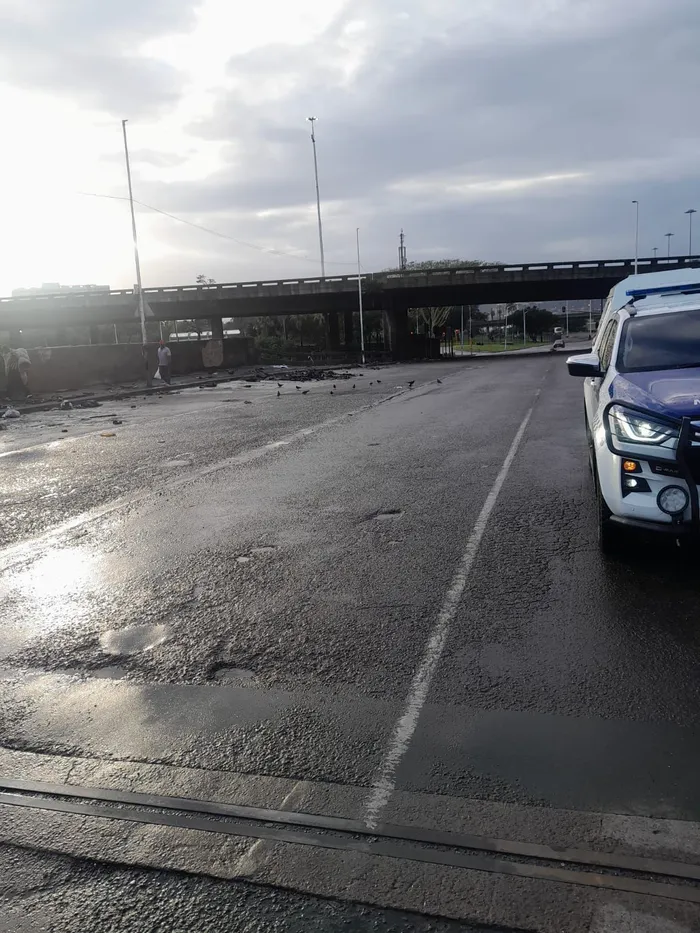
Residents of eThekwini express gratitude for the recent cleanup of Che Guevara Road. Newly cleaned Moore road.
Image: Supplied
Many Durban residents have expressed their gratitude to the city for recent initiatives to clean up the notorious Che Guevara Road, where vagrants have congregated continuously, causing fear and concern for locals and motorists alike.
Over the weekend, the Durban Metro Police Service (DMPS) made yet another attempt to restore law and order along an important stretch of road that links the city with areas like Glenwood and Umbilo.
Their action came as calls to deal decisively with Che Gueverra's vagrant issues gathers momentum, as the area has also become a den for criminals and drug-users, and left many motorists with the inconvenience of finding alternate routes.
Brian Simelane, a resident living in close proximity to Che Guevara Road, shared his appreciation for the city's efforts.
"The road had become what I would describe as a 'pigsty environment.
"It was not just unwelcoming for residents but also tarnished the city's image.
The city wants to attract tourists and businesses to downtown; how can they do so in places like this?," asked Simelane.
He welcomed the city’s prioritisation of the situation, noting its importance for community wellbeing and economic revitalisation.
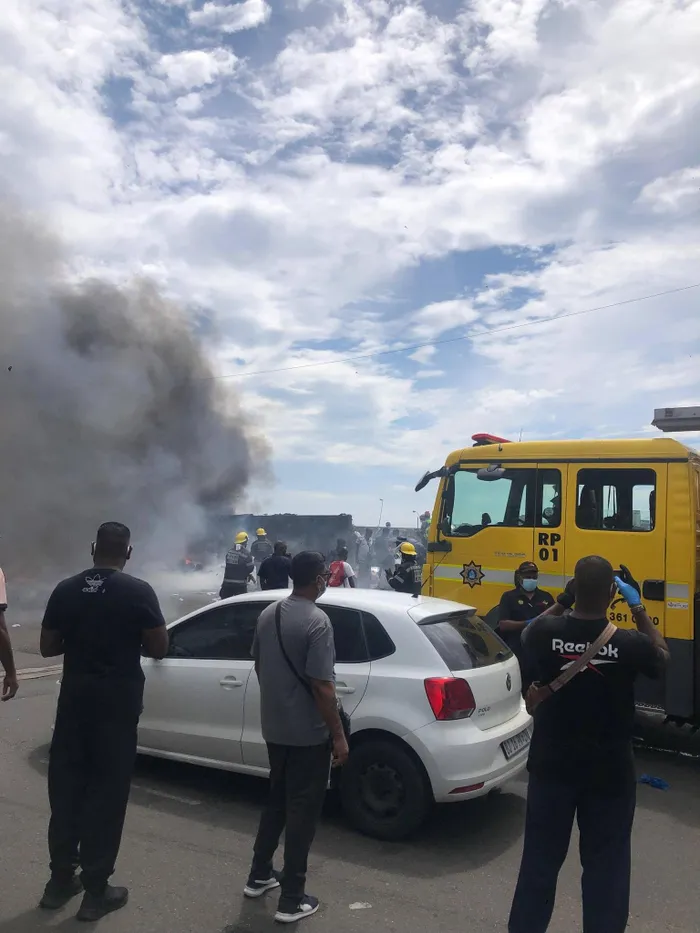
Fighters extinguishing one of the makeshift house at the Che Guevara road.
Image: supplied
The DMPS expressed their intent in addressing the challenges on Che Guevara Road in a statement they released regarding the weekend's operations.
"Individuals who had previously been removed from the area attempted to return and occupy parts of the public road again," the statement read.
"DMPS members intervened to ensure that the roadway remained safe and accessible."
However, in spite of what was achieved over the weekend, Phumzile Dlamini, another nearby resident, expressed cautious optimism about the intervention.
"While I welcome the city's action, I fear this is not a permanent solution," Dlamini said.
She urged the city to consider investing in technology like drones for better monitoring of the area, as many locals avoid using the road due to concerns about potential crime.
One of Dlamini's main concerns was the drug trade and usage in the area.
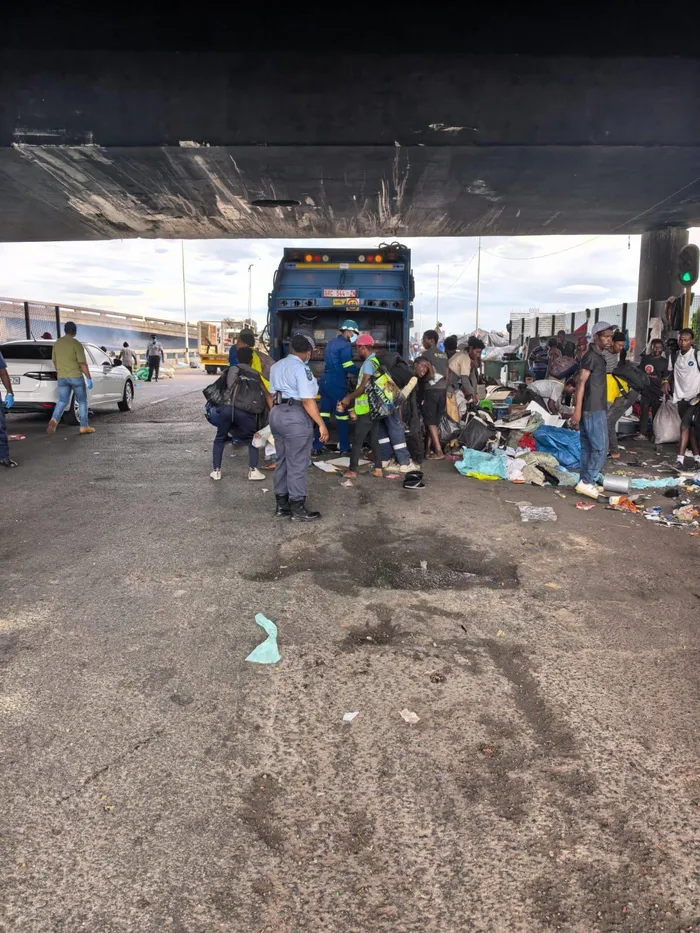
Vagrants made to clean up their own mess by a metro cop
Image: supplied
The news that police made a breakthrough with the arrest of a suspected drug dealer operating out of the area was heartening for Dlamini and others in her community.
During a coordinated operation, officers seized mandrax tablets, heroin, and a substantial amount of cash believed to be proceeds from illegal activities.
Metro police spokesperson Boyce Zungu confirmed that the road in Che Guevara was now open, adding that the public was free to use it.
“Police will continue to monitor the area, to make sure that it’s free of Vagrants,” Zungu said.
He, however, emphasised that the Sakhithemba facility in Illovo, was more of a permanent solution for the situation.
“Sakhithemba is intended to provide accommodation and support for individuals currently living on the streets. The project forms part of the City’s efforts to combine law enforcement with social development programmes, including shelter, rehabilitation support and assistance aimed at helping individuals reintegrate into society”.
Last month, the city announced that the vagrants would be moved to the Sakhithemba Shelter in Illovo, once construction of the facility is completed later this year.
The DA's eThekwini Municipality's exco member, Andre Beegte raised serious concerns about the sustainability and practicality of the Sakhithemba initiative, especially its capacity to house 1,200.
Having engaged with non-profit organisations (NPOs) and non-governmental organisations (NGOs) that were familiar with the struggles faced by the homeless individuals, and substance abusers, Beegte said the city's approach did not match up to the complex realities of recovery for the affected.
“The accepted norm in any recovery environment is a maximum of 200 individuals. This allows for meaningful interpersonal connections that are vital to the pathway to recovery,” Beegte stated.
DAILY NEWS