

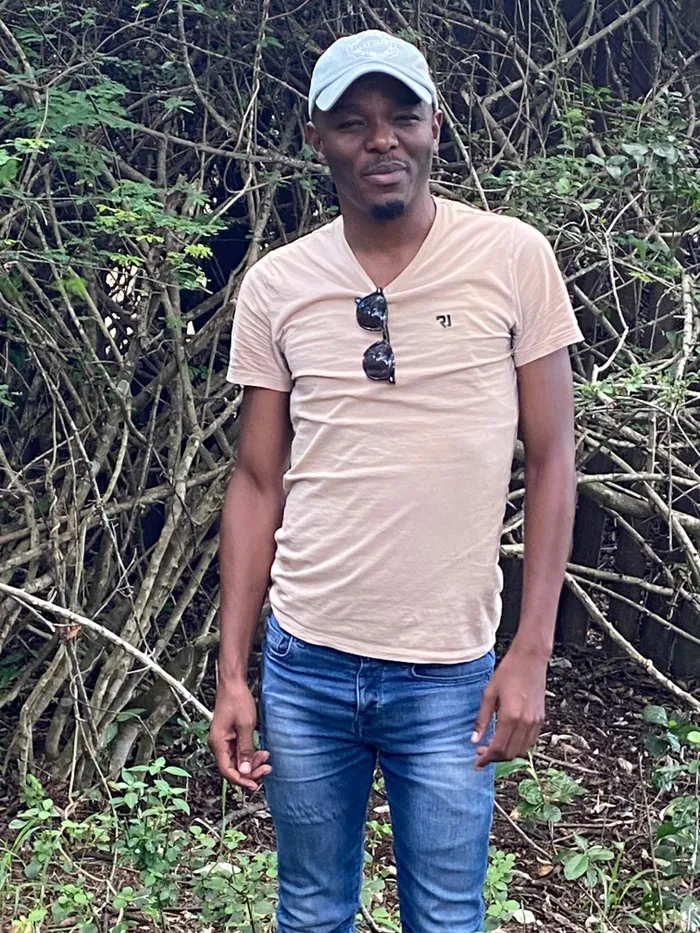
Daily News Journalist Sipho Jack shares about his bush experiences at the Hluhluwe–iMfolozi Park in Northern KZN.
Image: Supplied
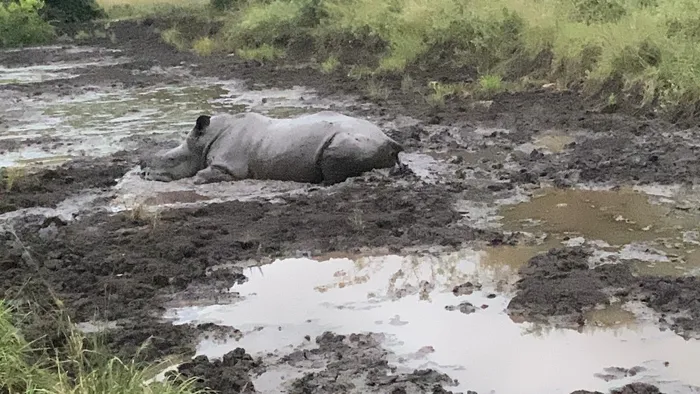
Join us on a captivating journey from Durban to Hluhluwe Park, where wildlife encounters and conservation efforts come to life amidst stunning natural beauty.
Image: Sipho Jack
After weeks of planning, the time finally arrived on Monday for the much-anticipated journey from the bustling city of Durban to the stunning vistas of Hluhluwe Park and Resort, set in the world-renowned Hluhluwe-iMfolozi Park, an approximately two-and-a-half hour road trip.
I'm among a group of journalists who have ventured to the heart of Zululand for a bush trip where we get to see the work being done by Ezemvelo KZN Wildlife to protect rhinos and the upgrading of their facilities at the park.
The four-hour drive was a delight, punctuated by the tantalising tastes of South African specialities such as biltong and hearty meaty platters, complemented by refreshing cold drinks.
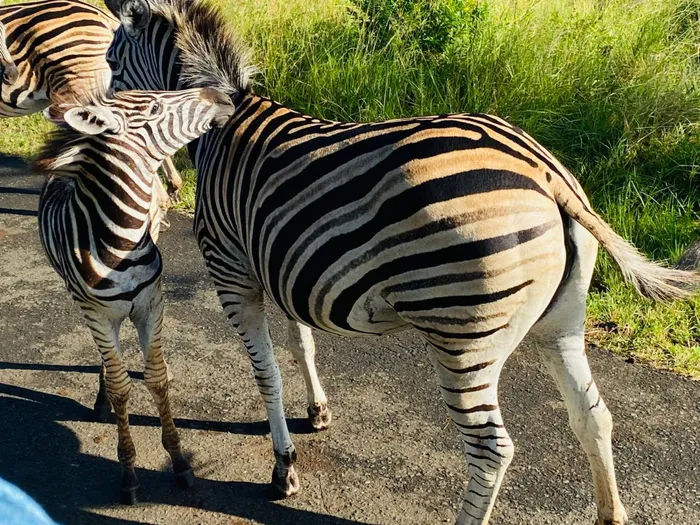
Some of the residents at Hluhluwe–iMfolozi Park prancing about.
Image: Sipho Jack
The stark contrast between urban life and the serene natural beauty along the N2 highway was a welcome change, with each mile steeped in the promise of adventure.
Upon arrival at the Hluhluwe Resort, visitors were greeted not by a human host, but by one of the park’s most memorable residents — a whimsical warthog affectionately known as “Kasongo.”
The friendly creature immediately conjured images of the beloved animated character Pumbaa from the popular film The Lion King, reminding us that wildlife is a precious part of our shared heritage.
After disembarking from the vehicle that carried us city slickers to our bush destination, the excitement shifted gears as we climbed into the rangers’ vehicles bound for the Magangeni Viewpoint.
Perched atop a hill, this scenic vantage point offered a breathtaking panorama of the sprawling park — a nature enthusiast’s delight.
Guiding us through the experience was Samora Xulu, the camp’s seasoned tour guide, who carefully explained the essential do’s and don’ts for a safe journey through the wild.
He shared valuable insights into animal behaviour, their instincts, and the required decorum when exploring their natural habitat.
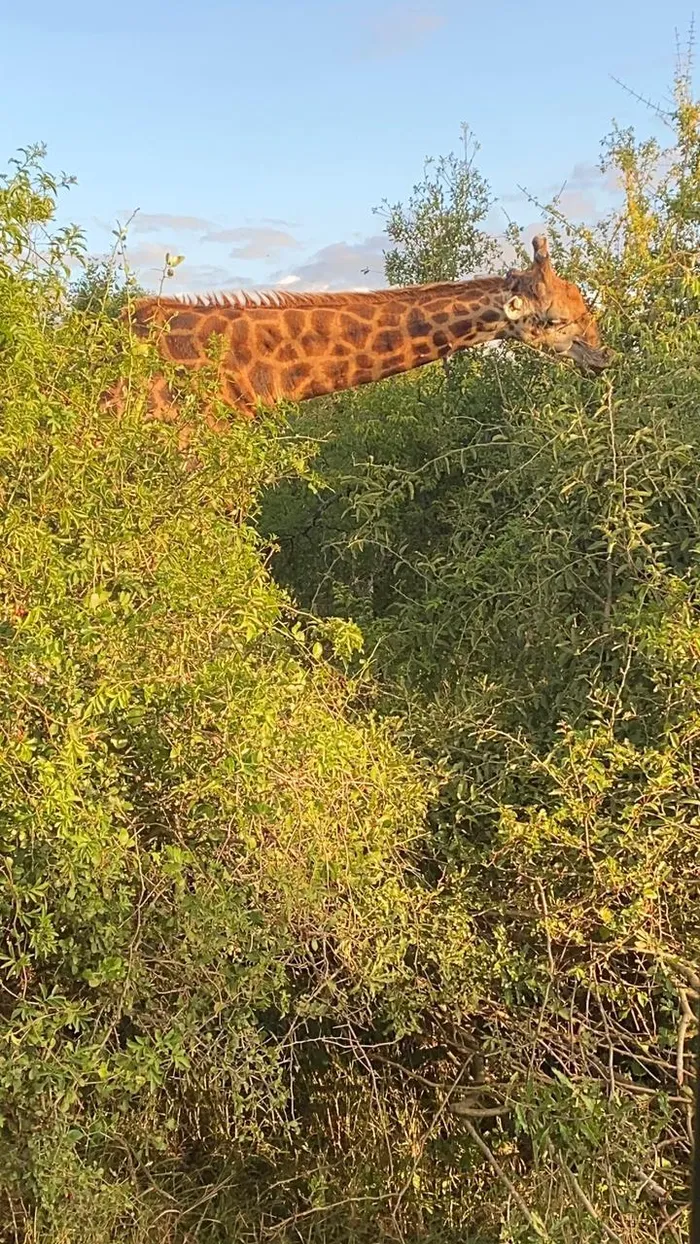
Feeding time: a giraffe at the Hluhluwe–iMfolozi Park uses its long neck to reach some of the succulent bush.
Image: Sipho Jack
After travelling through hills and valleys, we met Tallman Sibiya, the chairperson of People and Parks, an organisation that serves as a vital link between local communities — including those from areas such as Richtersveld and the Khomani San — and Ezemvelo Wildlife.
The organisation represents the voices of communities that were displaced from their land for the sake of conservation efforts. It works to bridge the gap between humankind and nature, ensuring that all stakeholders benefit from the ecosystem.
Sibiya enlightened us about the history of the organisation and its objectives through a digital presentation.
A focal point of the session was the screening of “Dehorning: The Making of a Movie,” which explored the brutal fate faced by many of South Africa’s rhinos.
The rising incidents of rhino poaching over many years have prompted Ezemvelo Wildlife to take urgent action. One of their responses has been the careful dehorning of more than 2,000 rhinos in an effort to preserve the species.
The park is currently celebrating 130 years of conservation, with its grounds spanning more than 96,000 hectares.
It remains the only non-privately owned reserve in South Africa that is home to the Big Five, serving both as a sanctuary for wildlife and as a platform for critical conservation efforts.
My time in the park thus far has given me a deeper appreciation for the invaluable work being done to protect our natural world.