

Voices of our readers.
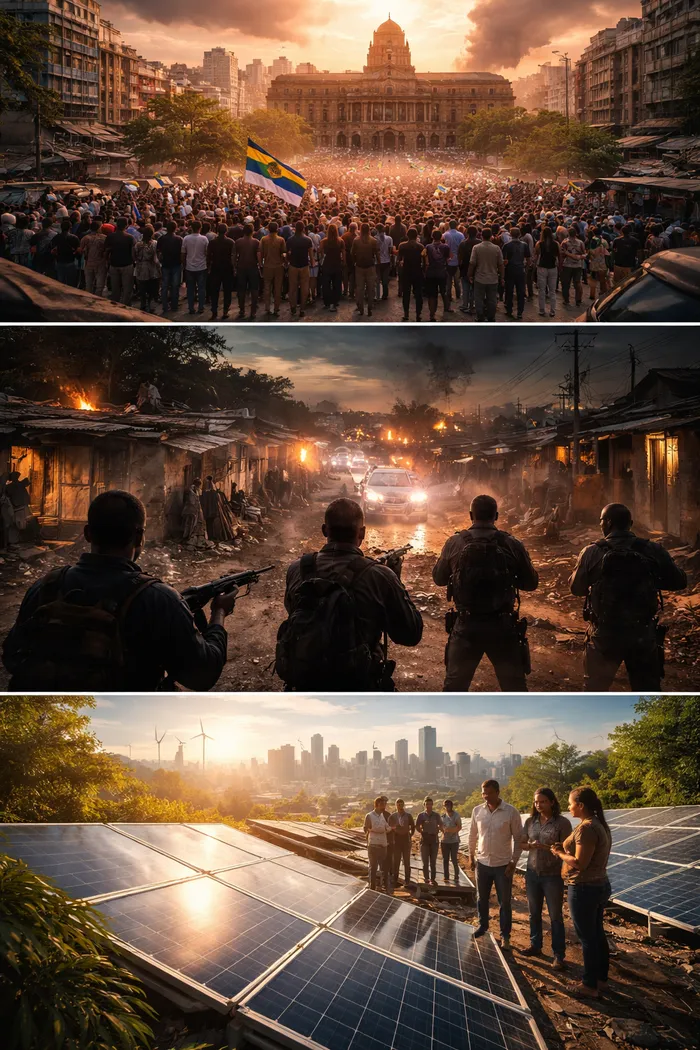
Image: ChatGPT
The ANC must be voted out of eThekwini in the next elections.
The administrative heads and ANC cronies in water, electricity, revenue and housing must also go because, together, they have destroyed our once-beautiful city and its surroundings. The pools at Amanzimtoti’s Inyoni Rocks and public pools in Newlands West, Asherville and Tongaat have been closed for years while renovation funds were allegedly squandered. The R22 million spent on statues should instead have benefited taxpayers.
Families and children are being deprived of safe recreational spaces, increasing exposure to gangsterism and drugs because this ANC-led eThekwini has replaced parks with housing. Tax-paying citizens are left without recreational facilities.
Anon | eThekwini
In any war there are no winners because the cost and losses always outweigh the selfish gains of individuals, leaders or parties.
South Africa’s history shows repeated failures by successive governments to properly care for citizens still suffering the trauma of colonialism. Indigenous Khoi and San communities once lived in harmony, resolving disputes through elders, before colonisation brought violent conflict. Historical battles such as Gorinhaiqua in 1510 showed early resistance, but colonists later returned better armed to occupy the land.
Post-apartheid reconciliation efforts also remain debated. Nelson Mandela’s meeting with Betsie Verwoerd symbolised reconciliation, yet some argue offenders should have initiated such processes. The Truth and Reconciliation Commission is criticised for focusing mainly on high-profile cases, while later processes have struggled to deliver closure for families such as those of the Cradock Four.
Globally and locally, weak leadership has allowed gangs and powerful groups to flourish. Despite calls for peace in the Middle East, conflict continues, while in South Africa crime syndicates exploit slow or reactive leadership responses. The costly deployment of the SANDF to assist SAPS, reportedly exceeding R800 million, suggests poor preparation.
Community-driven solutions may be more effective. Meetings between political leaders, police forums and gang leaders could help address violence. Electoral reform allowing communities to directly elect representatives could strengthen accountability. Parliamentarians should answer first to their constituencies rather than party structures.
The people must ultimately govern according to foundational democratic principles.
Clive Solomon | Durban
Rising electricity tariffs threaten to further strain already struggling South African households.
Instead of merely passing Eskom increases on to residents, municipalities could invest in citizen-driven microgrids combining renewable energy, storage and smart management. Durban is well positioned due to its strong solar potential and growing rooftop solar adoption. Expanding from individual systems to community microgrids could improve reliability and reduce long-term costs.
Solar, supported by small wind installations and shared batteries, could balance supply and demand while reducing dependence on Eskom. Communities could form energy co-operatives, allowing broader participation, including residents unable to afford private installations. Schools and businesses could also host infrastructure.
International examples in Germany, the United States and India show such systems can work. Distributed energy may also reduce cable theft by shortening distribution networks and encouraging alternative materials. Community ownership could further encourage protection of infrastructure.
While Eskom will remain vital, microgrids could strengthen resilience and empower citizens economically. Tariff hikes may be unavoidable, but failing to innovate would waste an opportunity to build a more democratic and sustainable energy future.
Taz Cassim | Century View
DAILY NEWS