

We air your views.
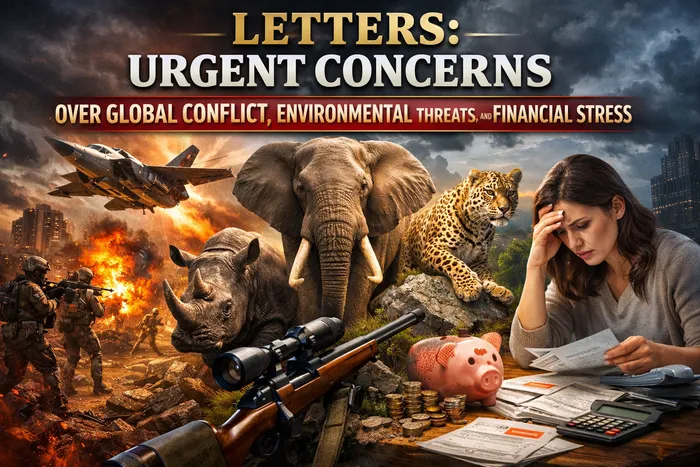
Image: ChatGPT
Dear Sir,
FIFA regulations clearly spell out what may disqualify any country from hosting the Football World Cup tournament. The primary concern is when a country is involved in war. Another is when a country cannot guarantee the safety of its own citizens, local and foreign supporters, and visiting teams. Yet another is when there are concerns about freedom of expression and whether all participants and supporters will be treated fairly and without discrimination.
At present, the United States appears to fall short in all three of these areas. The ongoing conflict with Iran raises serious questions about stability and whether the country can fully focus on hosting a global sporting spectacle meant to unite nations.
There are other serious considerations which seem to be worsening as the conflict continues with no clear end in sight. More countries risk being drawn into what increasingly appears to be a widening oil-driven conflict, which could further destabilise global relations.
There are also practical concerns. The issuing of visas to supporters from countries perceived to be aligned with so-called "enemy" states could become complicated. One must ask whether all fans will be treated equally or whether political considerations may interfere with the spirit of sport.
Sport should unite people, not be overshadowed by geopolitical tensions. Hosting a World Cup requires an environment where all nations feel welcome, safe, and respected, regardless of political differences.
FIFA has previously applied its rules firmly to countries such as Russia and even South Africa during difficult periods in history. For the sake of consistency and credibility, it should be seen to apply the same standards to the United States if the situation warrants it.
Fairness and consistency must remain the guiding principles if FIFA wishes to maintain the integrity of the beautiful game. | Ebrahim Essa, Durban
Dear Sir, I read that the Environmental Minister, Willie Aucamp, has reversed some of the restrictions on trophy hunting put in place by his predecessor. Apparently, Aucamp has approved the killing of 150 elephants, 12 black rhinos, and 11 leopards.
What madness is this? The mind boggles that the black rhino is on the list, as it is a critically endangered species. Have Aucamp and the government taken leave of their senses? How can he be willing to sacrifice 12 of such endangered animals?
The leopard is classified as vulnerable, meaning it is at high risk of extinction, while elephants have a deeply entrenched social system that, if disturbed, can cause much emotional anguish within the herd. Does Aucamp, as guardian of the environment, really approve and happily accept such consequences?
Trophy hunting is a highly contentious issue, so why is the government bending the knee to trophy hunters who suffer from narcissism and machiavellianism?
A trophy hunter comes with a high-powered rifle, with a telescopic scope, 'nogal', thus has a completely unfair advantage as he/she can shoot an animal from 200 or 300 metres away! What satisfaction can that bring? What is the difference between a trophy hunter and a poacher?
Some trophy hunters often use unethical methods such as bow hunting, using dogs to chase animals to exhaustion, or shooting canned animals that have no chance of escape. Absolutely shameful. I understand the cost to shoot a black rhino is between $50,000 and $60,000 American Dollars. Is someone in government receiving the proverbial 10%?
The infamous Riff Raff must have had a terrifying vision of Aucamp becoming a minister when he said, "Madness takes its toll." | Kevin Meineke, Summerveld
Dear Sir,
Johannesburg fintech company Wealthbit's 2026 Employee Benefits Report shows that employees are now placing greater importance on financial wellness alongside standard benefits.
As such, the escalating conflict between the United States and Iran is not only a geopolitical concern but one that will have real economic consequences for ordinary South Africans already struggling to make ends meet. International Relations and Co-operation Minister Ronald Lamola has warned that the region will not emerge unscathed, noting that strained public finances will ultimately place a greater burden on citizens.
Mineral and Petroleum Resources Minister Gwede Mantashe has similarly cautioned that the conflict could push up fuel prices, with knock-on effects across the economy.
Higher fuel costs inevitably raise transport and energy prices, which in turn increase the cost of basic goods and services. This places additional pressure on workers whose salaries are already stretched thin.
Research from Wealthbit highlights just how serious the situation has become. Its report found that 80% of South African employees worried about money most of the time, while more than half of them spent hours each week dealing with financial issues during working hours, affecting productivity.
Financial stress does not only affect employees. Businesses also pay the price through reduced productivity, lower staff morale, and higher staff turnover. Employees under financial strain are significantly more likely to seek new employment, which creates additional recruitment and training costs for employers.
This is why financial wellness programmes and improved financial literacy should be treated as essential support tools rather than optional extras. Empowering employees with better financial knowledge can help them make informed decisions about retirement planning, medical aid, and debt management, while also improving their focus and productivity at work.
At a time of growing global uncertainty a – it is essential for the long-term stability and productivity of our economy. | Annie Hodes, Braamfontein
DAILY NEWS