

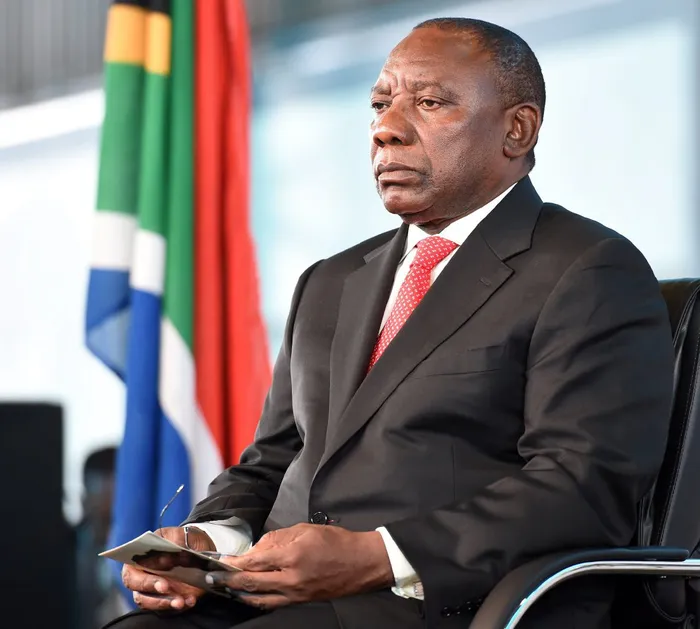
President Cyril Ramaphosa warns South Africans of rising petrol and diesel prices from April 1, urging ministers to find solutions amid global conflicts, inflation, and economic pressures affecting the cost of living.
Image: GCIS / DoC
South Africans are bracing for a sharp spike in fuel costs from April 1, with President Cyril Ramaphosa warning that soaring petrol and diesel prices will intensify pressure on already strained household budgets.
Addressing delegates at the ANC Limpopo’s 11th provincial conference on Sunday, Ramaphosa said that the impending increases — expected to be among the steepest on record — were largely being driven by global instability beyond South Africa’s control.
“The world economy is shifting beneath us,” he said, pointing to rising geopolitical tensions, slower global growth and increasing economic nationalism as key forces reshaping the landscape.
South Africa is facing a significant fuel price surge, with petrol expected to rise by between R5.31 and R5.82 per litre, while diesel could jump by more than R10. Combined with recent fuel tax adjustments of 21 cents per litre, prices are projected to climb to around R25.50 for 95 Unleaded at the coast and R26.33 inland, with diesel reaching as high as R29.08 in Gauteng.
Ramaphosa linked the increases directly to international conflicts, particularly in the Middle East and Eastern Europe, which have disrupted global oil supply and driven up prices.
“By 1 April, we’re going to see prices of petrol and diesel going up, driven largely by the conflict that is going on,” he said.
The president acknowledged that the ripple effects would be felt across the economy, from transport costs to food prices, further squeezing consumers and limiting government’s ability to fund key programmes.
He also warned that inflationary pressures would intensify, compounding the cost-of-living crisis faced by many South Africans.
In response, Ramaphosa said he has instructed key ministers to urgently intervene and develop measures to cushion the blow. Finance Minister Enoch Godongwana, he noted, is already grappling with the implications.
“He told me he is having sleepless nights… I am not sleeping at all because of this challenge that our people are now facing,” Ramaphosa said.
Beyond the immediate crisis, the president stressed the need for long-term solutions, including strengthening energy security, boosting local industry and improving infrastructure in sectors such as logistics, water and transport.
He emphasised that South Africa must build economic resilience in the face of global shocks, while continuing to pursue growth, job creation and reduced living costs.
“This moment requires that we build domestic industrial strength… and improve our energy security,” he said.
Ramaphosa also reaffirmed South Africa’s stance on global conflicts, criticising ongoing wars and their economic fallout, while reiterating support for nations pursuing self-determination.
Despite the looming fuel shock, he maintained that government remains focused on stabilising the economy and protecting vulnerable citizens from the worst effects of rising costs.
DAILY NEWS