

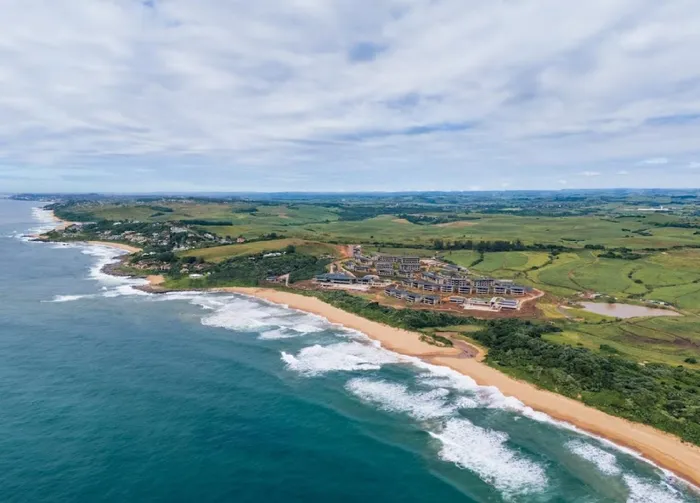
The property boom in KwaZulu-Natal is about a lot more than just people wanting a better lifestyle.
Image: Supplied
The KwaZulu-Natal (KZN) property market is entering a powerful new cycle.
While the North Coast continues to surge with high-end development, the South Coast remains significantly undervalued, says RealNet Properties SA.
For those who understand timing and positioning, the opportunity there is immense, says Gerhard Kotze, CEO and franchisor at RealNet Properties SA.
He says combining that with the steady evolution of the Midlands, one has a province truly on the move.
Last week, Kotze says he had the privilege of spending time with Jason Noel and his team as they officially launched the new RealNet South Coast franchise in Margate.
The CEO says seeing the office come together, the new trade dress in place, and the energy from a team stepping into a new chapter was something special.
“That's why I'm particularly proud that RealNet's first step back into KZN starts here, with Jason and his team. And this is just the beginning. Our second franchise opens in two weeks, with more already in discussion.
"If you are a business owner thinking about repositioning your operation, or a top-performing agent looking for a platform that can unlock more value, let's have a conversation.
"RealNet is stepping into KZN with intent, and we're only getting started. RealNet is back in KZN.”
According to him, Noel is a seasoned operator with roots in the South Coast market, having built a strong, established business in the area over many years. His decision to convert to RealNet, together with his team, speaks to a shared vision for growth and what the next chapter looks like, he adds.
“From Hibberdene through to Port Edward, including key nodes like Port Shepstone, Shelly Beach, Margate, Ramsgate and Southbroom, this is a strategically positioned operation covering one of the most opportunity-rich coastal stretches in the country. It's a move we've been waiting to make for years.”
In another LinkedIn post, Kotze says, "Who knew that one day the ocean would be the second-best thing about Ballito?"
He says if one looks at the North Coast lately, the boom there is about a lot more than just people wanting a better lifestyle.
“It feels as though we're watching a massive relocation of capital into these 'value islands'."
People aren't moving there just for the views. They're buying into a system where the HOA handles the things the state used to, such as power, water and security
It makes you wonder: are we seeing the birth of a new urban model where property developers have become the de facto urban planners?”
According to RealNet Properties SA, Ballito combines hospitals, schools, retail and commercial activity into a year-round economy that is increasingly shaped by gated estates and managed developments.
The estate agency says this is a high-functioning ecosystem that operates on its own terms, reflecting a broader shift toward convenience, security and reduced everyday friction.
“When the estate manager becomes more vital to your property value than a city councillor, the whole definition of a public suburb starts to change. What do you think this means for our broader cities?
“Are we moving toward a future where the municipality is just a line item on a private levy statement, and is that even a sustainable model for the rest of the country?” asks Kotze.
Meanwhile, South African households are said to be on the move in growing numbers, but the country’s internal migration story is no longer defined by a single coastal “semigration” narrative.
New data points to a more dynamic cycle of relocation, with Gauteng showing renewed pull as households respond to affordability, employment opportunities, and access to services.
These findings are contained in the Wise Move 2026 South African Migration Report, “Movement, Momentum, and Migration”, which analyses anonymised data from more than 30,000 household moves across South Africa, tracking movement between provinces, key corridors, and major cities over the past year.
“At the household level, every move is personal. But at the national level, migration becomes a powerful economic signal,” says Chante Venter, co-founder and CEO of Wise Move.
“When you look at relocation at scale, it becomes a measurable record of how South African households adapt. Where opportunity is concentrating, where costs are rising, and how people respond to changing regional conditions.”
Move volumes rose year on year, while the overall structure stayed stable.
Wise Move recorded a clear increase in completed moves between 2024 and 2025:
While the number of moves increased, the share of relocations happening across provincial borders remained consistent at about one-third of all moves recorded, indicating that South Africa’s overall mobility structure is stable, even as the direction of movement shifts between provinces.
However, activity is heavily concentrated in major economic centres, particularly Gauteng and the Western Cape.
The most striking changes in 2025 happened on the corridors flowing into Gauteng. While overall completed moves grew by 16%, movement from the Western Cape to Gauteng jumped by 58.6%, and from KwaZulu-Natal to Gauteng by 54.0%.
Taking platform growth into account, these two leading inbound corridors to Gauteng grew far beyond the platform average, by 42.6 and 38.0 percentage points, respectively. Growth in the opposite direction remained stable, pointing to a stronger pull into Gauteng rather than a balanced two-way exchange.
According to Venter, the shift reflects households making more deliberate, economically driven decisions about where to live.
In many cases, the trade-off is no longer lifestyle alone, but whether a location offers better access to work, lower cost pressure, and a stronger chance of maintaining or improving household stability.
Independent Media Property