

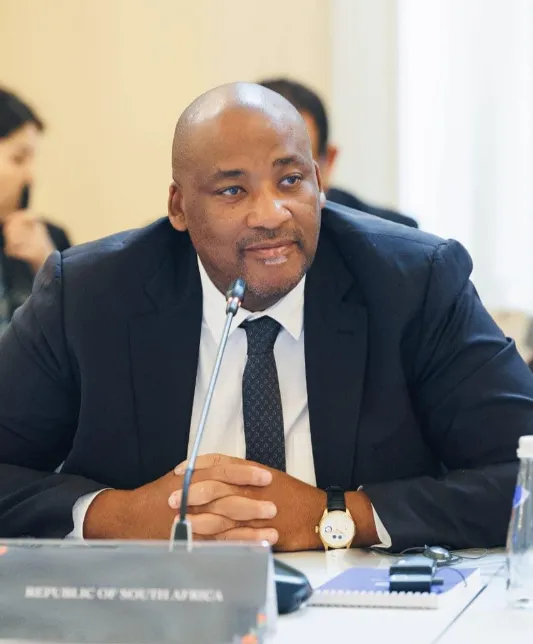
Sports, Arts and Culture Minister Gayton McKenzie said he was formally advised about a month ago that the procurement of his official vehicles had been approved, but they have yet to be delivered.
Image: Gayton McKenzie / Facebook
Sport, Arts and Culture Minister Gayton McKenzie has mounted a forceful defence of his department’s R2.1 million car hire bill, arguing it is not a case of excess—but the direct outcome of a formal security risk assessment that placed him in a higher threat category.
Responding to parliamentary questions from Dereleen James, McKenzie said the spending—averaging about R350,000 a month over six months—was driven by security demands identified by the South African Police Service (SAPS), not personal preference.
At the centre of his justification is a 2024 SAPS threat assessment conducted at the start of his term, which concluded that he requires a larger, more capable security convoy due to his frequent travel between Pretoria and Cape Town. According to McKenzie, that assessment dictates not just the number of vehicles—but the type.
“It is also necessary that these vehicles can accelerate and reach speeds to escape dangerous situations more easily,” he said, underscoring that the transport arrangements are tied directly to operational security requirements.
He rejected any suggestion that the expenditure was irregular, stating that all car hire was processed through official procurement channels and complies with National Treasury regulations. The department, he added, has not classified the spending as wasteful.
But McKenzie went further—anchoring his security concerns in the deadly political climate of KwaZulu-Natal, which he cited as a stark example of the risks faced by public representatives.
Referring to figures from the South African Local Government Association, he pointed out that 39 councillors were killed in the province in 2024 alone, while nearly 100 municipal councillors, party officials and senior municipal figures have been assassinated there over the past decade.
“The security environment is real, and my assessment reflects it,” McKenzie said—framing the car hire costs as a necessary buffer against a proven pattern of political violence.
Despite the heightened protection, McKenzie insisted he had not sought to inflate his security footprint. In fact, he said he was required to scale down from a larger private security contingent he maintained for over a decade before taking office.
He also revealed that an attempt to cut costs by using his own vehicles and supplementing SAPS protection with private personnel was rejected on both operational and legal grounds.
“I must trust the professional judgment of SAPS in this regard,” he said.
The minister maintained that the real driver behind the ballooning transport bill is the absence of permanent departmental vehicles. He confirmed that an order was placed through official channels around June or July 2025 after National Treasury approved the relevant vehicle list—but delivery is still pending.
Until then, hired vehicles remain the only viable option to meet the security specifications laid out in the threat assessment.
“I wish to make it clear that the car hire costs are a direct consequence of the absence of allocated departmental vehicles, not a preference,” McKenzie said.
While critics question the optics of such spending amid ongoing struggles faced by artists and athletes, McKenzie’s defence is blunt: the price tag reflects the risk—and the risk, he argues, is backed by bloodshed.
DAILY NEWS