

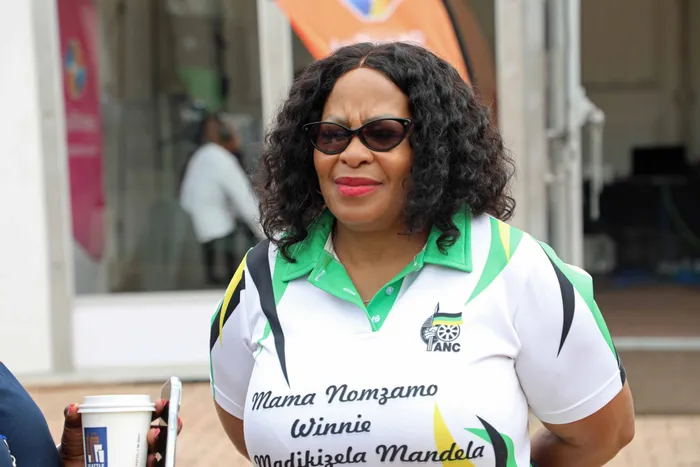
NC Deputy Secretary General Nomvula Mokonyane calls for unity and cooperation following the SACP's decision to contest elections independently, stressing the importance of mobilising voter support.
Image: Timothy Bernard / Independent Newspapers
The African National Congress (ANC) has issued a strong call for unity following the South African Communist Party (SACP)’s decision to contest elections independently.
The development has heightened tensions within the tripartite alliance, which also includes the Congress of South African Trade Unions (Cosatu), raising concerns about the future of the longstanding partnership.
Speaking at the KwaZulu-Natal Cosatu Workers’ Day rally held at Curries Fountain Stadium, ANC Deputy Secretary-General Nomvula Mokonyane emphasised the need for coherence among alliance partners as they navigate what she described as turbulent times.
Mokonyane said the ANC was not responsible for the fraying of relations.
“It is not us who have resolved to contest against the Communist Party; they have opted to go and contest elections, and that is their own decision.”
Her remarks reflected the ANC’s position that it remains committed to cooperation on key community programmes, despite the SACP’s decision to pursue its own electoral path.
She added: “What will make us survive is to go to the ground and explain ourselves and move beyond the discussions about the party. It's a done deal; they're gone. We must register people and ensure that this voter turnout is in our favour.”
Mokonyane dismissed suggestions that the alliance could be dissolved.
“The ANC has never said we are doing away with the alliance. The SACP never said it is doing away with the alliance,” she reassured attendees.
SACP Central Committee member Alex Mashilo underscored the historical importance of unity among political forces, noting that the alliance played a pivotal role in securing voting rights for all South Africans.
“On the contrary, it is this alliance that brought about the elections and the right of every adult from the age of 18, regardless of race and gender, to vote,” Mashilo said.
Addressing current tensions, he urged restraint.
“We need cool heads. We need to relax. Otherwise, we will commit errors and mistakes that could bring unnecessary conflict among the people while we are working with the enemy on the other side,” he said.
Both Mokonyane and Mashilo stressed the importance of unity and positivity within the alliance, acknowledging Cosatu’s role in guiding efforts to maintain cohesion.
On matters involving ANC members facing legal challenges, Mokonyane called for due process and discipline within the party.
“Where people have transgressed the laws of the country, the law must take its course.”
Political analyst Sipho Seepe said the current dynamics do not necessarily signal the end of the alliance but could indicate a significant recalibration.
“One of the things that the ANC has done is that it has treated its alliance with disdain,” Seepe said, suggesting that the party’s leadership has often neglected the concerns of its partners.
He also criticised the ANC’s decision to collaborate with the Democratic Alliance (DA), arguing that its allies were sidelined in key decision-making processes.
“They (allies) were not consulted or adequately engaged,” Seepe said.
Seepe further claimed there were tensions in the ANC’s relationship with the DA, accusing the party of being overly eager to align with “big business” while neglecting the interests of ordinary South Africans.
“This presidency,” he said, referring to Cyril Ramaphosa, “is a bought presidency.”
“Until we know who the beneficiaries of big business contributions are, the priorities of the ANC may remain misaligned with the desires of its supporters.”
He added that declining rally attendance and reduced electoral support reflected growing dissatisfaction among ANC supporters.
“The rejection of Ramaphosa is indicative that the people are not pleased.”
Seepe suggested that the SACP’s resistance to being “part of that” signalled a push for the ANC to reassess its strategies and relationships, particularly with its long-time allies.
He further claimed the ANC had become a party “led by the DA, led by Helen Zille.”
“How can you partner with somebody who does not represent the interests of the people?” he asked.
DAILY NEWS