

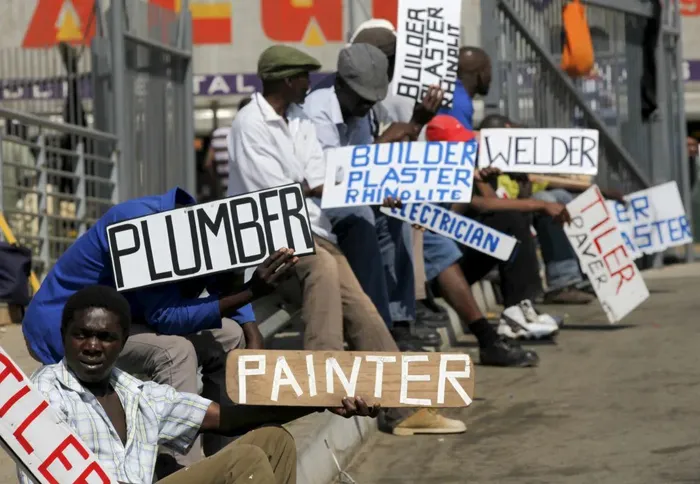
So what exactly do we have to celebrate on Workers' Day?
Image: File
Seven lives erased, with entire families and communities left shattered as violent crime continues to escalate across KZN.
Lately, it feels like barely a week passes without reports of yet another murder, robbery or home invasion tearing families apart. We have stopped lying awake at night worrying about load shedding or the weather; instead, it is gunshots, home invasions and murder that haunt us.
In recent months, our community has buried fathers, mothers and children. National crime statistics already confirm that KZN remains one of the murder capitals of the country. Three perpetrators are in custody, while one remains on the run, meaning the danger is not over and the work is far from done.
We know what was done to the seven victims. They were abducted, shot and stabbed. One was raped. Their dignity was stripped away in their final moments. While we are grateful that arrests have been made, they cannot bring back seven lives, and only full justice and appropriate sentences can begin to reflect the horror of what occurred.
It is time to be honest about the limits of policing alone. The army must be brought in to support efforts to disrupt the free movement of criminals. This is not about martial law, but about reinforcement for communities under siege, where crime unfolds daily and people feel powerless.
If nothing changes, more families will be forced to bury their loved ones. Station commanders must open channels for urgent community engagement, and residents must be given space to speak directly about what they are facing.
The time for action is now. Stand up, unite and take back our communities, or we will continue to bury our own while history judges our silence. | Dhayalan Moodley Mobeni Heights
The words of Charles Dickens about the law being an ass still echo today as justice continues to frustrate ordinary citizens.
Charles Dickens once wrote in Oliver Twist that “the law is an ass”, a sentiment that still feels painfully relevant in modern times.
Too often, cases drag on for months or even years, as seen in the Senzo Meyiwa murder trial, which has stretched on for over three years and increasingly resembles a televised drama rather than a pursuit of justice. Even after lengthy proceedings, courts still deliver judgments that leave the public bewildered.
At the same time, the principle of “innocent until proven guilty” remains central to criminal justice. This was evident in the case of the three men arrested for the alleged murder of seven members of the Monswamy family, who appeared in court with their identities concealed.
This brutal case, involving abduction, murder and rape, shocked the nation and drew widespread condemnation. Even provincial leadership attended the mass funeral, highlighting the scale of the tragedy.
While police action has been commendable, questions remain about judicial processes. If accused persons are presumed innocent, why should they not appear openly in court? The behaviour of the accused, including abandoning bail applications, leaves many questions unanswered. | Thyagaraj Markadan Kloof
Workers’ Day highlights a national contradiction in a country facing extreme unemployment and economic decline.
Only in South Africa do we celebrate Workers’ Day while facing one of the highest unemployment rates in the world, estimated between 40% and 50%.
This does not even account for the so-called unemployable population, those without skills or unwilling to work beyond the most basic labour. It is a national crisis contributing to the country’s decline.
Much of this situation is blamed on long-standing economic mismanagement, restrictive labour policies, halted mining expansion and failed industrial development, all of which have stifled growth and opportunity.
Even basic resource management has become symbolic of deeper dysfunction, with conferences held on water saving while critical infrastructure continues to deteriorate. The irony is that such discussions often avoid addressing the urgent need for investment in water systems, while inefficiency and informal arrangements continue unchecked.
South Africa has much to be proud of in potential, but little to celebrate in governance. Decades of poor policy, mismanagement and corruption have reversed progress and weakened what could have been a thriving economy.
The responsibility lies squarely with leadership failures that have left the country far from its promise and struggling to recover from years of decline. | Dr P Baker Parktown
DAILY NEWS