

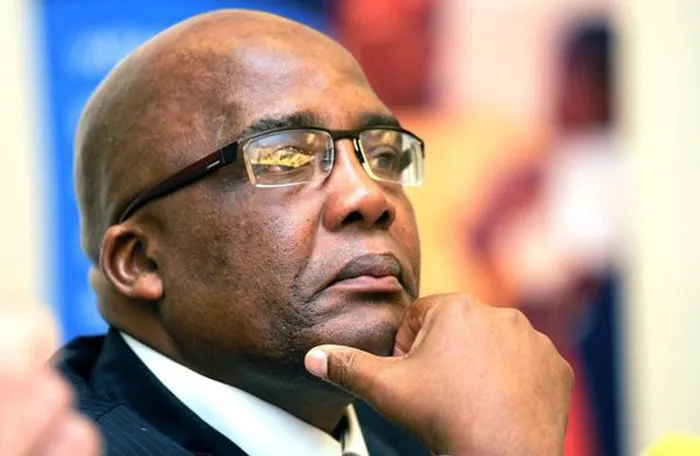
Minister of Health Aaron Motsoaled.
Image: Jacques Naude/Independent Media
Another day and another headline reporting an outrageous loss of public money – R80 billion on a transport system which should never have been authorized in the first place (The Mercury, May 14).
One wonders what sort of a feasibility study was done to justify such an ambitious, First World-type project. If the statistics are accurate that show minibus taxis attract eight million passengers daily compared to a possible 150 000 rapid transport customers, then it should have been clear that practically and financially the rapid transport system was a non-starter.
Knowing how the corruption network operates, the fact that R80 billion has been spent on accessories for the system before any buses are operating, once again, along the line, enrichment of a few must have occurred on an obscene scale.
Even if the R80 billion system was in operation today for 150 000 passengers it would mean that each passenger had cost R500 000. Flying to the moon would be cheaper.
The reality is that minibus taxis are the established form of public transport. The only viable, secondary form of transport would be limited, privatized shuttle services between specific points at specific times.
The late Marshall Cuthbert, manager of the Durban Transport Management Board in the former Durban City Council, provided a reliable bus service at a reasonable cost to the ratepayer.
He must be appalled at the multibillion-rand shambles that now prevails as a public transport system. DR DUNCAN DU BOIS | Bluff
After the ANC government destroyed much of what was once good about this country by insisting on changing systems they know very little about, Minister of Health Aaron Motsoaledi remains adamant that the private healthcare system must be dismantled in order to implement universal healthcare coverage.
I wonder whether he realises that major life-changing policies such as universal healthcare coverage should always follow thorough, in-depth research and international best practice, and not be driven by the ambitions of a single individual determined to impose his own vision.
According to the findings of the pioneers of universal healthcare coverage, the preferred funding mechanism was National Health Insurance. However, such a system cannot realistically function in a country with close to 32% unemployment and nearly 60% youth unemployment. The fact that the 2025/26 health budget of R310 billion still trails far behind the budgets for education and social development shows how little those running the Department of Health understand the enormous demands of healthcare.
The moment the Minister of Health decides to pursue his own financing model for UHC should already raise alarm bells for the country.
Everything the ANC government has touched has deteriorated. Yet, even after voters rejected many of the ANC’s destructive policies and ideologies by reducing the party to just 40% support in the May 2024 national elections, its leaders still refuse to admit failure.
Motsoaledi appears determined to ensure that the Department of Health follows the same path of collapse that has defined so many other government departments. In doing so, he risks delivering a final blow to what remains of South Africa’s once world-class healthcare system.
The healthcare sector deals with human lives. It is not an area where trial-and-error methods can be tolerated. People’s lives are at stake, and South Africans do not want to see this country reduced to another Zimbabwe or Cuba. COMETH MAKHOLWA | Midrand
DAILY NEWS