

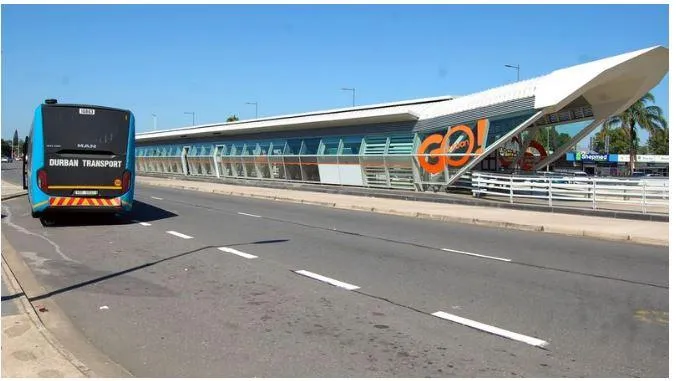
An empty, unused white elephant.
Image: Suopplied
Statistics South Africa released the first quarter report of 2026 on the unemployment rate. The Quarterly Labour Force Survey (Q1) of 2026 reveals an increase of 301 000 unemployed persons to 1.8 million compared to the Q4 results, meaning that South Africa’s unemployment rate has grown to 32.7% in the first quarter of 2026.
Meanwhile, the total number of unemployed youths aged 15-34 years has increased by 2 percentage points to 45,8% in the first quarter of 2026. South Africa has a predominantly young population, with youth aged 15-34 years constituting roughly 33.1% of the population. However, they are the most affected group in this economy.
This comes after the constant and rapid inflation of food, fuel, and electricity prices. It shows that high unemployment is worsening the country’s socio-economic challenges. In essence, everyone is affected by South Africa’s rapidly increasing unemployment rate.
The working class can no longer afford necessities such as food, fuel, electricity, and shelter. A single monthly salary is no longer enough to sustain households in South Africa’s economy. One should ask how ordinary citizens, particularly unemployed youth, are surviving in this economy. It should also be noted that the majority of unemployed youth are graduates. The youth are singled out in this discussion because they constitute the majority of South Africa’s population and are the group most affected by policy failures.
The Social Relief of Distress grant of R370 is not addressing the unemployment crisis facing the youth. Many young people are drowning in depression, drugs, and alcohol as they fail to provide for themselves and their families, even after obtaining degrees.
These harsh realities surrounding South Africa’s unemployment crisis are an indication that the country’s economic and labour policies are drastically failing. The question remains: what is government currently doing about it, and is it truly doing enough?
Unfortunately, South Africa now finds itself in a state of decline after once making meaningful progress in fighting unemployment and hunger.
Many voters believed that the Government of National Unity (GNU) would restore the country from its dire state of collapse. However, little has been achieved since the GNU was established, apart from continued political squabbles among opposition parties.
This demonstrates that South Africa currently lacks leaders who genuinely care about the future of the country’s youth. The ongoing Madlanga Commission hearings have revealed allegations involving corrupt politicians accused of mismanaging state funds to finance lavish lifestyles at the expense of poor South Africans.
These are the realities confronting South African youth today. It is now in their hands to find solutions to restore and resolve the socio-economic challenges they face.
Perhaps it is time for young people to participate more actively in policymaking through public consultations at local, provincial, and national levels.
If South Africa continues to fail its youth, it risks losing not only a generation of graduates, but the future of the nation itself. | Olerato Manyaapelo Fellow at the Institute for Pan-African Thought and Conversation
Remember some time ago the municipality came up with a grand idea of making life better for the taxi industry?
They created dedicated taxi lanes on the N3 and Southern Freeway so that the taxis could whizz past with no traffic holding them up. But it was a flop. The taxis never used them, preferring to weave in and out of traffic, dicing with the lives of their passengers.
Next came a very ambitious project, the Bus Rapid Transport, infamously known as Go! Durban. Sixteen years down the line and with R9 billion spent on stations and infrastructure, it is still off the track.
Not a single bus in sight on the Go! Durban routes. What bungling, what poor foresight, what sheer waste of money!
Surely the big wigs running the city should have known that the taxis, not them, are the bosses?
They are a law unto themselves and have never been brought under control. They have allowed the taxi industry to grow into a powerful mafia organisation and now cannot get it to co-operate with the Go! Durban project.
For years now, the stations are standing idle with security guards being employed to keep away undesirable elements.If not, they will become home to vagrants and tramps. Now there’s a green fence around the stations so the curious cannot see what is going on inside. I suspect that eventually the stations will be sold to the private industry to be turned into shops and take-aways.
Sixteen years and R9 billion down the drain! You would think that those responsible for this gross wastage of ratepayer’s money will be held accountable? You have got to be dreaming!
They will still get their fat cheques and even a bonus for this extraordinary flop! | T Markandan Kloof
DAILY NEWS