

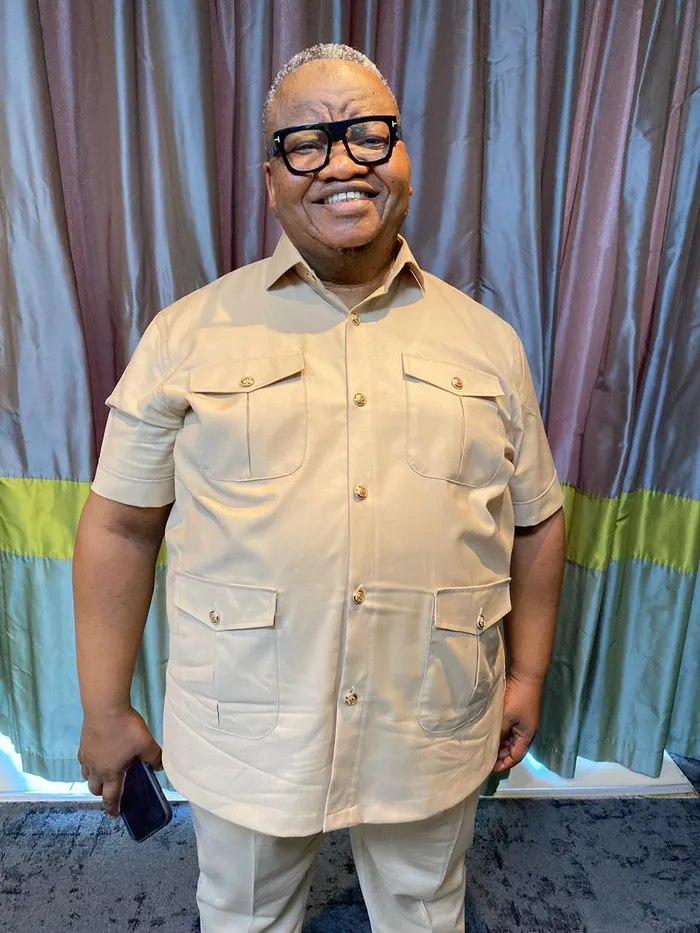
City manager Musa Mbhele shares his insights on eThekwini's transformation, highlighting improvements in service delivery, investment climate, and community engagement.
Image: Sipho Jack
eThekwini Municipality City Manager Musa Mbhele has hit back against criticism that he had steered the city towards collapse, instead, he insisted that Durban had undergone steady transformation under his leadership and that the Durban’s long-term outlook remained positive.
Speaking to the Daily News, Mbhele outlined what he described as significant improvements in service delivery, municipal discipline, investment attraction and infrastructure development since assuming leadership of the city administration.
Mbhele said his long association with the municipality, spanning 16 years, has given him a deep understanding of both the city’s past challenges and the interventions needed to stabilise and rebuild confidence in eThekwini.
“I’ve been working for this city for the last 16 years, so I know where it was. I know where we are going as a result of some of the interventions that I’ve put in place,” said Mbhele.
He assumed the role of acting city manager in June 2021 during a particularly turbulent period for the municipality, marked by widespread social unrest and the devastating floods that severely impacted infrastructure and service delivery across KwaZulu-Natal.
Reflecting on the municipality’s response to the disasters, Mbhele said the city demonstrated resilience under pressure.
“Immediately after the floods, within 24 hours, the city was back on its feet,” he said.
Mbhele said that the municipality had since improved its responsiveness to service delivery complaints, contrasting the current turnaround times with previous periods where residents allegedly waited months for issues to be resolved.
He also highlighted efforts to improve the investment climate in Durban by streamlining engagement with developers and prioritising economic growth initiatives.
“The investment community will tell you that now there is dedicated attention given to developers when they come to the city,” he said.
Among the developments currently underway, Mbhele referenced upgrades along the beachfront and broader infrastructure projects aimed at repositioning Durban as a leading tourism and investment destination.
“Last December, we experienced the biggest festive season since pre-COVID and pre-flood, with 1.5 million tourists flocking to Durban,” Mbhele said.
He linked the increase in visitor numbers to Durban’s growing international profile despite the challenges the city had faced in recent years.
Looking ahead, Mbhele said the municipality was focused on major economic and infrastructure programmes, including initiatives aimed at revitalising township economies and expanding opportunities for local entrepreneurs.
“We want to dismantle the apartheid notion of separate development,” he said.
Mbhele stressed that the city’s long-term strategy centred on job creation, inclusive economic participation and reducing dependency through entrepreneurship and local economic growth.
Turning to Durban’s inner-city renewal programme, which commenced in 2026, Mbhele said several catalytic projects involving both the public and private sectors were already underway.
“The inner city has become a focal point for numerous developments worth billions,” he said.
Regarding the municipality’s financial position, Mbhele rejected claims that eThekwini was facing imminent financial collapse.
He pointed to the municipality’s investment grading and favourable credit ratings, while also noting that the city continued to maintain a revenue collection rate of between 94% and 96%.
Mbhele acknowledged that the municipality continued to deal with legacy challenges that predated his tenure, but maintained that the administration was actively working to resolve them.
He said his broader vision was to transform eThekwini into an economically inclusive and sustainable metropolitan city capable of overcoming historical inequalities and infrastructure constraints.
His remarks come amid growing criticism from opposition parties regarding the municipality’s finances and service delivery failures.
Last week, DA councillor Thabani Ndlovu warned that eThekwini risked total collapse if urgent intervention was not taken to address what he described as a worsening financial crisis.
Ndlovu said financial reports presented before the municipality’s Finance Committee painted a troubling picture of declining governance and fiscal instability.
“Water losses have increased even further and now stand at an alarming 54.35%, while irregular expenditure has escalated to more than R1.48 billion. At the same time, uncollected debt has increased by almost R1 billion and is now sitting at over R45.4 billion.
“These figures clearly demonstrate that the financial position of eThekwini is deteriorating at a rapid pace, while residents continue to face collapsing service delivery, rising tariffs, and growing economic pressure.
“The DA has consistently warned the municipality that the continued failure to address water losses, improve revenue collection, and enforce consequence management would push the city closer to financial disaster,” said Ndlovu.
DAILY NEWS