

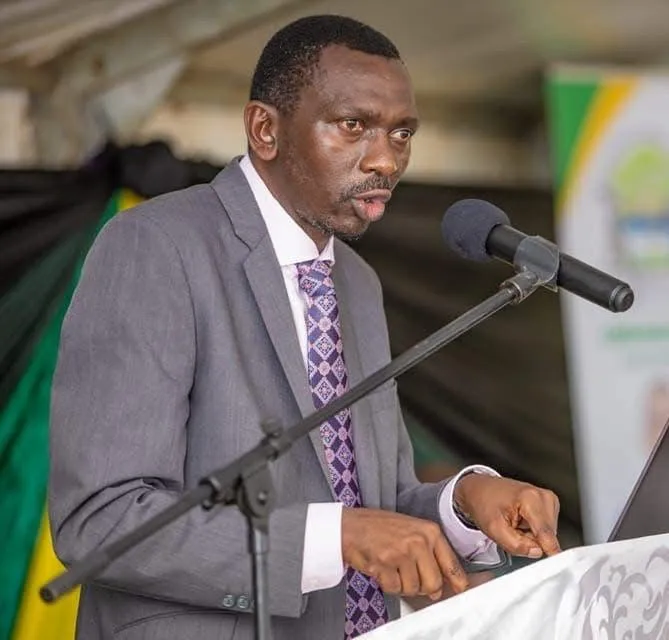
Discover how the Mayor of Umkhanyakude District Municipality is transforming the community through improved water access, agricultural advancements, and enhanced safety measures.
Image: Supplied
The Mayor of the Umkhanyakude District Municipality, Siphile Mdaka, has reaffirmed his commitment to improving the lives of residents while reflecting on milestones achieved since taking office on February 28, 2022.
Mdaka said his administration’s focus had not only been on governance and administration, but also on restoring pride and confidence among the communities served by the municipality.
According to Mdaka, the municipality faced significant challenges when he assumed office, including unresolved UIF matters, unfunded infrastructure projects and serious shortcomings in water provision across the district.
However, he said progress had since been made.
“We have stabilised the municipality with proper management, addressing the ratios deficit, securing funding for projects, and ensuring political stability,” Mdaka said.
One of the municipality’s major achievements, according to the mayor, has been the improvement in water quality standards across the district.
The municipality’s Blue Drop certification score for water quality improved from 35% to 75%, marking a significant turnaround in water management and compliance standards.
Mdaka also highlighted improvements in the municipality’s Green Drop rating, which assesses wastewater management performance. The municipality’s score improved from 21% to 61%.
“We are now positioned as the second-best municipality, surpassing others in the region,” said Mdaka.
Despite the progress, Mdaka said the municipality would not be satisfied until every household — estimated at approximately 132,000 families — had access to clean running water.
“We will continue our efforts until we achieve that goal,” he added.
Beyond water and sanitation, Mdaka said the municipality had prioritised stabilising its administration and strengthening community safety initiatives.
Working with community safety structures, the municipality has introduced measures aimed at combating crime, particularly vehicle-related incidents.
Mdaka also acknowledged the political tensions that emerged following governance changes in KwaZulu-Natal, particularly involving the Department of Cooperative Governance and Traditional Affairs (CoGTA).
Last year, the municipality accused KwaZulu-Natal CoGTA MEC Reverend Thulasizwe Buthelezi of misleading the public regarding a Pietermaritzburg High Court ruling.
At the time, the municipality maintained that the judgment did not confirm provincial intervention into its affairs.
The MEC had sought to place the municipality under administration in terms of Section 139(1)(b) of the Constitution.
According to CoGTA at the time, Auditor-General Tsakani Maluleke warned that the municipality’s continued failure to recover long-outstanding consumer debt posed a risk of material financial losses.
Maluleke stated that the matter had triggered a material irregularity report, resulting in formal recommendations and deadlines for remedial action.
CoGTA further indicated that the Auditor-General had requested a comprehensive report from Buthelezi by August 15, 2025.
In correspondence cited at the time, Maluleke stated: “The failure of the municipality to implement the municipality's credit and debt collection policy for a number of years and to take reasonable steps to recover outstanding debt from consumers is likely to result in a material financial loss for the municipality.”
The Auditor-General further stated: “The failure of the accounting officer to take appropriate actions to address the material irregularity led to a decision by the AGSA's material irregularity committee, duly delegated, to approve reporting in the audit report of the municipality on the material irregularity with recommendations, as provided for in section 20(4) of the PAA, read with regulation 4(3) of the MI regulations, on the steps the accounting officer should take to address the material irregularity within a stipulated period in the audit report.”
Mdaka said misunderstandings surrounding the intervention process had since been resolved, resulting in improved alignment and greater stability within the municipality.
Turning to economic development, Mdaka described the municipality’s arable land as one of its greatest strengths, particularly for agriculture and agro-processing.
He said discussions were underway with private sector stakeholders to attract manufacturing companies to the district, with the aim of creating employment opportunities and strengthening local production capacity.
“Our objective is to move from merely ploughing crops to full production,” he said.
Mdaka maintained that the municipality remained committed to improving water access, advancing agricultural development and strengthening safety initiatives across the district.
“With a focus on continued progress, there is optimism for a brighter future for Umkhanyakude residents,” he said.
DAILY NEWS