

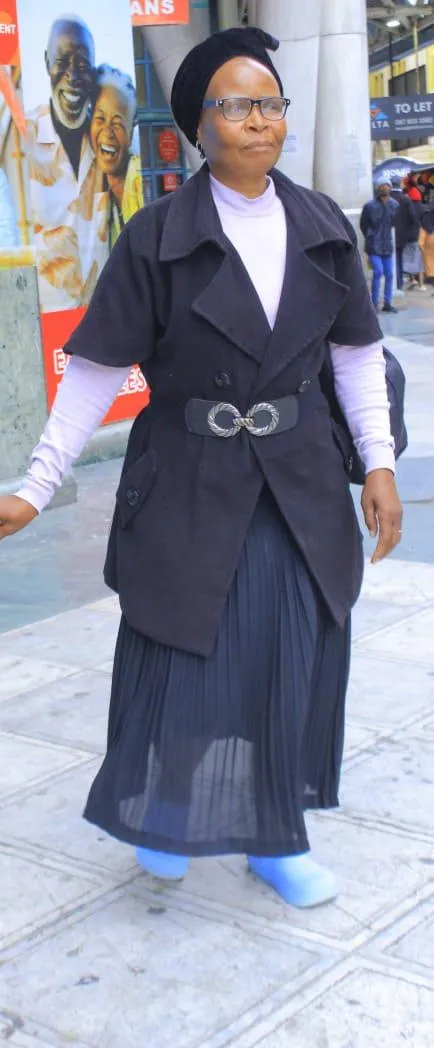
Sibongile Zandile Ngcobo shares her harrowing experience of navigating the aftermath of Durban 's devastating floods, highlighting the neglect and bureaucratic hurdles she faces in her quest for stable housing.
Image: Supplied
Sibongile Zandile Ngcobo, a victim of the devastating floods that struck Durban in 2022, says she finds herself in a heartbreaking predicament as she desperately seeks a home of her own, while her appeals for assistance have allegedly been ignored by local authorities.
Last Thursday, Ngcobo visited the Department of Human Settlements offices in Durban, where she said she was informed by an official that her name did not appear on the list of beneficiaries for homes linked to a housing project in Inanda.
Ngcobo was provided with transit accommodation in the Inanda area following the 2022 floods, but she was recently removed from the transit camp and is now left without a permanent place to stay.
Before the floods, the 63-year-old lived in a seven-room house in Inanda’s B-Section with her two children and five grandchildren. The house was destroyed during the floods.
Speaking to the Daily News this week, Ngcobo described the difficult journey she has faced since losing her home.
“I was sent from pillar to post by both the councillor and the Department of Human Settlements without receiving proper assistance,” she claimed.
She said she was accommodated at a transit camp at the Church of Nazareth in Ebuhleni, but the arrangement had ended.
According to Ngcobo, a Human Settlements official, whose identity is known to the publication, assured her that he would assist her in securing permanent accommodation.
However, when she believed she was close to receiving a home in the eMkhabela area, her hopes were dashed.
“When the department official contacted ward councillor Falakhe Gcabashe, he prevented me from receiving the house allocated to me,” she alleged.
Ngcobo further claimed that Gcabashe had her removed from the Ebuhleni transit camp, a move she believes ultimately disqualified her from receiving a house in the Inanda housing project.
She described missing out on the housing opportunity as traumatic.
After leaving Ebuhleni, Ngcobo said she moved in with her cousin in Malukazi, near uMlazi.
Although her cousin initially supported her, financial pressures soon mounted because her only source of income was an old-age pension.
“I have to take care of my family with the little money I receive. I cannot afford stable shelter,” she said.
Desperate for answers, Ngcobo returned to the Human Settlements offices in Durban last week.
“I was told that the official who assisted me previously no longer worked there. Instead, I was directed to the Embassy Building on Anton Lembede Street to receive further help,” she said.
Ngcobo said she became distressed after learning that her name no longer appeared on the department’s waiting list, fearing she would have to restart the process of qualifying as a beneficiary for a housing project.
She also said she repeatedly attempted to contact her local ward councillor for assistance, but alleged that he was unavailable and did not return her calls despite promising to do so.
“I feel abandoned and hopeless,” she said.
Responding to questions from the Daily News, Gcabashe said Ngcobo’s name was not included on the department’s list of beneficiaries because she had moved out of the transit camp when officials conducted the registration process for housing allocations.
Gcabashe denied claims that he was responsible for Ngcobo’s removal from the transit camp, adding that he had known her and her family for many years.
“Sibongile’s name is on the list of beneficiaries for municipal houses that are being built in the eTafoleni area in Inanda,” he said.
In response, Ngcobo said she wanted proof that her name appeared on the list and questioned why Gcabashe had not informed her directly.
The Department of Human Settlements had not responded to questions at the time of publication.
DAILY NEWS