

The no-where man.
Image: GCIS / Phando Jikelo
Any accord, including the Abraham Accords, that fails to end Israel’s occupation of Palestinian land and disregards the Palestinian struggle for freedom cannot deliver genuine peace.
The Abraham Accords merely legitimise the systemic injustice imposed by the Israeli regime: no right of return for millions of displaced Palestinians, no end to the blockade of Gaza, no genuine sovereignty, and no freedom for an indigenous people living under Israeli occupation.
Far from advancing peace, the Abraham Accords consolidate a status quo that threatens not only the Palestinian struggle for self-determination but also the future of Al-Aqsa Mosque and the holy sites of Jerusalem.
The so-called “Deal of the Century” ignores the enduring realities of dispossession, occupation and subjugation. Yet despite repeated attempts to marginalise the Palestinian cause, the struggle for self-determination endures through steadfast resistance and growing global solidarity.
The only path to lasting peace in the Holy Land is a one-state solution in which all who live in Palestine are equal before the law and enjoy the same rights, freedoms and human dignity. Peace cannot be built on occupation, exclusion or domination. It must be built on justice, freedom and the rule of law.
Until these principles are realised for all who call Palestine home, no agreement, however celebrated, will bring genuine and lasting peace. | MOHAMED SAEED Pietermaritzburg
A few nights ago, I heard Julius Malema on television extolling the virtues of welcoming and tolerating citizens from other African countries. He argued that xenophobia has no place in South Africa.
These remarks struck me as contradictory. Mr Malema has often made statements that many South Africans, particularly white citizens, regard as divisive and hostile. He has also defended the singing of controversial struggle songs that critics believe inflame racial tensions.
This raises an important question: how can one champion tolerance and inclusion for foreign nationals while being perceived as antagonistic towards some fellow South Africans? The two positions appear difficult to reconcile.
There is an old expression about “chasing two rabbits at the same time” – and ending up catching neither. In old Western movies, a person expressing conflicting views might be accused of “speaking with a forked tongue”.
South Africa faces enormous challenges and needs leaders who can unite us. We need leadership that promotes mutual respect, social cohesion and a shared vision for the future.
The examples set by leaders such as Jan Smuts and Nelson Mandela remind us of the qualities that can bring people together. Where are such leaders today? | KEVIN MEINEKE Summerveld
In the Daily News of May 28, letter-writer Peter Neil Hendricks argues that Khoisan recognition can no longer be ignored.
Firstly, according to our traditions and understanding of history, our ancient ancestors, Ntu and LiNtukazi, gave rise to seven sibling nations: Nama, Herero, Karanga, Ovambo, mLobedu, mNguni and San. Many of us believe we are descendants of these forebears and share deep historical connections across Southern Africa.
For generations, colonial powers used division and misinformation to weaken indigenous communities. As a result, many labels and terms were imposed on African people, some of which are regarded by many as offensive or derogatory. Such classifications often served political purposes rather than reflecting our true identities and shared heritage.
Peter should be careful not to present opinion as fact. Many of the peoples mentioned above consider themselves among the first indigenous inhabitants of this land and reject narratives that seek to divide them or diminish their history.
Today, we should focus on generational knowledge rather than generational trauma. Unity, education and a better understanding of our shared past can help build stronger communities. Knowledge is power, and unity is power.
Through decolonisation initiatives and the Masakhe Philosophy, efforts are being made to bring academic research closer to communities and encourage discussion about African history, identity and heritage. | THABO I SHONGWE Klaarwater, Pinetown
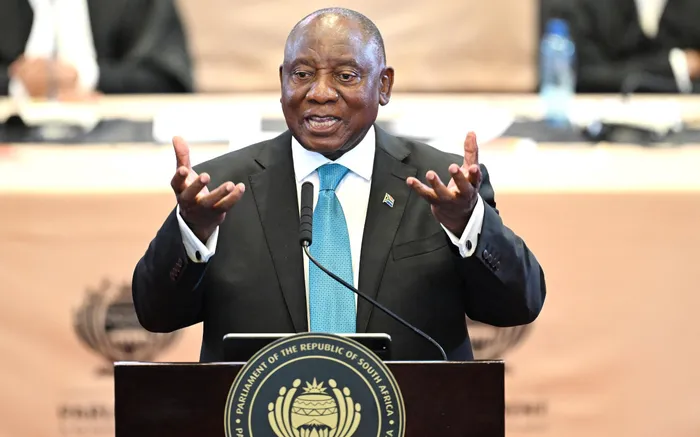
When Cyril Ramaphosa emerged as a leading political figure, many South Africans saw him as a breath of fresh air. His calm demeanour, diplomatic style and role in the Codesa negotiations earned him widespread respect and raised hopes for the country’s future.
After a successful business career, Ramaphosa returned to politics, eventually succeeding Jacob Zuma as president. He promised renewal and carried the hopes of a nation desperate for improved service delivery, job creation and economic growth.
Sadly, many South Africans now feel disappointed. Instead of progress, they see worsening conditions, rising crime and failing public services. There is a growing perception that the country lacks visible leadership at a time when decisive action is needed.
The Phala Phala controversy further damaged public confidence, while current concerns over illegal immigration, crime and corruption continue to dominate public debate. Yet many believe the president has remained largely silent on issues affecting ordinary citizens.
Government appears increasingly distant from the people it serves, whistle-blowers continue to face threats, and many citizens no longer feel safe in their own communities.
South Africans are asking a simple question: where is the leadership the nation was promised? | THABILE MANGE Gauteng
I was shocked, surprised and deeply disappointed by what I witnessed at the public toilets near Umhlanga’s Promenade Beach on May 27.
While the ANC-led eThekwini Municipality spends money on rebranding projects, advertising water-saving campaigns and changing street and building names, basic maintenance appears to be neglected in some of the city’s most prominent public facilities.
At the public toilets near the church and coffee shop, opposite On Tap Plumbers and close to the Umhlanga Lighthouse, every toilet cistern in both the men’s and women’s facilities was overflowing. The cisterns had no functioning mechanisms to stop the water flow once they were full, resulting in clean drinking water continuously running into the sewer system.
Even more concerning was the apparent absence of isolation valves that would allow the water supply to be shut off while repairs are carried out. I spoke to staff working at the site, who told me the problem had existed for months. Several regular visitors to the area confirmed the same thing.
How can such a well-known, high-rate-paying area like Umhlanga be allowed to waste water on this scale while residents across Durban face water restrictions, interruptions and rising tariffs?
The waste did not end there. The lights inside the facilities were switched on during broad daylight. Nearby public showers were also leaking continuously. Again, local residents told me these problems had been reported repeatedly but remained unresolved.
While sitting in the park area, I noticed a large number of mosquitoes. On closer inspection, several concrete bins contained stagnant water, creating ideal breeding conditions. Such issues should be addressed promptly in the interests of public health and visitor comfort.
I also observed municipal workers spending long periods standing and talking while maintenance issues remained unattended. Residents have a right to ask whether public resources are being used effectively and whether sufficient supervision is taking place.
Adding to the frustration, numerous streetlights near the Umhlanga Lighthouse remained illuminated during daylight hours, further wasting electricity at a time when residents are constantly being encouraged to conserve resources.
As ratepayers, we deserve answers. Why have these faults been allowed to continue for months? Why is so much water and electricity being wasted when residents are paying ever-increasing rates and service charges?
Most importantly, who will be held accountable for this ongoing neglect? | ZAHIR DANBAR Phoenix
Violence is no longer chaos – it is commissioned, outsourced and affordable.
The question is not simply why South Africans are being killed. It is why the machinery of killing has become so frictionless, so outsourced, that it no longer interrupts daily life. Murder now arrives in news alerts between weather updates and rugby scores. It flashes across social media feeds before disappearing beneath the next controversy. The dead are mourned briefly. The living move on. The cycle repeats. What should be a national outrage has become background noise.
In Table View just last month, two armed men walked into a café in broad daylight, opened fire on a patron, struck him multiple times, then calmly left with his laptop and phone. Controlled. Efficient. No panic. No visible emotion. Just execution and exit. In Athlone weeks earlier, a baby and two women were killed in yet another shooting that tore through an already long-suffering community.
These are not isolated tragedies. They sit inside a widening pattern where firearms, access and enforcement failure intersect in an increasingly predictable way. South Africa has more than 27,000 murders annually, according to SAPS data. More than 50 people are killed every day.
What is changing is not only the volume of violence. It is its structure. Killings are increasingly targeted, planned, outsourced and difficult to trace beyond the shooter. Violence is becoming transactional. This is no longer just crime. It is a system.
Violence is commissioned. Intermediaries connect buyers and shooters. Execution is delegated. Accountability stalls at the operational layer. In some cases, contract killings can reportedly be arranged for surprisingly small sums.
This economy feeds on firearm proliferation, criminal supply chains and institutional failures. Across multiple cases, hired hitmen are arrested while those who commission crimes remain beyond reach.
South Africa should begin with a large-scale firearm amnesty focused on illegal weapons, strengthen oversight and tighten controls on firearm ownership and transport.
These measures will not eliminate violence, but they can reduce its lethality. In a country where more than 50 people are murdered every day, that matters.
The most dangerous shift in South Africa is not only that people are being killed. It is that we no longer seem to care. | IMTIAZ (TAZ) CASSIM Cape Town
DAILY NEWS