

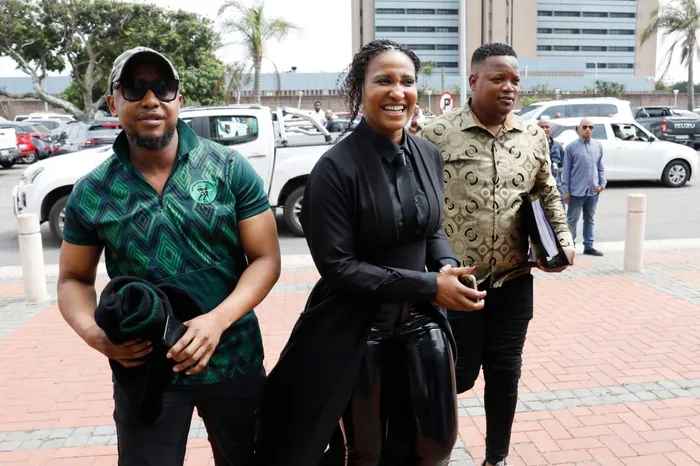
Duduzile Zuma-Sambudla, daughter of former president Jacob Zuma, attends proceedings at the Durban High Court on charges related to the deadly July 2021 unrest.
Image: Doctor Ngcobo / Independent Newspapers
The daughter of former president Jacob Zuma, Duduzile Zuma-Sambudla, has questioned why other social media users were not charged for sharing the same pictures that left more than 300 people dead.
She said through her legal representative, Advocate Dali Mpofu SC, during her appearance at the Durban High Court on Monday.
The appearance marked the start of her two-week trial.
Zuma-Sambudla, who appeared in good spirits and was seen smiling in court, faces serious allegations linked to her social media activity during the deadly unrest, which caused extensive economic damage, particularly in KwaZulu-Natal.
The state alleges that she played a key role in inciting the violence and faces three counts related to her online posts during the unrest.
The first charge is incitement to commit terrorism.
Prosecutors allege that between June 29 and July 2021, Zuma-Sambudla unlawfully and intentionally encouraged others to commit acts of terrorism.
The second charge is incitement to commit violence, with the state claiming she instigated or encouraged people to assemble unlawfully with the intent to disturb public peace or infringe on others’ rights.
The third charge concerns a violation of the Riotous Assemblies Act of 1956, which prohibits illegal gatherings intended to cause a riot.
The state’s first witness, Major General Gopal Gounden from the Directorate for Priority Crime Investigation (Hawks), was the coordinator of the team that investigated the unrest.
Gounden told the court that investigators had identified three X (formerly Twitter) accounts, one of which they confirmed as belonging to Zuma-Sambudla.
He said the other two were fake, containing misspellings of her name. He testified that Zuma-Sambudla’s verified account was allegedly used to incite violence during the unrest.
The prosecution argued that, as the daughter of the former president and with a following of 124,000 users on X, Zuma-Sambudla’s posts carried significant influence.
Her tweets before and after Zuma’s arrest in July 2021, they said, incited public violence.
“My Lord, as I indicated in paragraph 28, the accused published 19 tweets containing videos showing widespread looting. I never referred to all 19 individually,” Gounden said.
He explained that some tweets carried the caption “We see you” or “I see you,” which, according to the state, gave the impression of support for the unrest.
Mpofu questioned Gounden on whether the tweets themselves incited violence.
“My Lord, once again, take out these five words and look at the picture - burning buildings or a deceased person on the floor. That’s a picture,” Gounden said.
“But add the words in the environment of this unprecedented uprising - it changes the meaning when it comes from a person of influence.”
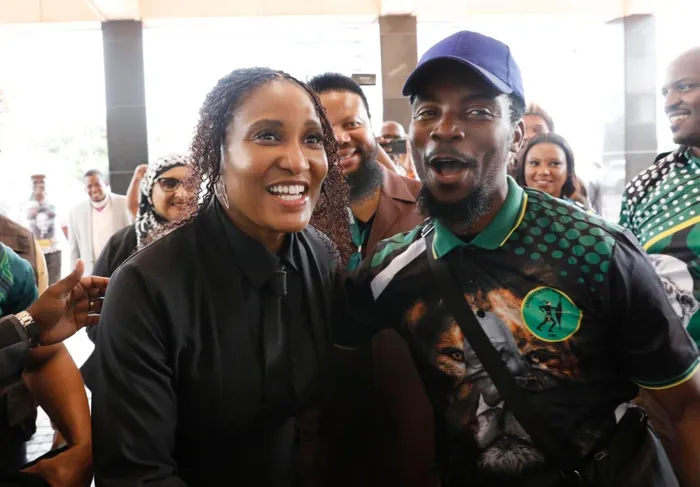
Duduzile Zuma-Sambudla arrives at the Durban High Court on Monday, where she faces charges of incitement linked to the July 2021 unrest.
Image: Doctor Ngcobo / Independent Newspapers
He acknowledged, however, that Zuma-Sambudla was not the only poster of the images, which were already trending at the time.
Mpofu asked whether other users who shared the same images had been charged. Gounden replied that they had not.
“No, there was no need to charge someone purely for sharing a picture. But the caption added by the accused gave credence to the image itself,” he said.
Mpofu later argued that Gounden’s testimony was “completely unhelpful” to the state’s case.
“Nothing in your evidence indicates or gives the court any reason why the accused is sitting here,” Mpofu said.
Earlier, Gounden told the court that the unrest involved multiple crimes, including looting, arson, destruction of property, murder and the burning of trucks.
“There was a broad range of crimes committed between July 8, and the evening of July 15,” he said.
He added that the violence followed Zuma’s incarceration after the Constitutional Court’s ruling.
Zuma handed himself over to authorities on the evening of July 7, 2021, and the unrest began the following day.
Gounden said investigators found that communication and coordination of the violence were largely organised through social media platforms.
“There were a total of 164 WhatsApp chat groups created for the sole purpose of coordinating activities, from high-level instructions down to ground forces,” he said.
Of these, eight main groups were identified as key to the organisation of the unrest, with 103 persons of interest linked to posts encouraging violence, looting and other criminal acts.
The state presented evidence about these eight groups, including their creation dates, number of participants and areas of activity:
-Chat 36: “Under the New Political Landscape” – 106 participants, no persons of interest; created 4 August 2021 in Bloemfontein.
-Chat 129: “INK Shutdown” – 84 participants, 16 persons of interest; created 7 July 2021 in KwaZulu-Natal.
-Chat 134: “eThekwini Shutdown” – 316 participants, 30 persons of interest; created 8 July 2021 in Durban Metro.
-Chat 135: “3 Zuma Coordinators” – 204 participants, 38 persons of interest; created 8 July 2021; national coordination group.
-Chat 147: “ANC Factional Metro” – 187 participants, no persons of interest; created 4 July 2021; national-based group.
-Chat 148: “EMTF Stop” – 222 participants, no persons of interest; created 2 July 2021 in Cape Town.
-Chat 152: “KR1 Jacob Zuma Supporters” – 280 participants, no persons of interest; created 29 June 2021.
-“Zuma Real Activists 100%” – 334 participants, 19 persons of interest; created 1 July 2021 in Gauteng.
Gounden said the groups demonstrated clear coordination between national and provincial levels.
“It shows that high-level information was filtered to provincial levels and disseminated to ground forces,” he told the court.
The trial is scheduled to continue on Tuesday, November 11.
IOL News