

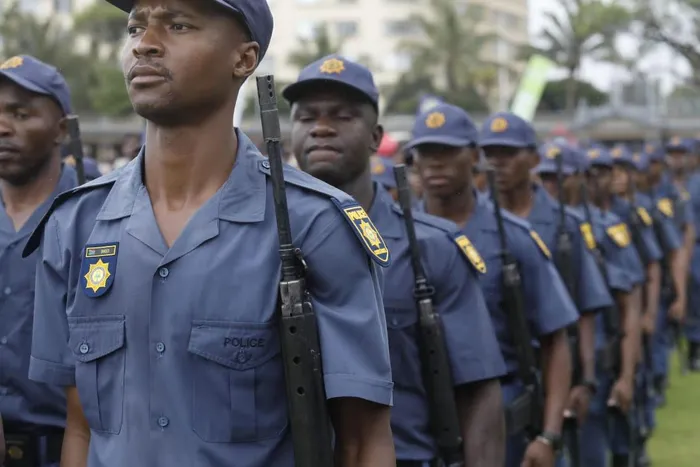
SAPS national officers still do not have body-worn cameras despite a promise to Parliament and the public.
Image: Doctor Nqcobo
The promised implementation of body-worn cameras (BWC) for South African Police Service (SAPS) officers has not yet been realised more than six months after its projected rollout.
According to SAPS, the rollout of BWC for officers is following a new, extended timeline aligned with the 2025/26–2027/28 Medium Term Expenditure Framework (MTEF), far beyond the promised rollout date of April 2025.
Suspended Police Minister Senzo Mchunu, in a written response to a Parliamentary question by DA MP Mzamo Billy in February this year, said BWC would be rolled out to police by April. Mchunu had noted only 100 devices would form part of a pilot project initially.
With the deadline now lapsed by seven months, police spokesperson Amanda van Wyk told IOL that SAPS "remains committed to implementing the Body-Worn Camera (BWC) project", but that the procurement project for the devices was now only entering its contracting phase.
Body-worn cameras are small recording devices typically attached to an officer’s uniform, designed to capture both video footage and audio during police operations and interactions with the public.
In the United States and the United Kingdom, these devices serve a vital role in some cases, such as
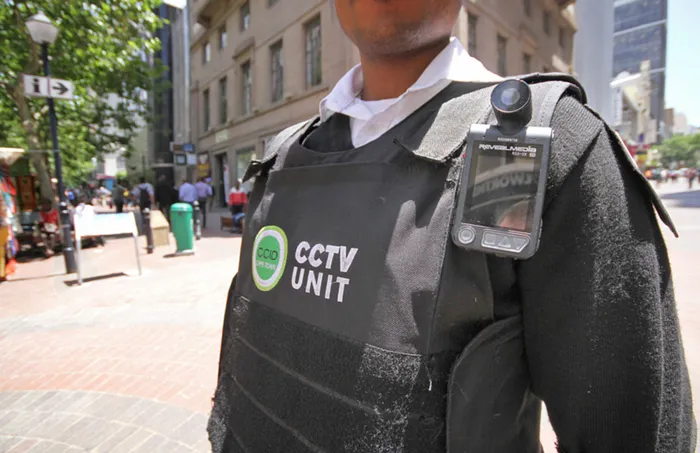
A body-worn camera donned by a CCID officer in Cape Town.
Image: Willem Law / Independent Newspapers Archives
Billy said in a recent interview with IOL that there had been no feedback from the police ministry on the delay, nor any updates regarding the progress.
Mchunu had initially said in the parliamentary reply in February that each device could cost around R28,000, but Billy disputed this, saying comparable devices should cost around R10,000 each.
“The police minister made a commitment, not only to Parliament but to South Africans, that this would commence in April,” Billy said. “You can only describe it as pure incompetence and a huge disregard for commitments made.
"We called for transparency.
"Right now, there are no clear oversight guidelines for the handling, storing, or reviewing of footage; no evaluation mechanisms; and no reporting framework to Parliament," Billy said.
BWC have been rolled out in the City of Cape Town, where Law Enforcement officers have adopted their use.
The City's Mayoral Committee Member for Safety and Security JP Smith said the rollout in Cape Town was now in its "second phase, with 1,250 shared cameras deployed and another 1,000 being rolled out; however, cameras are pooled between shifts".
Smith told IOL the City's enforcement division "is smaller and far more unencumbered" than SAPS, making it easier to implement new strategies.
The City said all BWC footage is managed through a "Digital Evidence Management Solution" (DEMS) and is "governed by a Standard Operating Procedure (SOP) designed to prevent tampering".
The City of Cape Town would not be drawn on the cost of the units or the infrastructure that supports it.
The South African Police Union (SAPU) had initially welcomed Mchunu's announcements that BWC would be rolled out to SAPS six months ago.
SAPU spokesperson Lesiba Thobakgale told IOL: "We welcomed the announcement because our officers need this protection, but without delivery it becomes just another promise.
"The Government made a promise. Officers and communities deserve these cameras now – not in another budget cycle."
In a written response to IOL, SAPS confirmed that the project's costs and procurement status are "yet to be advertised and remain undisclosed, and that once a service provider is appointed, a comprehensive rollout plan for all provinces will be finalised".
SAPS confirmed to IOL that the budget confirmation for future procurement would be finalised in the next financial year.
IOL