

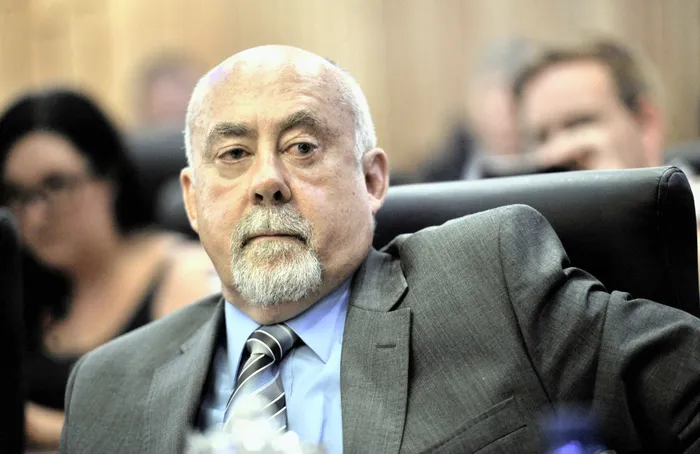
Dr Wouter Basson, who was head of the apartheid government's chemical and biological warfare programme in the 1980s, is trying to halt misconduct proceedings against him by the HPCSA.
Image: Oupa Mokoena / Independent Newspapers
Dr Wouter Basson, known for his role as the head of a top-secret chemical and biological warfare programme during apartheid, has turned to court to try to stop disciplinary action being taken against him by the Health Professions Council of South Africa (HPCSA).
Basson was found guilty of unprofessional conduct in December 2013. This followed a disciplinary hearing into complaints stemming from his activities in the early 1980s, when he headed the apartheid government’s chemical and biological warfare programme, dubbed Project Coast.
His sentencing proceedings commenced in January 2015. However, it was at the time halted by an application for the recusal of the committee members in a bid by Basson to save his professional career.
A new committee was, meanwhile, constituted in 2023 to hear the matter following the recusal of the two members of the original committee. The matter was eventually due to be heard in 2024, but it was once again stalled as Basson turned to the Gauteng High Court for the permanent stay of proceedings.
One of his main arguments is the long delay in the matter, as complaints against him that led to the HPCSA disciplinary hearing were launched around 2000. The first inquiry only kicked off in 2007. He pointed out that the complaints referred to his conduct in the 1980s.
Basson also pointed to the further time lapse in the matter, since 2007 until 2019, when the court eventually ordered that members of the committee had to recuse themselves.
According to him, the disciplinary hearing faced hiccups from the start. He pointed to the fact that it was originally set down for two weeks in 2007, but it could not start as the HPCSA had difficulties in convening a committee.
He said that at the time, he had already cancelled all consultations and work to attend the hearing.
When it eventually started months later, Basson pleaded not guilty to all six charges of unprofessional conduct levelled against him.
The pro forma complainant’s main witness, however, during cross-examination, said after reconsidering all the facts, Basson’s conduct was not unethical, as claimed in the charges.
The inquiry was then postponed for about a year to find another witness to testify against Basson. Following the further sitting, Basson testified and was found guilty on two of the charges against him.
In 2014, the proceedings relating to the sentence commenced and Basson gave notice that he would ask for the recusal of the panel, which led to prolonged court proceedings and the final recusal order in 2019, which was followed by failed appeals by the HPCSA to the Supreme Court of Appeal and the Constitutional Court.
With the HPCSA now aiming to resume the proceedings, Basson told the court that enough is enough, as the incidents forming the subject of the matter happened between 40 and 45 years ago, and he needs to get on with his life.
He also pointed to the fact that he was acquitted in 2002 of any criminal conduct relating to Project Coast (to which the HPCSA charges relate) and that he merely, as a soldier at the time, acted on instructions.
The HPCSA, in opposing Basson’s application for a stay of the proceedings, pointed to the long legal battle regarding the recusal of the panel, which was only legally finalised in 2020. It said it is not unreasonable to now commence with disciplinary proceedings against Basson.
The 25 years of delay in finalising disciplinary proceedings against Basson is not the fault of the HPCSA, it said, as there were many hurdles along the way. It said in the interest of justice, the stay of the proceedings must not be granted.