


Gauteng education department investigates Christian school.
Image: OUPA MOKOENA
A Gauteng Christian school is under fire after claims it made pupils “work off” their school fees by spending long hours filming singing and dancing videos for TikTok and YouTube.
Some of the videos posted by Christian Progressive College have pulled in hundreds of thousands — in some instances even millions — of views.
But those clips had allegedly not been posted just for fun.
If a new contract bearing the name of the Pretoria-based school is anything to go by, parents had to sign away certain rights when their artistically talented children received a “bursary” to attend the school.
These rights included the school having full control of the child for a minimum of five years.
During that time, the child would have to record music and create dance videos, with as much as 90% of the money earned going to the school until the bursary amount had been paid back.
The matter had gained traction after social media influencer Siya Mangena posted a video addressing the agreement.
IOL obtained a copy of the contract from a staff member.
And while such an agreement does exist, it remains unclear who drafted it, as no one has taken ownership of the document. The school has also allegedly distanced itself from it, with claims that a staff member drafted it without approval.
Claims that the school was not registered appeared to be unfounded, as basic education department sources confirmed it had been registered under the name “Christian Progressive”.

Are children being exploited? Gauteng school faces investigation over contract issues.
Image: OUPA MOKOENA
Approached for comment, the school’s principal, Zwelethu Ndhlovu, referred questions to the Gauteng education department.
“I’m sure you are aware that schools do not respond to the media,” Ndhlovu said.
The school, which grabbed headlines last year after a viral video showed a girl being attacked by pupils, has nearly three million followers on TikTok alone.
In a leaked internal memo sent to staff and parents on Tuesday, Ndlovu said the attacks on social media had been driven by individuals “who are uncomfortable with the holistic approach of educating learners and seeing them excel confidently while showcasing their God-given talents”.
He added: “Our legal team is diligently looking into this matter and will advise on the way forward.”
Gauteng education department spokesperson Steve Mabona said the matter had been subject to an inquiry.
“We are aware of the matter and have launched an inquiry,” Mabona said on Monday.
Asked for an update on Thursday night, Mabona said: “We can confirm that we are continuing with the investigation and if the school is found to be violating the rights of learners and post-registration requirements, the department may have no option but to apply relevant legislation.
“The department condemns any violation of the rights of children and will not hesitate to apply due process when children are used in exploitative practices.”
When IOL visited the school earlier this week, it was business as usual.
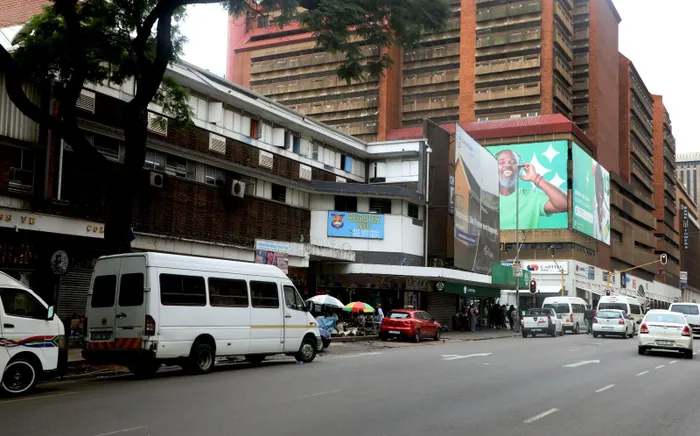
The area around the school is busy, with hawkers along the pavement, pedestrians moving along the roadside and the constant rumble of traffic.
A foul smell clung to the air outside.
Yet inside the school, the premises appeared clean and tidy.
Gauteng education department scrutinises 'exploitative' contract at Christian school.
Image: OUPA MOKOENA
The school has an entertainment and arts division called CPC Stars.
CPC Stars, with “CPC” taken from the school’s name, allegedly controlled these contracts and the pupils who were part of the programme.
By the time of publication, at least 21 children had been part of this division.
The contract, titled Minor Artist Education, Bursary & Record Label Agreement, said the school could provide education, accommodation, or both as part of the bursary.
But it also said these costs were “recoupable”, meaning they had to be paid back from the child’s earnings.
The agreement further granted the school exclusive management rights over the pupil’s performances and recordings.
It said parents could not negotiate bookings independently and that income earned would first be used to settle the listed costs.
The metadata of the document does not reveal who created the contract.
The file only lists “PDFium” as the creator and producer, which is a generic PDF engine often used by web browsers and other software to open or export PDF files.
This means the document was likely converted or saved as a PDF after it had already been created elsewhere, most likely in a program such as Microsoft Word. The original author details and creation date do not appear in the file’s metadata.
Attorney Paul Roelofse, who independently reviewed the document at the request of IOL, said in a preliminary legal view that the structure of the agreement had “raised concerns”.
“The agreement is presented as a bursary and education opportunity, but it is simultaneously a long-term exclusive commercial contract for a minor’s artistic labour,” Roelofse said.
He said the contract meant the child could only receive education and accommodation if they followed the performance and management rules in the agreement.
“The central concern is that the agreement risks converting vulnerable families’ hopes for education into leverage for commercial control over a child’s talent and future income,” he said.
Roelofse said the contract allowed the school to recover various costs from a child’s future earnings, including school expenses, and also allowed for income to be taken away or financial penalties in certain situations.
He also said South African law gives special protection to children who work in the arts, including permits for those under 15 and limits on fines or having their pay withheld.
“If children under 15 are used in profit-making performances or recordings, labour law safeguards become critical, and this agreement does not reflect those protections,” Roelofse said.
He said the structure of the contract could amount to “exploitative child labour” if it was not properly regulated.
Uzukhanye “Uzu” Myoywana, a law professional who is currently serving as an associate designate at Mcaciso Stansfield Incorporated, also shared his opinion with IOL.
“From the face of it, the document reads less like a bursary and more like a record-label contract.
“The label style features are hard to miss, for example, the five-year exclusivity; central control over bookings; and a required post-matric album judged against a commercial benchmark set by the school/label,” he said.
He said the pupil remains tied to the school until all costs — including school fees and living expenses — have been paid back.
This means a pupil cannot simply leave after a set period, but only once what Myoywana described as an open-ended debt has been paid off.
As a result, he said, the pupil is tied to a constantly increasing repayment amount.
“I am very skeptical as to the degree of strength upon which this contract may pass constitutional muster," Myoywana said.
“I say this because SA law takes a protective approach, and rightfully so, when children are drawn into contracts.
“As we would know, we only reach majority status at 18, and minors are not treated as having the same freedom as adults to commit themselves to substantial, long-term commercial obligations.”
He went on to say that while a parent or guardian’s signature may reinforce the agreement’s legal standing, it does not automatically shield it from scrutiny.
“The courts will still look closely at whether the arrangement is materially prejudicial to the child.”
The Basic Conditions of Employment Act strictly governs child labour, he continued, and children participating in advertising, artistic or cultural work are subject to specific regulations, particularly those set out in Sectoral Determination 10 for young performers.
“If this is genuinely an educational development programme, the contract should be rewritten to reflect that purpose.
“It should be a shorter and clearer term, tightly defined and capped recoupment, transparent accounting and audit rights, a reasonable and child-centred exit mechanism, and careful compliance with child-performer safeguards.”
Basil Manuel, executive director of teachers’ union Naptosa, said he had examined the contract and was "quite shocked".
“I have looked at this contract,” Manuel said.
“You cannot encumber a child, and this school is asking a parent to sign over the rights of the child.
"When the child reaches 18 and matriculates, they are still bound by it.
“This is not a contract, this is slavery ... they are enslaving the children.”
He added: “What type of opportunity results in you being tied up forever? And even the conditions of the contract are absolute nonsense.
“I would stay very far away from this, as any parent should.
"But I suppose there are people who get sucked into this because they think it is a great opportunity and their children have talent. This is why artists suffer their whole lives, because people take advantage of them.”
Veteran actress Lizz Meiring, speaking on behalf of the Theatre Benevolent Fund, also criticised the arrangement.
“This is a bogus agreement,” she said.
“Parents want their children to be famous, so they sign these bogus contracts, and they are promised the earth. It's all about the money.”
One parent, who asked not to be named to protect her child, said she removed her child, 14, from the school because it began to feel "more like work than school".
She said the focus "shifted from education to performance".
"I did not feel comfortable with that," she said.
Another parent whose child had attended the school defended the programme.
“He was OK with the school, he never complained," she said.
"As parents we are the ones who signed the contracts.
"He didn't have any issue with it.
"That contract is for CPC Stars; the school itself is not involved. Whatever it is they need to do, it is outside of the normal school hours.
"I support my child in all pursuits.
"He loves entertainment so that is what he does. I was shocked to see that video and I got confused. I can say the contract was bursary-like.”
Matome Robert Thoka, also known as "Limpopo Boy", said he was part of the management of CPC Stars, the entertainment department of the school.
“I’m part of the management of the CPC Stars which is an entertainment department of the school," he said.
"I’m in charge of marketing, media training and choreographer for their content or any brand deals we may need to represent through dance and music.
"I work for CPC Start and I have been working with them for about two years now,"
On the allegations, Thoka said: “They are false, we don’t exploit the kids and also, they don’t know that the school runs like a normal school.
"There is a department of entertainment which is CPC Stars which only has 21 kids in it, and we do have a contract in place with their parents.”
He said the contracts were introduced because some students were being managed by parents or friends and taking gigs on their own.
“This is why this year we came up with a solution of contracts so we may fully take charge of the management as we have been investing in this project,” he said.
He described the management as growing and said the children were benefiting.
“It is still being managed well and growing, it’s not perfect but we are doing right by the kids and parents," he said.
"This is why you see the kids become famous and still pass well at school"
Thoka said the entertainment activities take place after school hours.
“Christian Progressive College is a school just like any other school, and we decided to add entertainment as well and it works very well."
Thoka then told IOL that his boss would make contact to answer further questions. No contact had been made by the time of publication.
Mabona said the investigation was ongoing.
* Additional reporting by Cherie Vertuin
IOL News