Islamic State of Africa bid to register as a political party, dismissed by IEC
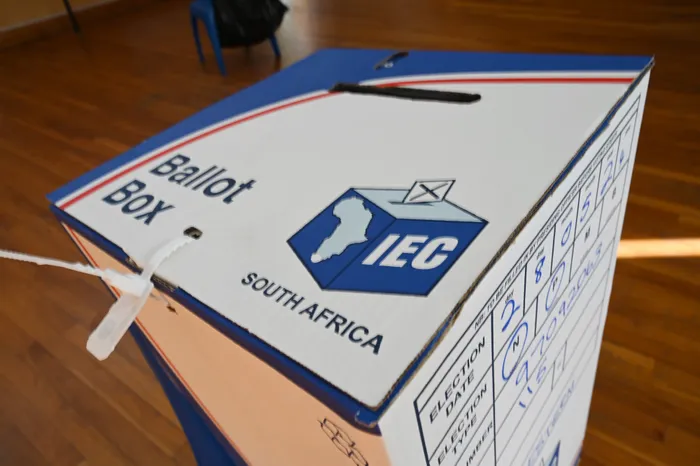
The Electoral Commission of South Africa has rejected the Islamic State of Africa’s application and appeal to register as a political party.
Image: Armand Hough / Independent Newspapers
The Islamic State of Africa (ISA), a non-profit organisation, is contending with what it describes as systemic bias in democratic processes after the Electoral Commission of South Africa (IEC) struck its' appeal to register as a political party off the roll.
The Chief Electoral Officer (CEO) rejected ISA’s application on three grounds:
- The party failed to meet the threshold of prescribed details of registered voters supporting the party’s formation. The prescribed details were full names and signatures of 300 registered voters.
- The application notice was published in a newspaper circulated only in parts of the municipal area (eThekwini Municipality), which is insufficient to alert all relevant persons in the geographic area of the party’s application.
- The CEO received over 200 objections from individuals and organisations arguing that the constitution of ISA espouses “the intention to develop policies based on Sharia law”. Objectors argue that part of ISA’s constitution was “antithetical to the secular and inclusive nature of the principles underpinning the South African constitutional order, and registering ISA would cause serious offence to a section of the population”.
ISA administrator Rev Ethan Ramkuar said that after careful consideration and deliberation with organisation founder Farhad Hoomer and the executive, 'it is sad that in a democracy, a person who has a vision using God’s law cannot fulfil their duty'.
“It’s noted that the IEC argued there were over 200 objections; strangely enough, when gay marriages were passed, abortion was passed, and just recently the surname saga passed that a man can take the wife’s surname, did the state institutions even look at what the people of the country want and was it in the best interest of the people?” Ramkuar asked.
“We speak of democracy, but yet throughout all these above laws passed, the opinion of the majority Christian population was not considered, but ironically, for a party that wants to make a difference, objections were taken seriously.”
He said the ACDP openly called for the death penalty, something contrary to our Constitution and yet they are still a party.
"The ACDP, being a Christian party, and funded by certain people who have interest, seem to also be anti our Constitution, but allowed to practice.”

Islamic State of Africa founder Farhad Hoomer.
Image: Al- Qalam
The ISA noted the IEC’s decision dismissing its appeal, and said it respected the process but disagreed with the judgment.
“The Islamic State of Africa non-profit organisation applied to be a political party and was rejected. We are not backing down, we are consulting our leaders and executive, including our attorneys. We are deliberating on whether to approach the High Court or other possible ways forward,” Ramkuar said.
He said South Africa’s democracy allows for the challenging of decisions by any institution if they felt the need to, and also allowed the courts to decide.