

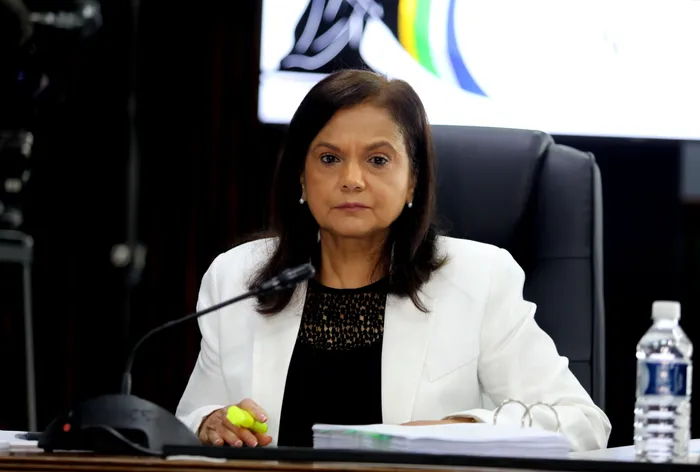
NPA boss Advocate Shamila Batohi DPP Andrew Chauke acted unlawfully by pressing for an indictment without evidence, telling the inquiry that proper processes were bypassed and the acting KZN DPP was sidelined.
Image: Oupa Mokoena/Independent Newspapers
National Director of Public Prosecutions (NDPP) Advocate Shamila Batohi has told the Nkabinde Inquiry that it was unlawful for Deputy Director of Public Prosecutions Advocate Andrew Chauke to push for the signing of an indictment in the Booysen matter without providing supporting evidence to the acting KwaZulu-Natal DPP at the time, Advocate Cyril Mlotshwa.
Testifying before the inquiry, Batohi said emails, affidavits, and documents before the panel point to prima facie interference in prosecutorial decision-making—an issue at the heart of the inquiry’s terms of reference.
The inquiry is probing Advocate Chauke's fitness to hold office. Batohi’s testimony is being led by Evidence Leader Advocate David Mahlomanyane.
Explaining the nature of an indictment, Batohi said it is a document used in the High Court that sets out the charges against an accused, typically accompanied by a summary of the substantial facts underlying those charges.
According to Batohi, Mlotshwa refused to sign an indictment emailed to him by Chauke on 12 June 2012, because the supporting evidence was not included despite repeated requests. She told the panel that Mlotshwa emphasised that signing such a document without verifying the evidence would be unlawful.
Batohi said the prosecution team bypassed Mlotshwa and reported directly to Chauke, leaving Mlotshwa without access to key documentation. The email chain showed Mlotshwa repeatedly raising concerns, including a written warning that he could not sign anything without first confirming the evidence supported the charges.
She drew attention to a remark in which Chauke told Mlotshwa to express discomfort if he had any, so that Chauke could escalate the matter to the Acting NDPP and the Minister. Batohi said the reference to the Minister was problematic, as the Minister has no role in prosecutorial operations.
The inquiry heard that Mlotshwa was removed as Acting DPP KwaZulu-Natal on 9 July 2012. Advocate Moipone Noko was appointed days later on the recommendation of then-Acting NDPP Advocate Nomgcobo Jiba.
Batohi said that on 10 July 2012, the day after Mlotshwa’s term ended, a racketeering authorisation application in the Booysen matter—bearing Chauke’s name—was submitted to the NPA’s VGM offices.
Dr Broughton’s supplementary opinion noted that the application was unsigned and that the corresponding 2012 racketeering file could not be located at the VGM offices.
The inquiry also heard from the affidavit of Advocate Anthony Mosing, then a DDPP in the Special Projects Division, who said he received the racketeering application “under cover of the letter from DPP South Gauteng” around the same time. The submission included a draft indictment, draft authorisations under POCA, and a prosecution memorandum outlining the evidence and proposed charges. Batohi confirmed these authorisations were also unsigned.
She told the panel she does not know whether Mlotshwa ever received the prosecution memorandum. “As I sit here, I do not know if Advocate Mlotshwa received the prosecution memo,” she said.
Batohi added that she would explain in due course how the racketeering authorisation ultimately came to be signed. She stressed her intention to be transparent with the panel: “I want to give the panel all the facts as far as I am aware of.”
The inquiry continues.
IOL Politics