

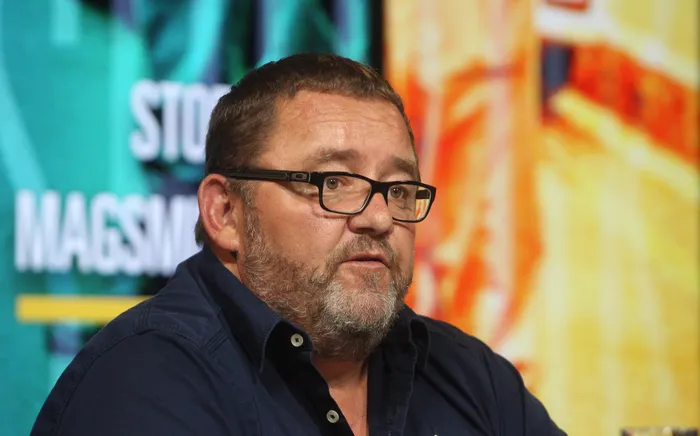
Kallie Kriel, CEO of AfriForum, has responded to President Cyril Ramaphosa’s national address on genocide allegations and property rights.
Image: Jacques Naude/Independent Media
AfriForum chief executive Kallie Kriel has accused President Cyril Ramaphosa of denialism after the president used a national address to dismiss claims of genocide against Afrikaners and land confiscation as “baseless misinformation”.
In his Sunday night address, which focused on South Africa’s hosting of the G20, Ramaphosa criticised the United States government for not attending the G20 Leaders’ Summit, saying Washington had cited “false allegations that South Africa is perpetrating genocide against Afrikaners and the confiscation of land from white people”.
Ramaphosa said such claims were the result of “a sustained campaign of disinformation by groups and individuals within our country, in the US and elsewhere”. He added that those spreading misinformation were “destroying South African jobs and weakening our country’s relations with one of our most important partners”.
The president insisted that South Africa was a constitutional democracy with an independent judiciary, and invited those who “spread misinformation” to present their concerns at the government’s newly launched National Dialogue.
He also repeated his position that “South African problems must be solved by South Africans themselves”.
Responding on X, Kriel said Ramaphosa was “still trying to downplay international concern regarding property rights in South Africa as the result of ‘disinformation’”, arguing instead that the concerns were valid.
“It is a fact that Ramaphosa signed an Act allowing for expropriation without compensation, as well as expropriation before a court has ruled on the matter,” Kriel said.
“By signing this act, Ramaphosa is destroying thousands of jobs in the country. His denialism regarding the negative effects of the expropriation act is, in fact, the only disinformation being spread.”
Kriel further criticised Ramaphosa for what he called the president’s “continued refusal to condemn the ‘kill the boer’ chant”, describing it as a call for violence against Afrikaners. He added that Ramaphosa had ignored AfriForum’s letters proposing South African solutions to these disputes.
Ramaphosa’s address also touched on domestic challenges, including crime, the high cost of living, and gender-based violence — which the government recently classified as a national disaster — but did not directly respond to AfriForum’s repeated calls for a stronger stance on farm attacks or anti-minority sentiments.
In its ruling, the apex court said the application bears no reasonable prospects for success.
The decision comes on the heels of a prolonged struggle initiated by AfriForum, which has been vocal in its push to eliminate the song from public discourse, citing its violent connotations and historical context tied to racial tensions in South Africa.
The ruling confirms an earlier ruling by the Equality Court that the song, often chanted by Economic Freedom Fighters (EFF) leader Julius Malema at political rallies, does not constitute hate speech but rather falls under the protection of free speech.
In August 2022, the lobby group lost in the Equality Court after Judge Edwin Molahlehi said the song does not constitute hate speech and deserves to be protected under the rubric of freedom of speech.
IOL News