

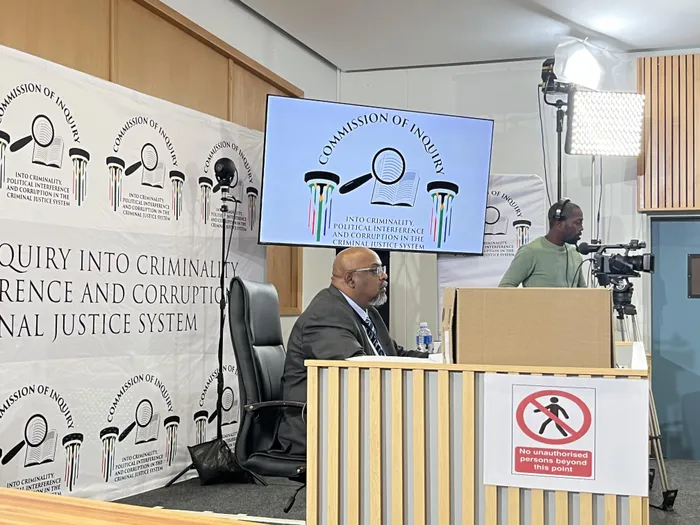
Ekurhuleni's Advocate Kemi Behari, head of Legal and Risk Services, has testified at the Madlanga Commission.
Image: Kamogelo Moichela / IOL News
Since 2018, South Africa has relied heavily on commissions of inquiry to address corruption, governance failures, and institutional collapse.
From the far-reaching hearings of the Judicial Commission of Inquiry into Allegations of State Capture to targeted probes into the South African Revenue Service and the Public Investment Corporation, the process has laid bare the depth of institutional compromise.
Nearly eight years into this accountability cycle, outcomes remain uneven. Arrests, sanctions, and civil claims have followed many findings, but the conversion of those findings into final convictions has been slow and frequently contested.
Political analyst Professor Bheki Mngomezulu stated that commissions are a waste of time and money because they lack prosecutorial powers and their findings are not binding. “No justice is served because the NPA, which has powers, cannot be trusted since it applies the law selectively,” he said.
The National Prosecuting Authority (NPA), which is meant to lead prosecutions of individuals implicated, did not respond to questions about case progress and the number of matters before the courts.
The State Capture inquiry remains the most consequential anti-corruption investigation in democratic South Africa, mapping networks of political influence, procurement manipulation, and institutional capture across state-owned enterprises.
Several high-profile figures have faced direct legal consequences. Former president Jacob Zuma was jailed for 15 months in 2021 for contempt of court after refusing to comply with a Constitutional Court order to testify, an unprecedented moment in the country’s constitutional history.
The July 2021 unrest, triggered by Zuma’s imprisonment, unfolded from July 8 to 19 across KwaZulu-Natal and Gauteng, marking the most severe violence since the end of apartheid. At least 354 people died, while economic losses were estimated at R50 billion, with 161 shopping malls, 11 warehouses, eight factories, and more than 1,400 ATMs damaged or destroyed.
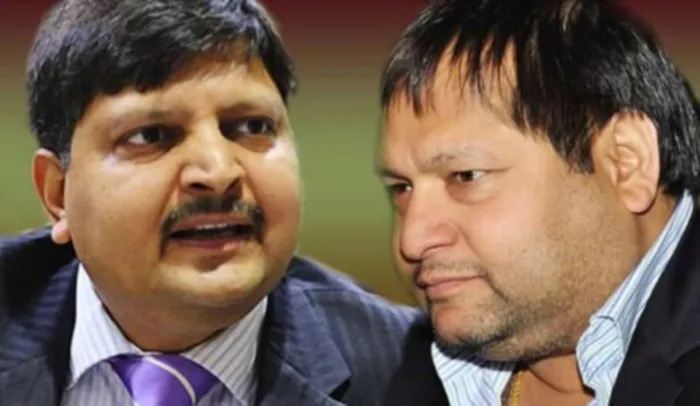
The Guptas are wanted in South Africa to face charges emanating from the Zondo Commission. The NPA is trying to extradite them from the UAE.
Image: File
Members of the Gupta family — Atul, Ajay, and Rajesh — remain central to extradition and prosecution efforts tied to alleged state capture dealings. The brothers fled South Africa in 2018 and remain wanted. After their arrest in Dubai in 2022, a UAE court rejected South Africa’s extradition request in April 2023 on technical grounds, prompting prosecutors to prepare a revised application.
Former minister Mosebenzi Zwane has been charged over the Estina dairy project, while former executives Brian Molefe, Anoj Singh, and Matshela Koko face corruption cases linked to state-owned enterprise procurement. Despite the scale of the allegations, many matters remain stalled due to postponements and procedural challenges.
Estina dairy case
The case against Zwane over the R280 million Estina dairy project is heading towards a retrial. The Free State High Court struck it off the roll in August 2024 due to “unreasonable delays”, while the Supreme Court of Appeal ordered a retrial in June 2025 in a related matter. Zwane faces charges including fraud, corruption, and money laundering.
Transnet corruption case
Former Transnet executives Molefe and Siyabonga Gama, alongside Singh, former public enterprises minister Malusi Gigaba, and procurement chief Thamsanqa Jiyane, face 18 charges linked to a R54 billion locomotive tender. The matter in the South Gauteng High Court was postponed on February 19, 2026, to May 8, 2026, for further investigations and the disclosure of documents.
Kusile/Eskom case
The R2.2 billion corruption case against Koko was struck off the roll in November 2023 due to delays. He is pursuing legal action to review findings against him, with hearings scheduled for April 2026.
Mngomezulu said some cases appeared politically motivated and risked damaging reputations without resolution.
“They were never meant to serve justice; they were vindictive,” he said, arguing delays undermine fairness.
Legal expert Dr Shadi Maganoe from the Wits School of Law said the outcomes have been mixed.
“Commissions have been effective fact-finding mechanisms; they have been less immediately effective as accountability accelerators,” she said, noting most cases remain in pre-trial phases.
In corporate governance, the Pretoria High Court’s decision declaring Dudu Myeni a delinquent director for life stands as one of the most tangible sanctions. Myeni died on June 14, 2024, leading to the closure or withdrawal of several proceedings against her. She had previously been fined R120,000 in 2022 after pleading guilty to defeating the ends of justice for revealing a protected witness’s identity during the inquiry.
Civil recovery has been another key pillar. Through the Special Investigating Unit (SIU) and the Asset Forfeiture Unit (AFU), the state has pursued claims worth billions, combining criminal cases with financial clawbacks.
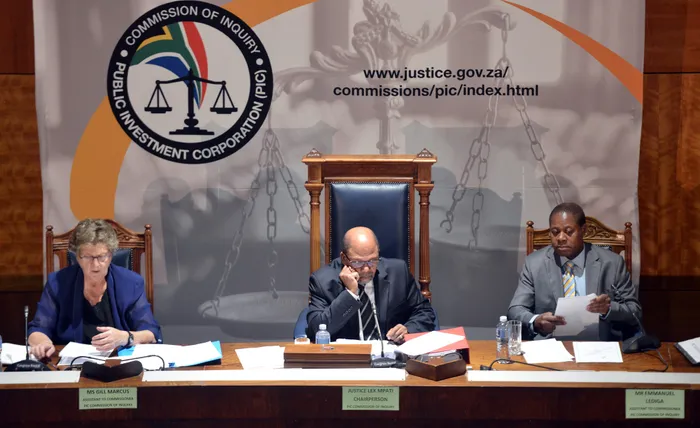
PIC Commission of Inquiry Chairperson Justice Lex Mpati with his assistants Gill Marcus and Emmanuel Lediga during the PIC Commission of Inquiry at Sammy Marks Square.
Image: Oupa Mokoena / Independent Newspapers
The Nugent Commission exposed governance failures at SARS, leading to the removal of former commissioner Tom Moyane and a broader institutional rebuild. His dismissal was upheld by the Constitutional Court in 2019, though criminal prosecutions have been limited.
Similarly, the PIC Commission highlighted governance failures at Africa’s largest asset manager. Former CEO Dan Matjila continues to challenge findings in court while facing regulatory scrutiny, but no criminal conviction has followed.
Former acting SA Express CEO Tebogo van Wyk was arrested over procurement fraud linked to a R400 million North West transport tender. He faces 34 charges and remains on R500,000 bail.
Gupta associate Ronica Ragavan is also facing a retrial in the R24.9 million Nulane fraud case after the Supreme Court of Appeal overturned a previous acquittal. Her separate case relating to R107.5 million in mine rehabilitation funds is set to resume on May 25, 2026.
Former executives France Hlakudi and Abram Masango are on trial over a R1.4 billion Kusile contract, alongside businessman Michael Lomas, extradited from the UK in 2024. Proceedings have been postponed to September 2026.
More recently, the Madlanga Commission has begun probing alleged links between organised crime and law enforcement. Among those implicated are suspended metro police official Julius Mkhwanazi and businessman Vusimusi Matlala, who faces multiple criminal charges, including attempted murder.
Maganoe said large corruption prosecutions are inherently complex. Commission testimony is not automatically admissible, meaning investigators must rebuild cases to meet the criminal standard of proof beyond a reasonable doubt.
She described commissions as diagnostic tools rather than prosecutorial substitutes, with success measured not only in convictions but also in institutional reform.
SIU spokesperson Kaizer Kganyago said the unit investigates matters under presidential proclamations and refers evidence of criminal conduct to prosecutors, but does not coordinate commissions itself.
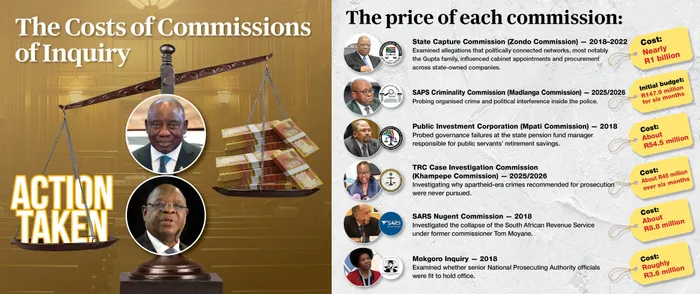
The commissions of inquiry in South Africa since 2018 and the costs associated with them.
Image: IOL Graphics
Political analyst Professor Kedibone Phago from the North-West University said commissions help unpack complex corruption networks but delays in prosecutions raise concerns. “In a constitutional democracy such as ours, people have a right to justice,” he said, stressing the need to strengthen both the police and the prosecuting authority.
Despite extensive evidence produced by inquiries, relatively few cases have reached final judgment. Supporters argue commissions restored transparency and exposed corruption networks, while critics say the slow pace of prosecutions has widened the gap between revelations and consequences.
In a 2025 progress update, President Cyril Ramaphosa said nearly half of the state capture response actions had been completed or substantially implemented, with asset recoveries approaching R11 billion.
Minister in the Presidency, Khumbudzo Ntshaveni, on Thursday, said the Cabinet approved the progress on implementing the actions from the Recommendations of the Zondo Commission for submission to Parliament.
She said by November 2025, assets recovered in relation to the allegations of the state of capture, corruption and fraud stood at R16.432 billion.
“Progress on reforms includes the Public Service Amendment Bill and Public Management Amendment Bill, which are with the president for assent. An overseeing judge has been appointed for the Directorate Against Corruption (IDAC). To date, 57% (34 of 60) of the actions have been completed, 18% (11 of 60) of the actions are on track, 23% (14 of 60) of the actions are delayed, but work is proceeding, and only 2% (1 of 60) action requires attention,” she said.
KEY NUMBERS AT A GLANCE
Commissions since 2018:
(Figures compiled from NPA updates, commission reports, and parliamentary briefings.)
2018 — State Capture Commission established
Mandated to investigate systemic corruption across government and state-owned entities.
2018 — SARS Nugent Commission
Examined governance failures at the revenue service and recommended leadership changes.
2019 — PIC Commission of Inquiry
Probed investment decisions at the Public Investment Corporation.
2021 — Arms Procurement / Defence-related probes revived
Focused on legacy corruption allegations and procurement oversight.
2022 — Completion of State Capture final report
Findings handed to the Presidency with recommendations for prosecutions and reforms.
2025 — TRC investigative process revived
Focus on unresolved apartheid-era crimes and prosecutorial gaps.
2025 — Madlanga Commission established
Examining accountability and systemic failures within justice and security institutions.
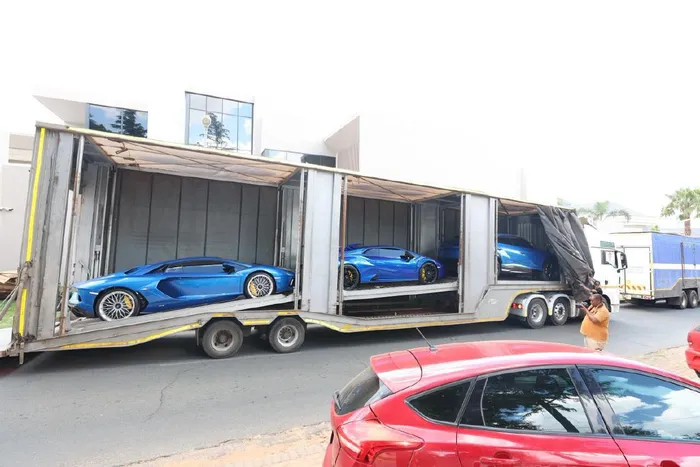
Some of the luxury vehicles that were seized from the Sandton home of alleged R2 billion Tembisa Hospital looting kingpin Hangwani Maumela by the Special Investigating Unit in October last year.
Image: SIU/X
OUTCOMES BY COMMISSION
| Commission | Core Mandate | Arrests | Convictions | Key Impact |
| Truth and Reconciliation Commission | Apartheid crimes & reconciliation | — | Amnesty-based process | Historical record; reparations framework |
| State Capture (Zondo) | Corruption in SOEs & state | 30+ | Ongoing | Prosecution pipeline reforms |
| SARS Nugent | Revenue service governance | — | — | Leadership overhaul |
| PIC Inquiry | Investment irregularities | Few | Pending | Civil claims & reforms |
| Madlanga Commission | Justice & security accountability | Emerging | Pending | Institutional reforms expected |
This is part 2 of our series looking into Commissions of Inquiry and what has resulted from them. Catch part 3 next week.
If you have missed part 1, here is the link: South Africa's Commissions of Inquiry: Expensive theatre or real justice?