

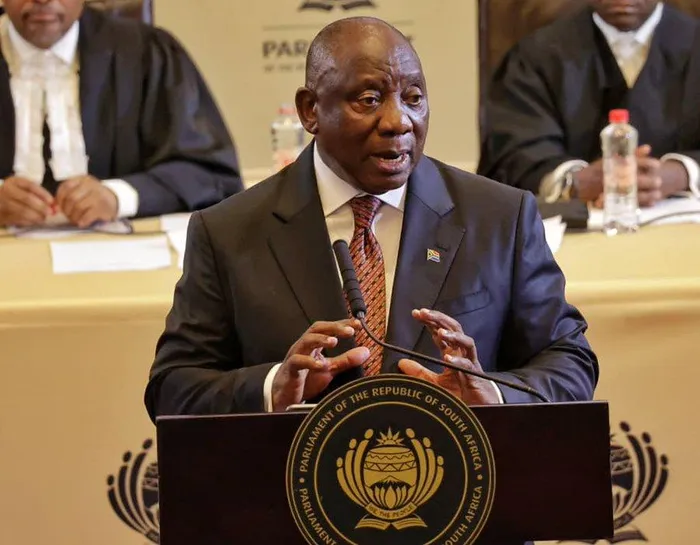
President Cyril Ramaphosa.
Image: GCIS
Analysts and the uMkhonto weSizwe Party (“MK Party”) have expressed deep concerns over attorney and certified fraud examiner Sarah-Jane Trent's recent testimony delivered before Parliament’s Ad Hoc Committee, revealing alarming connections between private actors and high-ranking officials linked to President Cyril Ramaphosa.
The committee, probing allegations made by SAPS KwaZulu-Natal provincial commissioner Lieutenant-General Nhlanhla Mkhwanazi, heard testimony from Trent in which she exposed troubling questions about the role of private actors who have embedded themselves in South Africa’s criminal justice processes.
This was after Trent's former boss, fraud examiner Paul O'Sullivan concluded his evidence following he walkout recently.
Trent revealed unsettling connections involving high-ranking government officials and key institutions at the Ad Hoc Committee. Trent’s evidence shed light on O'Sullivan's relationship with President Cyril Ramaphosa’s advisor Bejani Chauke.
National Spokesperson for MKP, Nhlamulo Ndhlela, said that they cannot ignore the disturbing pattern that has emerged when the activities of Trent and O’Sullivan are examined.
The party highlighted how, during cross-examination in the trial involving Duduzile Sambudla-Zuma, Trent admitted that when she laid criminal charges, she was acting on behalf of the organisation Forensics for Justice.
“This admission raises serious concerns about the motives, methods and accountability of private individuals who appear to exercise disproportionate influence in criminal matters involving political figures and public representatives.
“This past week, former Member of Parliament Vincent Smith was sentenced to seven years’ direct imprisonment in a case that originated from charges laid by Ms Trent.
“While the courts have pronounced themselves on that matter, it remains legitimate to interrogate the broader environment in which certain individuals repeatedly position themselves as aggressive pursuers of some public figures while seemingly acting as defenders of others,” Ndhlela said.
“The contrast is glaring because when Andile Ramaphosa reportedly received approximately R2 million over twelve months through his company Blue Crane Capital from Bosasa in relation to an allegedly corrupt contract, and later a further R500,000 linked to the CR17 campaign of President Cyril Ramaphosa, the same actors who present themselves as relentless corruption fighters, adopted a very different posture.
“Instead of laying criminal complaints with the same zeal demonstrated in other cases, Ms Trent, Mr O’Sullivan and their associates reportedly worked vigorously to advance arguments defending Mr Ramaphosa’s innocence,” Ndhlela said.
“While the Constitutional Court ultimately found that President Ramaphosa did not deliberately mislead Parliament regarding the CR17 payment, the MK Party notes that the conduct of private actors in the lead-up to such matters raises legitimate questions.
“The selective activism displayed in these cases creates a dangerous perception that certain individuals are pursued with extraordinary aggression while others are shielded with equal determination. For the MK Party, this pattern cannot be ignored,” Ndhlela said.
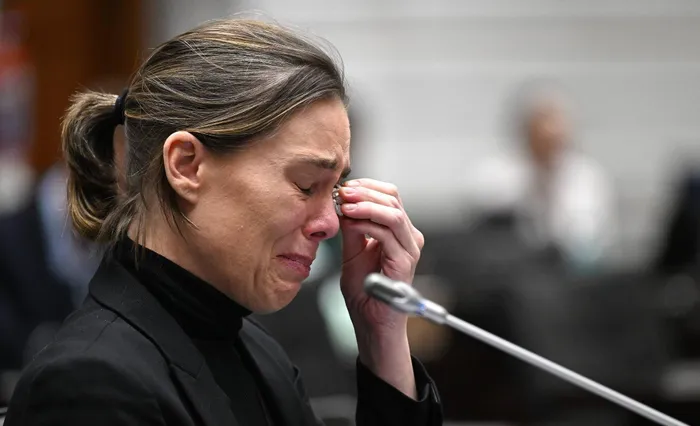
Paul O’Sullivan’s former assistant, Sarah-Jane Trent, appeared before Parliament’s Ad Hoc Committee, where she broke down multiple times during her testimony.
Image: Phando Jikelo/ Parliament RSA
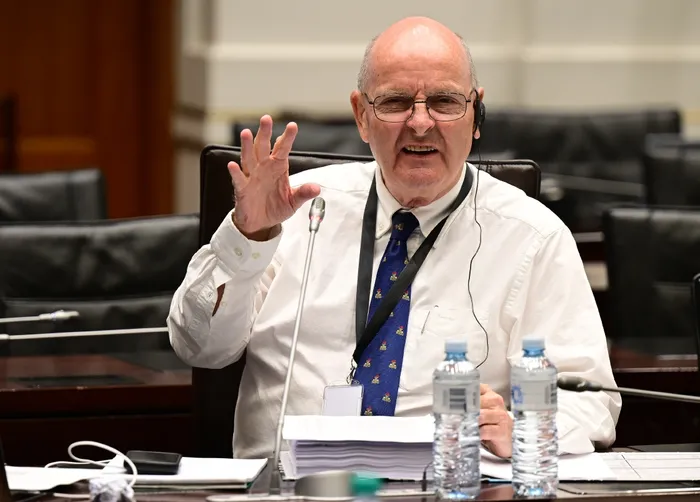
Forensic investigator Paul O’Sullivan on Thursday apologised and withdrew controversial remarks, saying the comments had been taken out of context.
Image: Picture: Henk Kruger / Independent Newspapers
He added that the party has consistently warned that South Africa faces not only a crisis of prosecution but also a crisis of perception.
“The MK Party is seeking legal counsel regarding the legality of Ms Sarah-Jane Trent and Paul O’Sullivan’s actions, as well as avenues to pursue criminal charges. We stand firmly with all those who have experienced what increasingly appears to be politically motivated persecution masquerading as justice,” Ndhlela said.
Political analyst Professor Sipho Seepe added that there is little doubt that the relationship between (Cyril) Ramaphosa and O'Sullivan leaves much to be desired.
“What has emerged is that O'Sullivan targeted certain individuals in law enforcement under the pretext of fighting corruption. In doing so, he would engage in what looks like extortionist techniques that border on blackmail.
“At the same time, he seemed willing to ensure that the favourites are exonerated. O'Sullivan's word seems to carry weight,” Seepe said.
“After stating that he found nothing amiss with Andile Ramaphosa when it relates to Bosasa, that was the end of the story. There was no appetite by law enforcement agencies to investigate further.
“O'Sullivan's questionable methods have not prevented him from being a trust go-to person by those close to Ramaphosa,” Seepe said.
Professor André Duvenhage echoed Seepe’s sentiments, saying that various commissions have implicated top leaders within the ANC, from presidents to secretaries-general.
“This is evidence that is available in public, but is not acted on by the public prosecutor. The fact that they are not found guilty has nothing to do with their innocence, but it has a lot to say about the underperformance coming from the criminal justice system at large against individuals of political status, profile and influence.”
In response to the testimony from Trent and the subsequent allegations, spokesperson for the president, Vincent Magwenya, said: “The president has received detailed questions from the Ad Hoc Committee. Issues arising from the Ad Hoc Committee will be responded to directly with the Ad Hoc Committee.”