

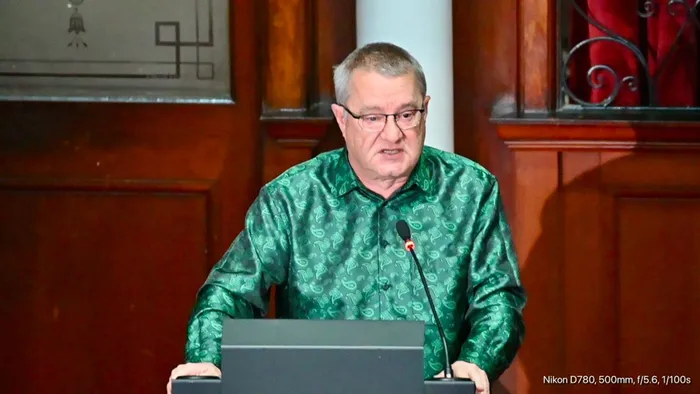
KZN MEC for Finance Francois Rodgers outlines KwaZulu-Natal’s economic outlook, projecting gradual growth despite ongoing challenges like unemployment and Foot-and-Mouth Disease.
Image: Independent Media Archives
KwaZulu-Natal’s economy is expected to grow modestly over the next two years, although unemployment and a livestock disease outbreak remain serious challenges for the province.
This is according to KZN Finance MEC Francois Rodgers, who outlined the province’s economic outlook while tabling the 2026/27 provincial budget on Tuesday.
Rodgers said the provincial economy recorded real regional GDP growth of 1.4% in 2025, supported by improvements in electricity supply and easing logistical bottlenecks.
“Provincial growth is expected to accelerate further to 1.5% in 2026 and to 1.6% in 2027,” Rodgers told the legislature.
Despite the projected improvement, Rodgers warned that unemployment remains a major concern for the province.
“Despite these favourable growth prospects over the medium-term, the scourge of unemployment remains a significant challenge for our province and its people,” he said.
Rodgers said the global economy had stabilised after a turbulent period marked by economic shocks and geopolitical tensions.
According to projections by the International Monetary Fund, global economic growth is expected to remain steady at around 3.3% in 2026, before slowing slightly to 3.2% in 2027.
Rodgers said South Africa continues to face structural challenges such as high unemployment and infrastructure bottlenecks that are constraining growth.
However, he noted that improvements in electricity supply and economic reforms aimed at addressing logistical constraints were helping to support economic recovery.
South Africa’s real gross domestic product is estimated to have improved to 1.3% in 2025, supported by stronger agricultural production, lower inflation, and improving business confidence.
Rodgers also raised concern about the impact of the outbreak of Foot-and-Mouth Disease (FMD), which he described as an emerging crisis affecting the province’s agricultural sector.
“The FMD crisis is causing severe economic loss to the province, with this province identified as the epicentre of this national disaster,” Rodgers said.
He said the outbreak had already led to export disruptions, rising operational costs for farmers, and higher food prices.
The disease also threatens livelihoods in the agricultural sector, which is an important contributor to employment and economic activity in the province.
Rodgers said the government is currently rolling out a large-scale vaccination campaign aimed at creating a buffer zone and preventing further spread of the disease.
Rodgers said that despite these risks, KwaZulu-Natal still has opportunities for economic growth through increased private-sector investment and infrastructure spending.
If these opportunities are effectively leveraged, sectors such as tourism, agriculture, and manufacturing could contribute to the province’s gradual economic recovery, he said.
IOL Politics