

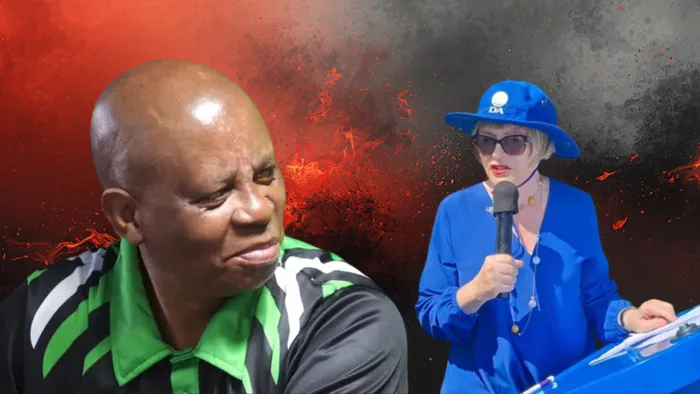
Action SA leader and Johannesburg mayoral candidate Herman Mashaba says the DA's Helen Zille will fail in her bid to govern the city of Joburg due to her party's lack of focus on the poor.
Image: IOL Graphics
"Ask the people of Khayelitsha why they will never vote for Helen Zille and you will understand why she will never be Joburg mayor. She is not pro-poor — it’s that simple."
That's the blunt assessment from ActionSA leader and Johannesburg mayoral candidate Herman Mashaba.
In an exclusive interview with IOL at his Sandton home this week, Mashaba vowed to win the mayoral race, insisting Zille would never win the support of Johannesburg’s poor communities.
“If she was so good, why have the people of Khayelitsha never supported her or the DA in the Western Cape, which they govern? It’s because they are not pro-poor,” Mashaba said.
Drawing on his experience as a former DA mayor, Mashaba said he often clashed with the party over his focus on poorer communities.
“I was taken to task for focusing on poor communities. I was asked why I was concentrating on areas that don’t contribute much in rates instead of focusing on affluent suburbs,” he said.
The gloves are off in the mayoral contest between Mashaba and Zille, the DA’s candidate. And its not just a political race. It's personal. It's about settling scores and the battle is expected to become increasingly fierce as the country prepares for local government elections expected later this year, or by February 2027 at the latest.
Mashaba also made the startling claim that there are “two ANCs”.
“There is the ANC captured by Cyril Ramaphosa which supports the DA and Zille and another ANC which refuses to work with the DA. I know this because of the secret negotiations that eventually removed me as mayor of Johannesburg which I was told about. And I can tell you this: the ANC that is not captured by Ramaphosa will never agree to Helen Zille becoming mayor of Johannesburg," he said.
Mashaba also laid down three conditions for any future coalition government involving ActionSA.
“First, any party that wants to govern with us must agree to full scrutiny and corruption audits — no cover-ups. Secondly, there must be service delivery for all communities. We will not allow selective services where affluent suburbs benefit while poor communities are ignored. Thirdly, illegal foreigners must be removed. They have captured parts of the inner city and we want them out,” he said.
As the race for Johannesburg intensifies, both Mashaba and Zille are campaigning on issues dominating residents’ concerns — water cuts, collapsing service delivery, corruption, and the urgent need to fix the city.
Johannesburg has the country’s largest municipal budget at R89.4 billion annually, compared with Cape Town’s R84.1 billion and eThekwini’s R70 billion.
However, analysts say the difference lies in spending priorities. While Cape Town invests heavily in infrastructure such as roads, pipes, electricity and transport, Johannesburg spends more on operational costs, leaving less funding available to rebuild crumbling infrastructure.
Experts estimate the city needs at least R20 billion more each year to properly address its infrastructure backlog.
Corruption has also become a central issue in the campaign, with reports suggesting about R22 billion is lost annually to wasteful and unauthorised expenditure.
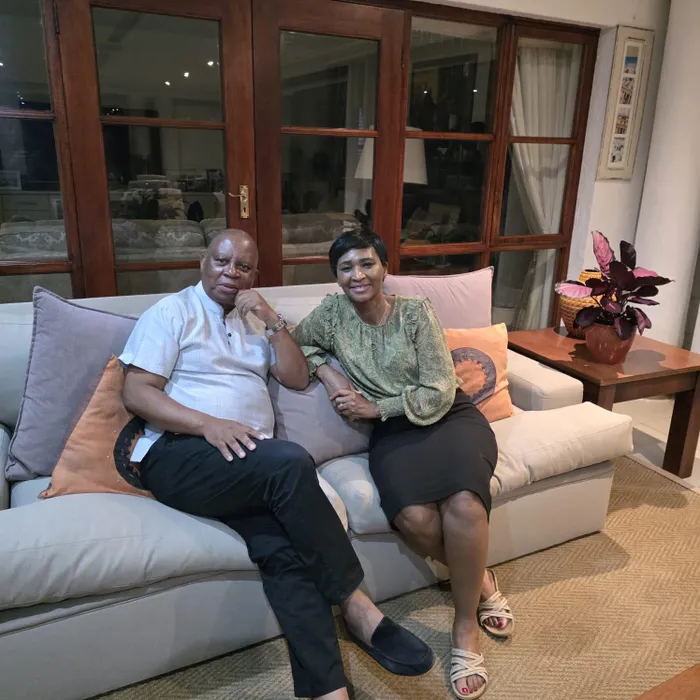
Former Johannesburg mayor and 2026 mayoral candidate Herman Mashaba with his wife, Connie, in their Sandton, Johannesburg home.
Image: Zohra Teke
Mashaba remains confident his record as mayor will work in his favour. During his tenure, he established a special anti-corruption unit that investigated more than 5,000 corruption cases involving billions of rand.
“We facilitated around R17 billion in investment, helped create job opportunities and focused on repairing infrastructure,” he said.
“We also reduced water leaks from about 45,000 to 37,000 per year and launched an inner-city programme to reclaim hijacked buildings from illegal occupants, with plans to turn them into student housing and investment opportunities.”
Despite his personal wealth as the founder of the haircare brand Black Like Me, the 66-year-old entrepreneur says he is driven by unfinished business.
“Look at my home — I have everything I need, every comfort, while people just down the road don’t even have running water,” he said.
“As a black person, how can that not weigh on my conscience? I still have unfinished business to fix this city.”
IOL Politics