

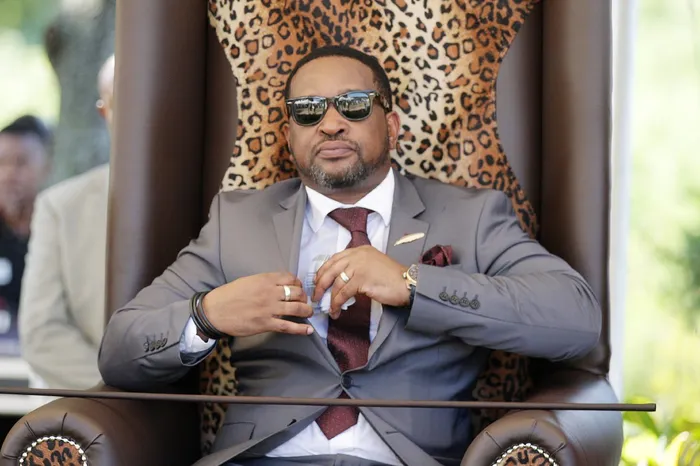
King Misuzulu kaZwelithini has dispatched a high-level royal delegation to engage political parties in Parliament on proposed legislative reforms
Image: Independent Newspapers Archives
King Misuzulu kaZwelithini has initiated a renewed push to reshape the governance of the Ingonyama Trust, dispatching a high-level royal delegation to engage political parties in Parliament on proposed legislative reforms.
The Zulu monarch confirmed in a statement on Tuesday that an Ingonyama Trust Royal Panel will meet with 13 of the 18 political parties represented in Parliament over two days, from April 22 to 23, 2026.
“This interaction will be aimed at conveying His Majesty's proposals on the Ingonyama Trust, which will ultimately require Parliament to enact amendments to the Ingonyama Trust Act of 1994 as amended in 1997.”
“The delegation will be led by the Traditional Prime Minister of the Zulu Nation, Reverend Thulasizwe Buthelezi, and includes Amakhosi, senior members of the Royal family, academics and legal experts,” spokesperson Prince Thulani Zulu said.
It is expected to engage major parties including the ANC, DA, EFF, IFP, and newer entrants such as Rise Mzansi and Build One South Africa (BOSA), among others.
Zulu said the move comes as the King wants to have adequate control over the running of the Trust. He said the current system is proving to be difficult.
“It’s a way for the Ingonyama Trust to come back to KwaZulu-Natal. The King can’t manage the land at the national level or in Parliament. We wish the delegation well on this,” he said.
At the centre of the initiative is a bid to “restore the original objectives” of the Ingonyama Trust, while strengthening accountability and governance within the Ingonyama Trust Board.
Established in 1994 on the eve of South Africa’s democratic transition, the trust holds approximately 2.8 million hectares of land in KwaZulu-Natal on behalf of the Zulu nation, with the king as its sole trustee. However, its operations have long been a source of political and legal contention.
Media reports over the years have highlighted persistent criticism of the board, particularly around land tenure practices, governance transparency, and allegations that some residents were pressured into converting informal land rights into lease agreements.
These issues have triggered court challenges and scrutiny from Parliament, placing the trust at the centre of broader debates about land reform, traditional leadership, and rural development.
The king’s intervention signals a more assertive role by the monarchy in shaping the future of the trust, at a time when land remains one of South Africa’s most politically sensitive issues. Any proposed amendments to the legislation will require parliamentary approval, making the upcoming consultations a critical step in building consensus across party lines.
The inclusion of a broad spectrum of political parties suggests an attempt to secure cross-party legitimacy, particularly as debates over land ownership, expropriation, and customary law continue to evolve.
The outcome of these engagements could have far-reaching implications, not only for the governance of communal land in KwaZulu-Natal but also for the broader relationship between traditional institutions and the democratic state.
Political parties on Tuesday indicated that they would wait for the consultations with the king's delegation and what would be proposed.