

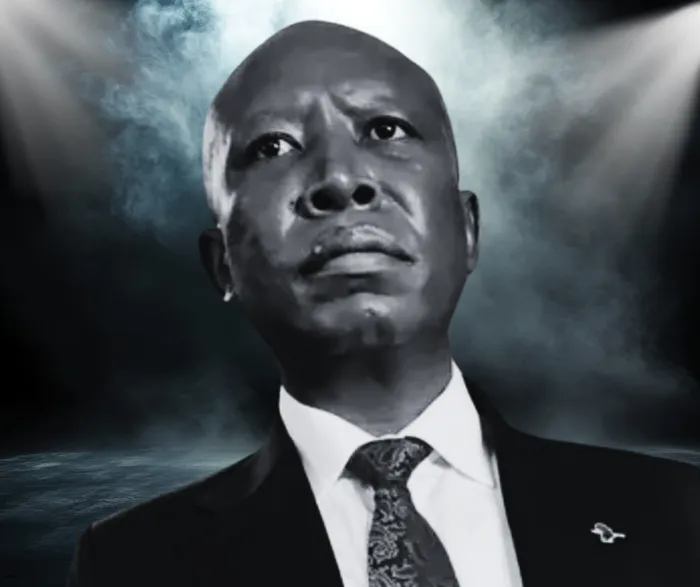
EFF leader Julius Malema’s five-year prison sentence for a 2018 incident at an EFF rally in Mdantsane has been described by legal experts as excessive, with some warning that it could be increased to as much as 10 years if a higher court finds the magistrate was “too lenient.”
Image: IOL Graphics
EFF leader Julius Malema’s five-year prison sentence for a 2018 incident at an EFF rally in Mdantsane has been described by legal experts as excessive, with some warning that it could be increased to as much as 10 years if a higher court finds the magistrate was “too lenient.”
Some experts say that, if a higher court reaches that conclusion, it may impose a harsher sentence on appeal.
Malema was sentenced on Thursday by Magistrate Twanet Olivier in the East London Magistrate’s Court in KuGompo City.
He was, however, released on warning after filing an immediate appeal.
The State had argued for a harsher penalty. Prosecutor Advocate Joel Cesar asked the court to impose a sentence of up to 15 years’ imprisonment, or alternatively 10 years with three years suspended, along with fines on the remaining counts.
Malema was convicted in October 2025 on five counts under the Firearms Control Act.
The charges relate to a 2018 EFF rally at Sisa Dukashe Stadium in Mdantsane, where he was seen on video firing what appeared to be a semi-automatic rifle into the air before a crowd of about 20,000 supporters.
The firearm belonged to a security company linked to his former bodyguard, Adriaan Snyman, who was acquitted due to a lack of evidence.
The court heard that Snyman handed the weapon to Malema during the event.
Malema has consistently maintained that the firearm was a prop or blank gun and not capable of firing live ammunition.
Top Durban advocate Paul Jorgensen said that Malema’s decision to appeal his sentence was a “no-brainer.” There was a strong possibility the appeal court could significantly alter the outcome.
Jorgenson said that on appeal, Malema’s five-year prison sentence could potentially be replaced with a fine or a suspended sentence. He also questioned whether the trial court fully considered alternative sentencing options, saying: “I mean, did the magistrate even consider correctional supervision?”
In his view, the sentence could ultimately be set aside by a higher court. However, he cautioned that the State may also pursue a cross-appeal seeking a harsher punishment.
“That is a strong possibility,” Jorgenson said, referring to the chance of a reduced or non-custodial sentence on appeal, while noting that the legal process could still work in either direction depending on arguments presented by both sides.
Speaking to IOL News, legal expert Malesela Komape of Komape Incorporated Attorneys said the sentence was “far-fetched” and likely to be overturned or reduced on appeal.
“The defence has shown that previous authorities support a non-custodial sentence in cases like this,” he said.
“A five-year direct imprisonment is excessive, and there is a strong possibility that Mr Malema will succeed on appeal.”
Komape said the High Court would examine whether the magistrate erred in both conviction and sentencing.
He pointed to inconsistencies in the treatment of the co-accused, saying that Snyman was initially found to have a case to answer under Section 174 but was later acquitted.
Komape also raised questions about the nature of the firearm, arguing that there was no conclusive evidence disproving the defence’s claim that it was a blank weapon.
“The alleged shot was fired in front of thousands of people, yet none testified that they feared for their lives,” he said.
“These are factors the appeal court may consider in reducing the sentence or even overturning the conviction.”
Komape added that while it is legally possible for a sentence to be increased on appeal, such an outcome is unlikely in this case.
“The court could impose a harsher sentence if it finds the magistrate was too lenient, but that would be an extreme outcome given the circumstances,” he said.
Another legal expert, Nthabiseng Dubazana of Dubazana Attorneys, also criticised the sentence, arguing that the magistrate failed to properly consider relevant case law and defence arguments.
“In my view, the sentencing was incorrect,” she said.
“The magistrate appeared to rely more heavily on the State’s arguments while overlooking comparable cases presented by the defence.”
Dubazana also questioned the acquittal of the co-accused, who was the licensed owner of the firearm.
She argued that, under the Firearms Control Act, a licensed owner may supervise another person using the firearm, a factor she believes was not adequately considered.
Dubazana further said that none of the 19 witnesses who testified indicated that they felt endangered, and criticised the court’s reliance on circumstantial evidence.
Malema’s legal team is expected to petition the High Court to consider the sentence.
While the magistrate granted leave to appeal the sentence, she denied leave to appeal the conviction.
Dubazana said the appeal process would involve a review of the trial record to determine whether the magistrate misapplied the law or failed to properly assess the evidence.
“The court will reassess the elements of the charges and the evidence presented. If it finds errors, both the conviction and sentence could be set aside,” she said.
She added that the appeal court could confirm the sentence, reduce it, replace it with a suspended sentence or fine, or, in rare cases, increase it.
“There is always a risk when appealing,” Dubazana said. “An accused person could end up in a worse position, but competent legal advice usually mitigates that risk.”
Speaking outside the court after the sentencing, Malema has claimed the prosecution is politically motivated.
He alleged a broader campaign to undermine his leadership and the EFF ahead of the 2026 local government elections.
The red berets leader accused Magistrate Olivier of bias and external influence, claiming she failed to properly consider legal arguments.
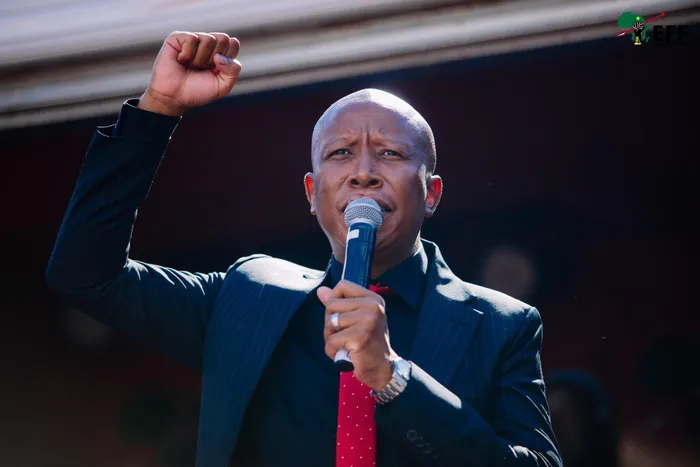
EFF leader Julius Malema has described his five-year direct prison sentence for unlawful possession of a firearm as a politically motivated attempt to silence him and his party.
Image: EFF
Meanwhile, the National Prosecuting Authority (NPA) said it has noted with concern the circulation of content on a social media platform X, purporting to represent the EFF, in which statements contain serious threats directed at a prosecutor involved in a matter before the court.
NPA national spokesperson Kaizer Kganyago said the prosecuting authority “strongly condemns any form of intimidation or threats against its prosecutors.”
“These officials serve the public by representing the State and are constitutionally mandated to execute their duties without fear, favour, or prejudice.”
“Threats against prosecutors whether perceived as credible or not must be treated with the utmost seriousness and reported to the relevant law enforcement authorities for investigation,” he said.
Kganyago said such conduct undermines the rule of law and poses a real risk to the safety and lives of those entrusted with upholding justice.
“This concern is heightened in the Eastern Cape, where three prosecutors have tragically been killed over the past two years, underscoring the very real dangers faced by members of the prosecuting authority.”
He said the NPA remains resolute in its commitment to safeguard its prosecutors and ensure that they are able to perform their functions independently, safely, and effectively.
“Prosecutors are officers of court and a threat to a prosecutor will attract consequences and anyone must desist from whatever form of threat against them,” he added.
IOL Politics