

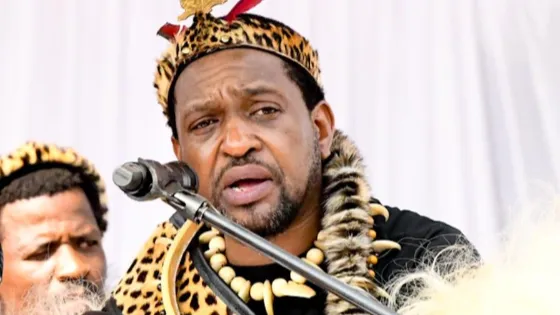
AmaZulu King Misuzulu kaZwelithini has renewed calls for the Ingonyama Trust Board's dissolution following the resignation of another member, Nomusa Zulu
Image: Siphamandla Mbhele / KZN DSAC
AmaZulu King Misuzulu kaZwelithini has called for another dissolution of the Ingonyama Trust Board following the resignation of the fifth board member, Nomusa Zulu, on Wednesday.
The nine-member board now has three active members, who are Deputy Chairperson Advocate Linda Zama, Inkosi Sibonelo Zulu, and Inkosi Phallang Molefe.
Misuzulu, who is the chairperson and sole trustee, is regarded as an inactive member since he does not attend board meetings because he does not recognise them.
In her letter of resignation addressed to the Land Reform Minister Mzwanele Nyhontso and to Misuzulu, Zulu cited “serious concerns regarding several irregularities and governance failures” within the board structure, stating that she could no longer oversee or associate herself with them.
Zulu stated that she was resigning with immediate effect.
In a statement issued by Misuzulu’s Private Office Secretary Arnold Nododile, he said Misuzulu, as the sole trustee of the Ingonyama Trust, had noted the resignation of Zulu, which rendered the board more dysfunctional.
He stated that her resignation followed months of escalating governance instability, legal disputes, internal divisions, allegations of irregular conduct, and public confrontation between the board and the office of the king, who served as the sole trustee and chairperson of the Trust in terms of the KwaZulu-Natal Ingonyama Trust Act.
The Administrative Regulations issued under the KwaZulu-Natal Ingonyama Trust Act required a minimum quorum of five members for the board to lawfully sit and make decisions; however, the board had only three active members.
“In terms of governance principles under the Public Finance Management Act (PFMA), a public entity’s accounting authority cannot validly transact or adopt binding resolutions where quorum requirements were not met.
A board unable to constitute a quorum becomes institutionally paralysed and incapable of lawfully convening board meetings, passing binding resolutions, approving expenditure, exercising oversight and performing fiduciary duties required by law.
“The board is therefore effectively rendered inoperative and legally dysfunctional. With only four remaining members, inclusive of the chairperson, the board no longer possesses the legislative quorum required to lawfully conduct meetings or transact governance business.
“The legal and governance position now strongly supports the necessity for the board’s formal dissolution and replacement through lawful reconstitution processes,” read the statement.
Attempts to receive Nyhontso and Zulu's responses were unsuccessful.
The board’s Acting Chief Executive Officer, Siyadumisa Vilakazi, said the board would not confirm Zulu’s resignation; however, it was still functioning.
In March, Nyhontso dissolved the board, citing dysfunctionality after lacking a quorum following the resignation of four members, who were Inkosi Mabhudu Tembe, Lisa Del Grande, Dr Thandi Dlamini, and Dandy Matamela.
However, the board successfully challenged the minister in court, which set aside the decision.
Last year, the board was also fired by Misuzulu, but the monarch's decision was defied. Nyhontso also appointed a commission of inquiry, in 2025, led by Advocate Marumo Moerane to investigate the alleged financial irregularities; however, it was not clear what the investigation yielded.