

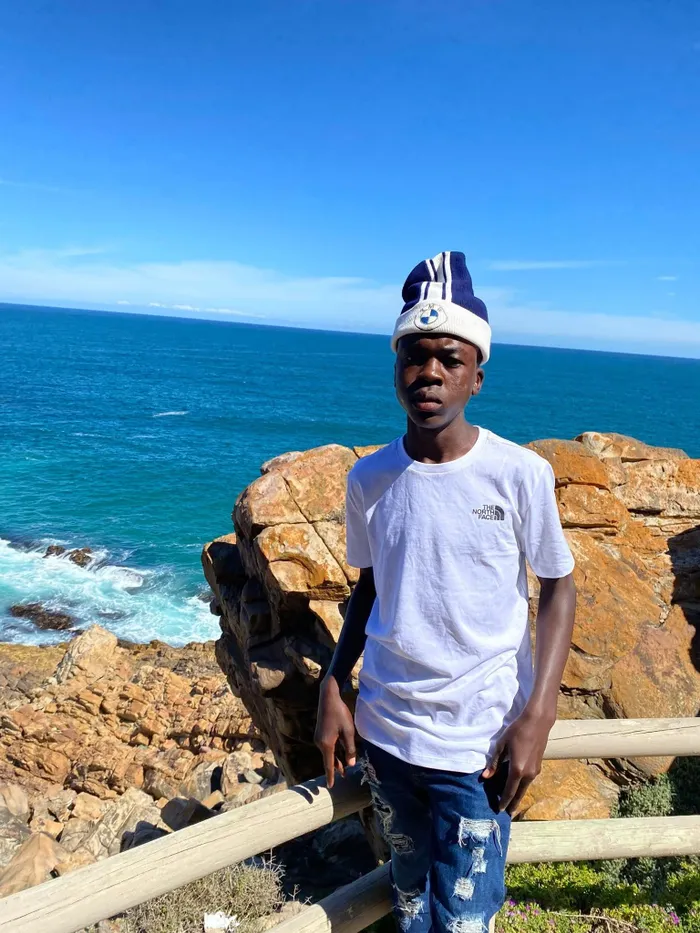
The fatal stabbing of 19-year-old Nhlamulo Sambo in the Western Cape has ignited a fierce political and social debate.
Image: FACEBOOK
Economic Freedom Fighters (EFF) MP Naledi Chirwa has launched a scathing attack on March and March leader Jacinta Ngobese-Zuma, alleging that the movement's rhetoric has contributed to a climate of hostility that preceded the fatal stabbing of 19-year-old Nhlamulo Sambo in the Western Cape.
Sambo was killed on May 31 in an incident that has ignited fierce political debate, renewed concerns over xenophobia and language-based discrimination, and prompted calls for accountability from political leaders and civil society organisations.
According to police, the teenager was fatally wounded following an altercation with a man. The suspect fled the scene and remains at large.
"He was declared dead by paramedics on scene. The suspect fled the scene. He is yet to be arrested," said police spokesperson Warrant Officer Christopher Spies.
As outrage over the killing spread, Chirwa accused Ngobese-Zuma and her movement of helping to create conditions that normalise hostility toward people perceived to be foreigners or outsiders. She argued that repeated warnings about the consequences of inflammatory rhetoric had been ignored.
"What did you think was going to happen when a group of people chant, 'Fusek Shangane!'? What did you think was going to happen when a Venda policeman in KZN was being called a kwrkwr, humiliated and told to go back home?" she asked.
Chirwa was referring to an incident in January involving KwaZulu-Natal SAPS spokesperson Robert Netshiunda, who was subjected to the slur after speaking English to a woman.
The incident drew widespread condemnation at the time, with police leadership warning that discrimination based on language, culture, or ethnicity threatens the country's constitutional values.
National police spokesperson Athlenda Mathe said: "The SAPS takes this opportunity to remind our communities that discriminating against any individual based on their culture, their race and their language is highly unacceptable and it undermines the constitutional values upon which our democracy is founded."
Five months later, following Sambo's death, Chirwa said those promoting anti-immigration rhetoric should not feign surprise at the consequences.
"What did you think was going to happen when June 30 was declared the last day for foreigners (documented and undocumented) to be in South Africa? Please do not act shocked."
"The aftermath of Afrophobia is bloodshed! It has always been and will always be. We warned you a million times, but you accused us of being Jolofinas, called us kwrkwrs, and chose lies to be your comfort."
She further accused the government of failing to intervene decisively, directing particular criticism at Home Affairs Minister Leon Schreiber.
"Schreiber is in all of this but is on a political vacation because his skin gives him immunity from your chants. Not once have you chanted fusek Leon!' Sies!'."
Ngobese-Zuma swiftly rejected the accusations, accusing Chirwa of exploiting a tragedy for political gain.
"Dear Naledi. It's a pity you people are so disgustingly low and desperate to the point that you would use a child's death to feel like you have an 'I got you moment'."
"Your obsession with March and March makes you people so heartless and careless to the point of selfishness, and I hope you will get the votes you are so desperately looking for," she responded.
As political leaders trade accusations over the circumstances surrounding the killing, Sambo's family has spoken publicly about their grief and their demand for justice.
"Our hearts are broken. Nhlamulo was a beloved son, brother, relative, and friend whose life was taken in a brutal and senseless act of violence."
However, the family has questioned the circumstances surrounding his death, saying information available to them paints a different picture of what happened before he was killed.
"According to information available to us, Nhlamulo was found sleeping in a room with a friend when a mob arrived during a march that had started in Mossel Bay. We believe that Nhlamulo was forcibly removed from the house and attacked. He was stabbed multiple times, resulting in his death."
The family's account has intensified calls for a full investigation into the incident as anger continues to mount across the country.
The clash comes as Sambo's death continues to trigger national anger and renewed scrutiny of rising tensions around immigration, identity and language in South Africa.
The Afrika Mayibuye Movement joined growing calls for justice, expressing support for Sambo's family and warning that the circumstances surrounding the killing raise troubling questions about social cohesion.
"We extend our deepest condolences to the family and assure the people of South Africa that Mayibuye leadership in Giyani has reached out to the family. This young life, full of promise and potential, was tragically cut short."
"His death, allegedly resulting from being mistaken for a foreigner simply because he spoke Xitsonga, represents a profound failure of our society and a heartbreaking reminder of how hatred and division can destroy innocent lives," the party said.
The movement stressed that legitimate concerns about immigration should never be exploited to justify violence or vigilantism.
"While we recognise the urgent need to address issues of border security, job creation for South Africans, and the rule of law, these challenges must never serve as a pretext for violence, vigilantism, or the targeting of fellow human beings."
"Such acts of brutality undermine the very foundations of our nation and betray the principles of unity and justice that our liberation struggle sought to establish."
Mayibuye further stated that it does not and will never associate itself with criminal elements that seek to hijack public concerns about undocumented immigration for unlawful purposes.
The debate has intensified in recent days following another widely shared incident involving a Venda security officer employed by SBV, who was reportedly confronted by a Zulu-speaking man questioning whether he was South African after he struggled to speak isiZulu fluently.
The exchange, captured on video and circulated widely on social media, has become a flashpoint in the broader national discussion about identity, language and belonging. In the footage, the man repeatedly demands to know where the officer is from.
"Why do you care where I'm from? You want to see my ID?"
Social commentator and activist Mukhethwa Dzhugudzha said the incident highlights how tensions are increasingly affecting even South Africans who are perceived as outsiders because of the language they speak.
"Let's be honest, if a Venda man can be called a foreigner in his own country because he does not speak IsiZulu then this is not just about illegal immigration because if this was truly about documentation then South Africans would not be attacked and humiliated simply for speaking the wrong language," he said.
Dzhugudzha has since launched a petition urging South Africans to reject xenophobia and what he describes as a growing culture of suspicion directed at people based on language, accent or ethnicity.
"Xenophobia is not only a crime against foreign nationals. It is a crime against humanity."
"When we burn the shops of Zimbabweans, Mozambicans, Ethiopians, and Congolese people who came here carrying the same hopes and dreams that our own grandparents carried when they left the Bantustans to seek work opportunities in white neighborhoods, we are not protecting South Africa. We are humiliating it," he said.
IOL News