

If South Africa 2010 was hosted on paper and in the boardroom, it would be Fifa's best World Cup ever.
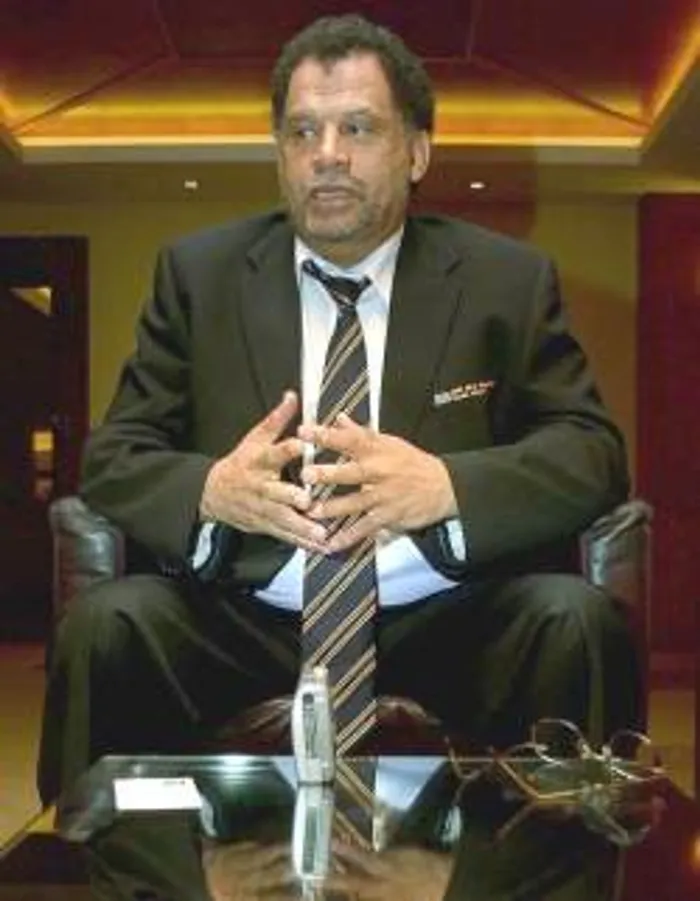
As around 100 local and international journalists expectantly gathered in Sandton on Wednesday to hear more World Cup news their cameras clicking, film rolling and notes frantically being jotted down Irvin Khoza and Danny Jordaan presented a strong case on the state of SA's 2010 preparations.
Slides were projected showing spectacular proposed stadiums, and graphs were presented showing that SA was well ahead of the game in comparison with Germany 2006 at the same stage.
A beautiful country, with the most exquisite scenery and warm, enthusiastic people, SA indeed has the potential to be wonderful World Cup hosts.
Khoza and Jordaan, the 2010 chairperson and chief executive respectively, know, however, that as impressive as their best laid plans are, the country's World Cup organisers now need to roll up their sleeves and get their hands dirty if those plans are to come to fruition.
The World Cup's not played on paper; it's played on grass in big stadiums, with hundreds of thousands of people following the event who need safe and secure accommodation and transport, and to be catered for.
All the host city agreements have been signed with Fifa, government guarantees have been given, the tournament logo has been unveiled and the 2010 stakeholders engaged but now is the time to see tangible evidence of the work being done.
The tournament's organising committee has estimated that R8,3-billion will be required to build and upgrade the 10 proposed 2010 stadiums; R3,7-billion to upgrade the country's transport infrastructure; and R400-million to get the country's broadcasting capabilities up to scratch.
In his medium-term budget in parliament next week, Finance Minister Trevor Manuel is expected to make the money available from the Treasury's coffers.
The time for planning and preparations will then be concluded, and it will be time to deliver on SA's World Cup promises.
As Fifa president Sepp Blatter said recently, the South Africans have the "plans, money and decisions, but I have yet to see the pickaxes and spades needed to start the work".
Jordaan has acknowledged Blatter is right: the construction phase must start no later than January, and for South Africa 2010 it's sekunjalo ke nako.
The 2010 organising committee is not responsible for the construction and upgrading of the stadiums that is the job of the local municipalities.
As things stand now, the stadiums in Cape Town, Durban, Port Elizabeth, Polokwane and Nelspruit are still only the visions and creations of architects.
Once Manuel releases the money, the cities need to finalise stadium tenders quickly, and work must frantically get under way to make those snazzy stadiums realities.
In addition to the stadiums, the transport situation will be 2010's biggest Achilles heel.
It was Manuel himself who said this week that with the current traffic congestion in the country, it was sometimes quicker to fly from Johannesburg to Cape Town than it was to drive on the N1 from Johannesburg to Pretoria.
The ambitious Gautrain project will in the long run hopefully improve the situation, but its construction over the next four years will put even more pressure on Gauteng's fragile transport capacity.
Jordaan dismissed media reports that the organisers were behind schedule.
"This is a clear misconception. They (the media) say we are unprofessional, that we don't keep time, because it's in Africa they say it's a crisis... People do not see anything above the ground, but there's such a lot happening.
"We are comfortable that when we say we're on track and we're ahead, that is the case," Jordaan added.
Khoza, too, was confident that the World Cup stadiums would be completed on time.
"Everything is running as planned," said Khoza.
"Work on the five new World Cup stadiums is scheduled to start at the beginning of 2007 and the timetables for completion are well within the time periods required by Fifa."
The 2010 organisers have set a target of completing the upgrade of Johannesburg's FNB Stadium, with its calabash design, at 30 months; 34 months for the construction of Durban's King Senzangakhona Stadium; 28 months for the construction of the stadium in Polokwane; 31 months for Cape Town's; 27 months for Nelspruit; 24 months for the construction of the stadium in Port Elizabeth; 18 months for the upgrade of Loftus in Pretoria; 18 months for the Free State Stadium's upgrade; 19 months for the upgrade of Rustenburg's Royal Bafokeng; and 20 months for Ellis Park's upgrade.
The deadlines are tight and South Africans and the world will be watching.