

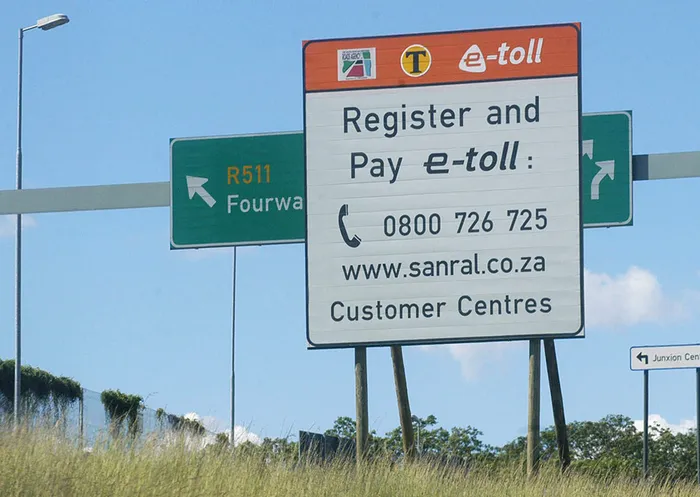
Etoll, E-toll, gantry, toll road, toll gate. Freeway / highway N3 between Beyers Naude and Linksfield. 18 March 2012. Generic illustrative highway pic, caption as needed. Picture: Karen Sandison Etoll, E-toll, gantry, toll road, toll gate. Freeway / highway N3 between Beyers Naude and Linksfield. 18 March 2012. Generic illustrative highway pic, caption as needed. Picture: Karen Sandison
Johannesburg - Business unity in opposing the controversial Gauteng e-tolling system appears to be weakening with the Road Freight Association now considering new pay figures from the SA National Roads Agency.
This comes at the time when the interministerial committee led by Deputy President Kgalema Motlanthe was expected to announce reduced e-toll tariffs and further capped maximum charge in preparation for the implementation of the system.
The association’s technical and operations manager Gavin Kelly said the organisation’s stance has always been that they were prepared to pay for the road infrastructure but that they were concerned by high figures that had been published.
“Over the last couple of months we have met with Sanral and the interministerial committee and we got to obtain some data. At this stage we are comparing their data on the fuel levy with their charges on the gantries,” he said. “From the very beginning we said we don’t have a problem with the users-pay principle.”
Kelly said if the e-tolling charges came down to a rate that has far less reaching implications on the economy they would accept them, but that hasn’t happened yet.
In April the association applied to join the Opposition to Urban Tolling Alliance (Outa) in the legal battle to halt the planned implementation of e-tolling on the Gauteng Freeway Improvement Project but their application was dismissed.
In its affidavit the association argued that Sanral was a company wielding monopolistic powers and had published tariffs that constituted “excessive pricing”.
It estimated that about 10 percent of all traffic on the toll roads would be large trucks and freight vehicles, but about 50 percent of all revenue generated through the toll levies would come from that section. Alternative or so-called secondary routes were generally not suitable for large trucks.
The association said then that the additional expenses would have an adverse effect on the economy because the costs will ultimately be passed on to the consumer.
This week Transport Minister Ben Martins reportedly urged the public to buy e-tags with speculation rife the that government intended to launch e-tolling before a court review starts on November 26.
Outa chairman Wayne Duvenage said Outa believed the announcement would include the acceptance of e-tolling by a few entities that were originally opposed to the plan.
The SA Council of Churches, the National Interfaith Council of SA and the National Religious Association for Social Development accepted e-tolling this week following a meeting with government.
But Duvenage said the vast majority of people continued to disagree with the principle of e-tolling because they cannot be “fooled”.
On Friday, Cosatu affiliate, the SA Municipal Workers Union, encouraged the public not to buy the e-tags. - Saturday Star