Proper meat tests all too rare
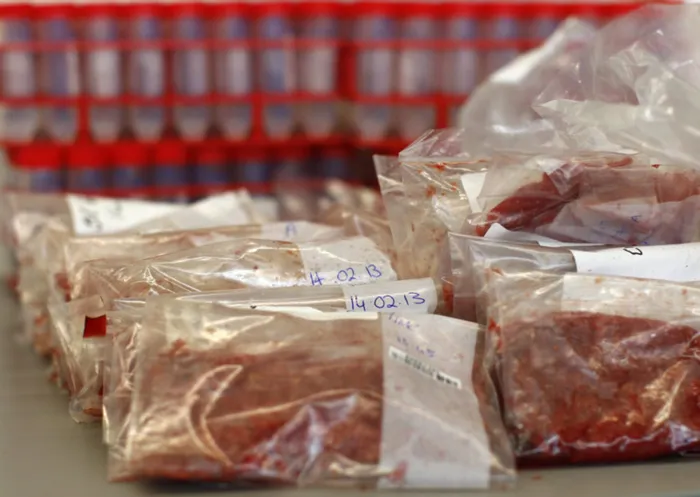
File photo: As the horse meat scandal rages in Europe, top local researchers have found "fraudulent meat products" across South Africa. File photo: As the horse meat scandal rages in Europe, top local researchers have found "fraudulent meat products" across South Africa.
Durban - A major shortage of health inspectors, budget cuts and changing legislation mean KwaZulu-Natal consumers are at the mercy of unscrupulous butchers and meat processors whose products are seldom scientifically checked.
There are 330 qualified environmental health inspectors who police water and food quality, monitor communicable diseases, environmental pollution, disposal of the dead, and chemical waste control in the province’s 10 district municipalities including the Durban metro.
Ideally 660 inspectors should be working in the province, say health officials. A lot of these jobs were vacant, but also, not enough positions were created when local government took over health inspecting responsibility from the province.
The lack of attention to what goes on behind the scenes in butcheries has been in the news after research by Stellenbosch University showed traces of donkey, kangaroo and water buffalo had been found in meat samples taken across the country, including KZN.
Part of the problem is that health inspectors, who used to be managed by the province, now fall under district municipalities.
Health Department spokesman, Samuel Mkhwanazi, said the process of re-employing the inspectors was under way and the service was in “a state of change”.
Mkhwanazi said there was a shortage of inspectors, and testing of meat samples in butcheries and supermarkets was not being properly done.
He also said the high cost of DNA testing (R350 a test) meant that if butcheries or meat processing plants were inspected, tests for bacteria concentration were more likely as they were cheaper.
“Because of budget constraints DNA testing has gone a bit quiet.”
Inspectors were more likely to take swabs from counter tops to look for bacteria build-up.
Butcheries and restaurants contacted by The Mercury said they had either never been inspected or were inspected once a month depending on the efficiency of the municipality.
However, they all agreed the inspection was more about hygiene, water supply, refrigeration and the grading of carcasses than the content of polony, patties and boerewors.
Gavin Buys, who worked as a health inspector in Durban in the 1980s and 1990s, said an inspector making regular rounds to butcheries should identify different meats by sight.
“They have different textures and colours,” he said. “Horsemeat is deep purple whereas beef is red. Horsemeat is also very sinewy and has a characteristic odour.”
Butchers said the public was overreacting to the Stellenbosch findings. “If a beef carcass just brushes up against a pork carcass, for example, a DNA test may pick up pork in the beef product,” said one. They did agree, however, that products should be labelled correctly.
Buys said the only way to identify what was in mixed-meat products, like sausages, was to send them to a laboratory for analysis.
But, he said, when he was in the industry, this was done without DNA testing.
“Instead, they used to use a special technique to pick up what percentage of the meat came from what animal,” he said.
Hamish Skead of Lowlands Meats in Estcourt urged consumers to build up a relationship of trust with their butcher.
“We have built trust through the quality of the meat we sell and by steering clear of mass-produced meat,” he said.
Abattoir owners and meat importers said they were strictly policed by customs and agriculture department officials.
Jeffrey Zikhali of the KZN Department of Agriculture said there were 40 slaughter houses in KZN. All were privately owned.
“Abattoirs are usually inspected monthly. If there is a problem then it will be more often.”
Zikhali said all facilities in the province complied with legislation.
Additional reporting by Bernadette Wolhuter
The Mercury