Transformation is slow at SA varsities
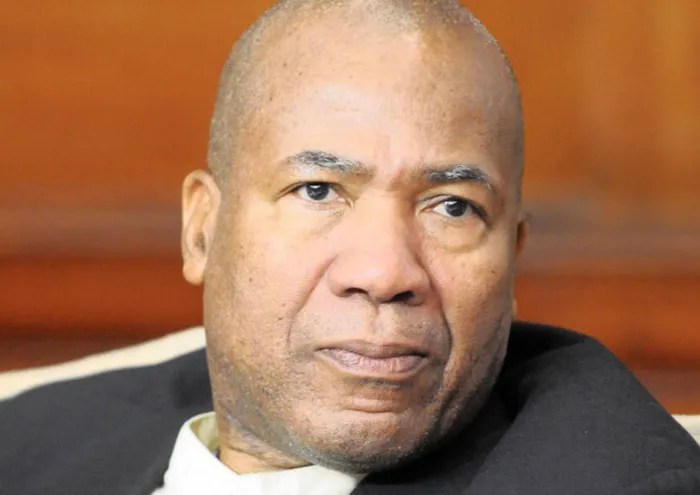
Professor Malegapuru Makgoba. File photo: Phill Magakoe Professor Malegapuru Makgoba. File photo: Phill Magakoe
Durban - Universities have a long road to travel before they are transformed and properly represent the racial demographics of South Africa.
This was the message delivered to Parliament’s portfolio committee on higher education on Wednesday by the University of KwaZulu-Natal’s vice-chancellor, Professor Malegapuru Makgoba, who chairs the oversight committee on transformation in higher education.
He was in Cape Town to present research, produced by his committee, to members of Parliament and to point out which areas of higher education needed transformation.
It would take universities four decades to change the face of their academic staff and 12 years to reach an acceptable level of equity among students, he said.
UKZN’s dean of mathematics, Professor Kesh Govinder, who was with Makgoba, explained to MPs that they had developed an “equity index” to do the research.
This index measured the distance between two points - the race and gender of a university's staff and student population in 2011 - and South Africa’s demographics. The closer the two points were, the better an institution was transforming itself.
Of all the universities the “long walk to transformation” would be hardest for Stellenbosch University, they said, which was the least transformed. When race and gender were put together, the study found that the Central University of Technology in the Free State best mirrored the national demographics.
Of the top five research-producing universities - the University of the Witwatersrand, the University of Pretoria, the University of Cape Town, Stellenbosch University and UKZN - it was UKZN that was the top achiever.
And, of KZN’s four universities, the Durban University of Technology was transforming fastest. It was fourth-best in the country while UKZN was 15th.
Looking at the transformation of university councils (excluding the three under administration), UKZN took top spot with Mangosuthu University of Technology second. Stellenbosch University again was at the bottom.
Govinder said it was worrying when university councils and senates were not transformed, because they had to drive transformation.
Every six years universities negotiated their enrolment plans with the Higher Education Department, and the transformation committee suggested these discussions should include transformation targets.
Makgoba said the data used in the study had been audited, and the research was peer-reviewed.
Asked to characterise the pace at which transformation was occurring, Makgoba said: “Painfully slowly”.
He would not comment on whether there was a lack of will on the part of universities to transform.
Transformation committee member Nazeema Mahomed, who is also the director of transformation at Wits, said universities could have equity and quality - “there is no compromise”.
The MPs asked if some of the universities were committed to transformation at all, and whether, if universities enjoyed institutional autonomy, equity targets could be enforced.
Makgoba said the job of the committee was not to make policy, but to empower policymakers through such studies.
Professor Crain Soudien, the transformation director at UCT, said although representivity was important, it was not, by itself, transformation.
“It is but one part of it. As important is what is in people’s heads, what they think and how they think.”
The Mercury