PICS: Volunteers keep Limpopo rhino orphanage going during lockdown
|Published
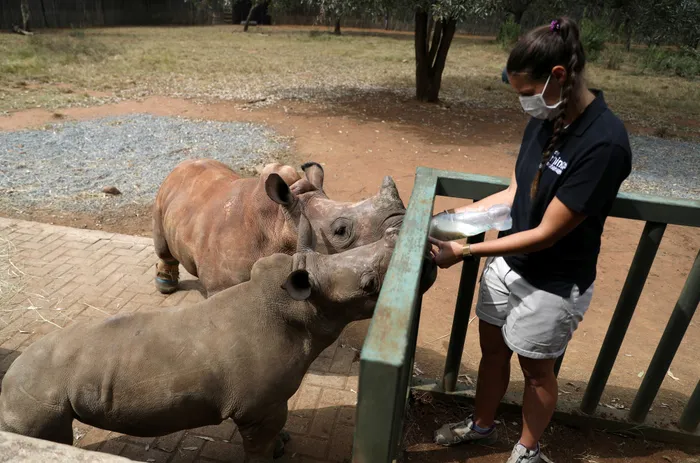
Zanrie Van Jaarsveld feeds orphaned rhinos Kolisi and Amelia, amid the spread of the coronavirus disease (Covid-19), at a sanctuary for rhinos orphaned by poaching, in Mookgopong, Limpopo. Picture: Siphiwe Sibeko/Reuters Zanrie Van Jaarsveld feeds orphaned rhinos Kolisi and Amelia, amid the spread of the coronavirus disease (Covid-19), at a sanctuary for rhinos orphaned by poaching, in Mookgopong, Limpopo. Picture: Siphiwe Sibeko/Reuters
The Rhino Orphanage -
Looking after an orphaned baby rhino is hard work: you feed them
bottled milk at all hours, comfort them through constant fear
and bereavement and endure long nights of screaming for the
absent mother they witnessed being shot dead by poachers.
"The older calves take it really hard. They'll call for
their mothers for up to two weeks," said Yolande van der Merwe,
38, who helped set up the world's first such orphanage in South
Africa's Limpopo province almost a decade ago.
"They start bawling and that hits you right in the heart."
To help manage the workload - "we can easily pull a 72 hour
shift with two to three hours sleep", van der Merwe said - the
orphanage has depended on volunteers to fly in from abroad on
three-month rotations at the site set amongst thick bush.
So when coronavirus panic struck and the latest three
foreign volunteers' visas were revoked, they were in a bind.
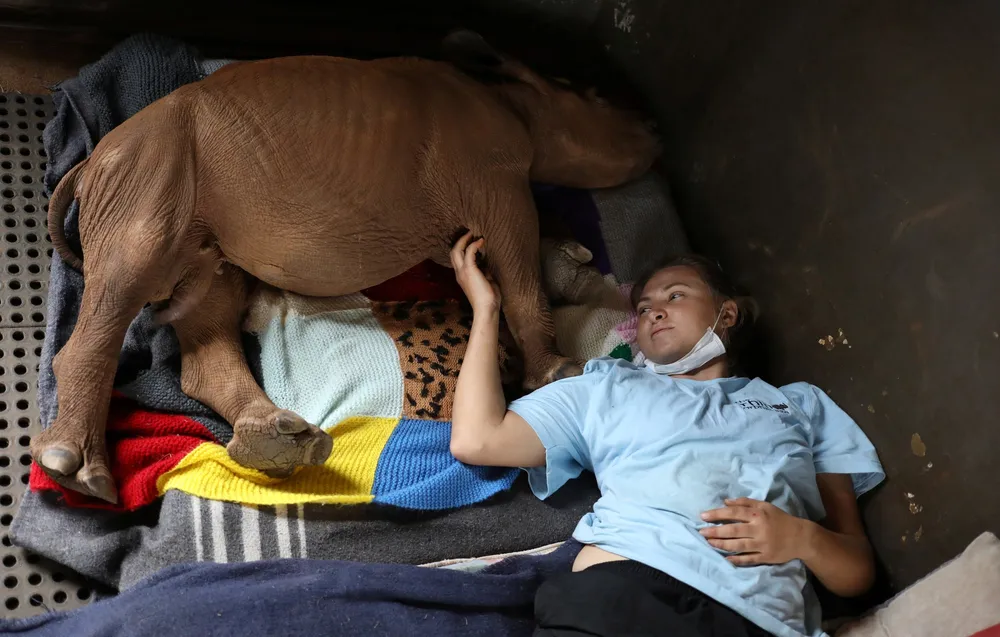
Larize Nel lies next to Mapimpi, an orphaned rhino at a Limpopo sanctuary for rhinos orphaned by poaching. Picture: Siphiwe Sibeko/Reuters
"I was quite worried that we were not going to cope," she
said, after Kolisi and Amelia, seven and four months,
respectively, slurped noisily from 2-litre bottles of milk
formula she was feeding them.
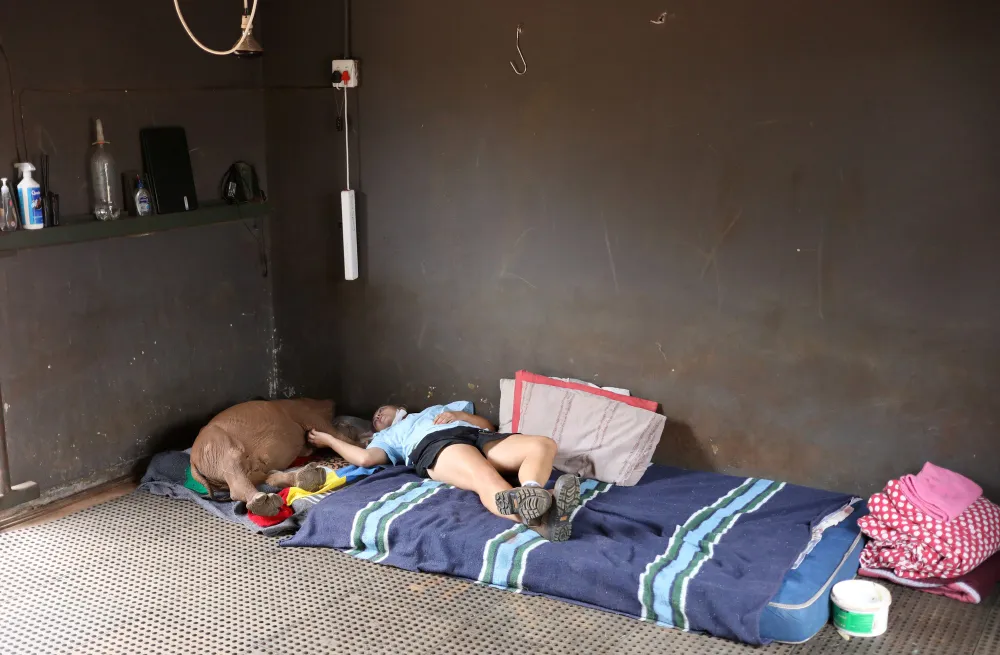
Larize Nel, a volunteer, lies next to Mapimpi, an orphaned rhino at a sanctuary for rhinos orphaned by poaching, in Mookgopong, Limpopo. Picture: Siphiwe Sibeko/Reuters
Manager and founder Arrie van Deventer, a 66-year-old
retired teacher, got on the phone and started making frantic
pleas on social media for South Africans to help out.
"We were swamped," he said. He picked two volunteers from
the several hundred offers. They are now staying put with the
four permanent staff since last month's nationwide lockdown
imposed by President Cyril Ramphosa.
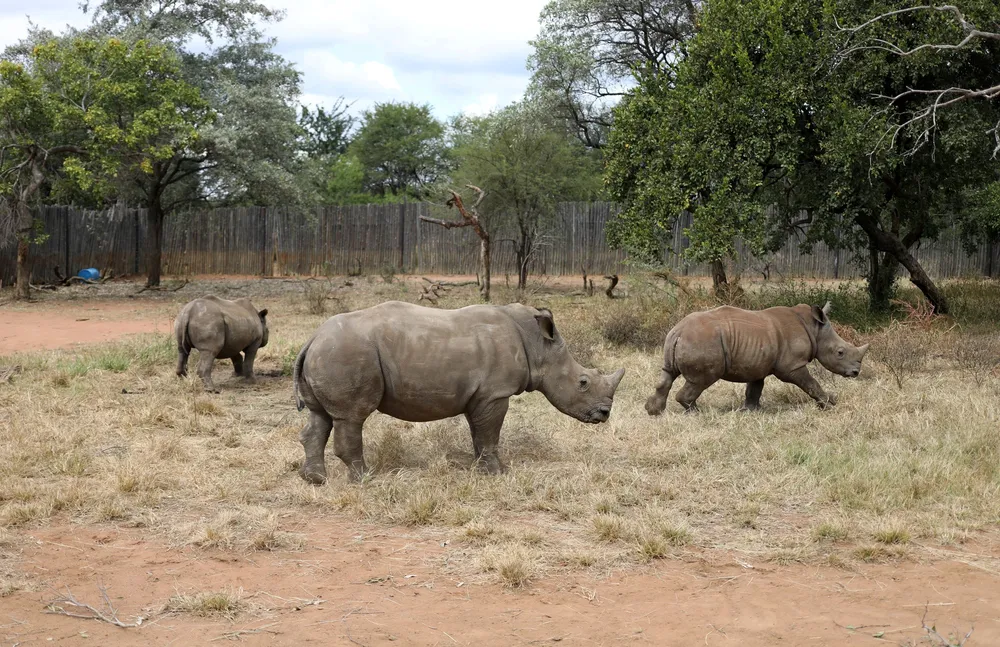
Orphaned rhinos are seen at a sanctuary for rhinos orphaned by poaching, in Mookgopong, Limpopo. Picture: Siphiwe Sibeko/Reuters
South African Deidre Rosenbahn, 37, had been a restaurant
chef in Britain for 14 years and then travelled in Australia,
but yearned to return home.
"I came back to the coronavirus. It was hard to find a job,
so when this came up I put my hand up," she said, as she fed
their youngest new arrival, Mapimpi, from a bottle.
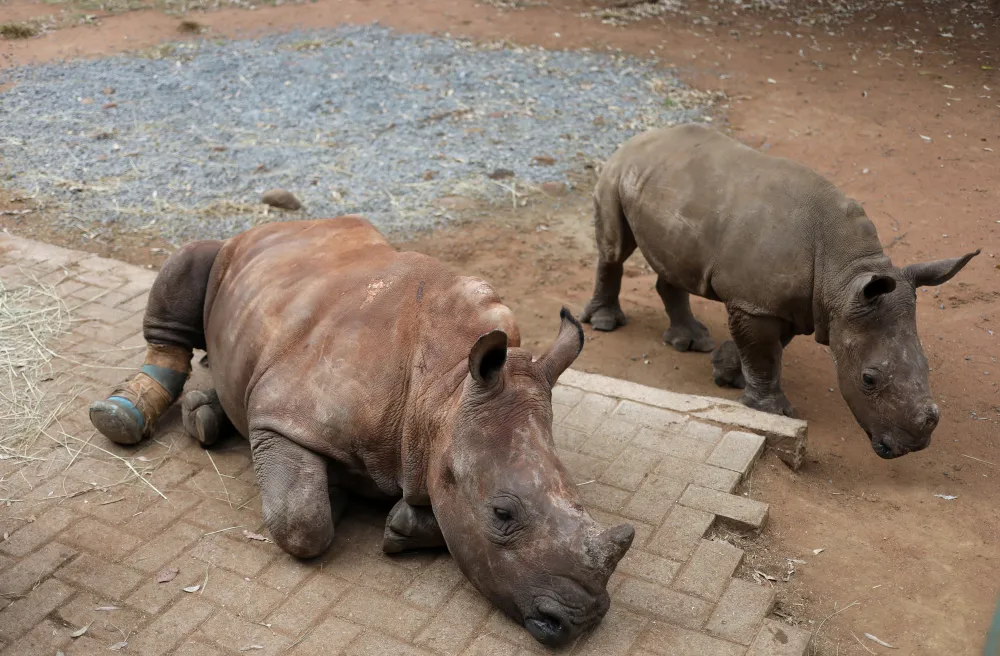
Orphaned rhinos Kolisi and Amelia, seven and four months respectively, are seen at a sanctuary for rhinos orphaned by poaching, in Mookgopong, Limpopo. Picture: Siphiwe Sibeko/Reuters
Poachers killed his mother when he was 7 days old. He was
dehydrated and withered - they found him trying to eat sand. Now
he seems well-fed, relaxed and playful. At the age of five, the
rhinos in the orphanage are released back into the wild.
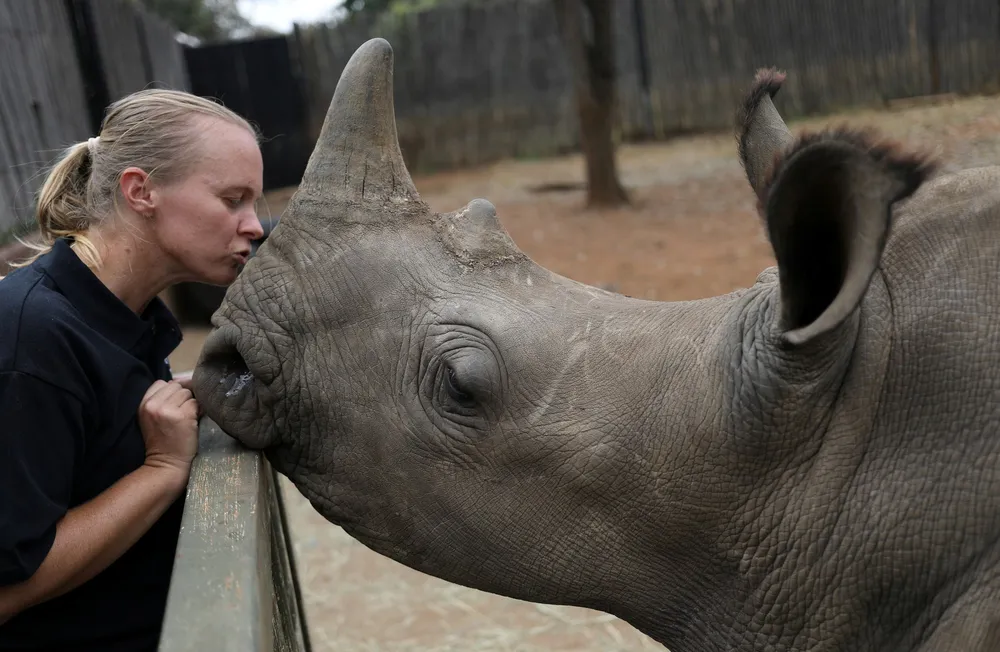
Yolande van der Merwe kisses an orphaned rhino at a sanctuary in Mookgopong, Limpopo. Picture: Siphiwe Sibeko/Reuters
"We have dozens of rhinos that come through here, and 95% of
them are because of the poaching pandemic," Deventer said. The
precise number, like the sanctuary's location, are closely
guarded secrets in order to protect them from poachers.
The game reserve adjacent to the orphanage has been
attacked, unsuccessfully, twice.
Africa's rhino population has been decimated over the
decades to feed demand for rhino horn, which, despite being made
of the same stuff as hair and fingernails, is prized in East
Asia as a supposed medicine and as jewellery.