

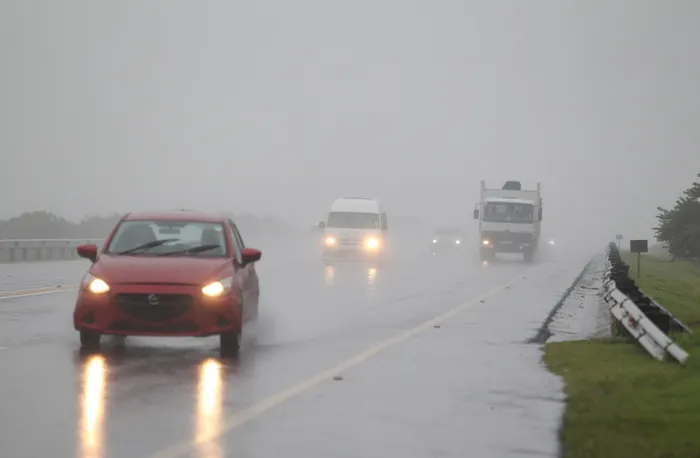
South Africa is bracing for severe thunderstorms, hail, and potential flooding as the South African Weather Service issues a Yellow Level 2 warning for Monday.
Image: Doctor Ngcobo / Independent Media
As floods, heatwaves, and storms continue to make more headlines now with the persisting cold fronts, we don't often look at how much the weather costs us.
South Africans are paying for extreme weather more often, even when disasters aren’t officially declared. Data from the South African Weather Service (SAWS), agricultural researchers and climate reports indicate that variability in rainfall and temperature is increasing - an increase that can be felt in your pocket.
Even if your home has never flooded, you are still paying for extreme weather. As severe weather events become more frequent, the cost of payouts rises, and those increases are passed on to consumers through higher premiums or stricter cover conditions.
Recent climate reporting from the South African Weather Service shows growing variability in rainfall and more frequent extreme weather conditions. Global reinsurers such as Munich Re and Swiss Re have similarly warned that climate-related losses are increasing worldwide.
For most households, the most immediate impact of volatile weather shows up at the till.
South Africa’s agricultural sector is highly sensitive to rainfall and temperature changes. Long-term research published in the journal Water SA shows rainfall variability across regions between 1921 and 2015, affecting crop stability and yields.
At the same time, datasets from the Agricultural Research Council, which draws on hundreds of weather stations nationwide, show how widespread and uneven these weather patterns have become.
Simply put, erratic rainfall or heatwaves damage crops, drastically decreasing the supply, which increases prices around the country.
Extreme weather doesn’t just damage homes. It damages public infrastructure, and that bill is ultimately carried by taxpayers.
Storms and flooding regularly strain roads, drainage systems and electricity networks. Climate data and projections hosted by South Africa’s National Climate Change Information System show shifting rainfall patterns and increased intensity of weather events, which can place additional pressure on already ageing infrastructure.
An overlooked impact is the financial hit that extreme weather has on income.
Flooding, storms and extreme heat can disrupt transport, halt construction, and reduce working hours, particularly in sectors like agriculture and the informal economy. For workers paid hourly or operating small businesses, even short disruptions can translate directly into lost earnings.
As the weather becomes more unpredictable, these disruptions are becoming harder to plan for and more frequent.
Extreme weather in South Africa is no longer just an environmental issue; it is an economic one.
From higher insurance premiums and rising food prices to infrastructure damage and lost income, the cost is already being felt across the country. And as climate variability increases, those costs are likely to become more frequent and harder to avoid.
IOL