

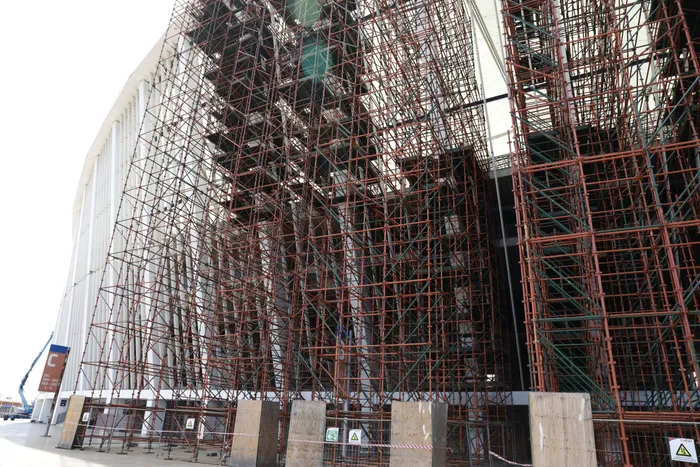
Upgrades are in progress to enhance the safety and structural integrity of the Moses Mabhida Stadium.
Image: Doctor Ngcobo / Independent Newspapers
In a push to fortify the structural integrity of the iconic Moses Mabhida Stadium (MMS), the eThekwini Municipality has announced a series of extensive upgrades aimed at addressing longstanding design issues and ensuring safety.
Acting Director of Commercial Sport and Facilities, Dr Zakhi Mkhize, highlighted the urgent need for rehabilitation of the stadium, which has been without significant refurbishment since its inception for the 2010 FIFA World Cup.
Opened in 2009, the MMS was initially designed for high-profile sporting events. However, Mkhize iterated that it functions as a multi-purpose venue, hosting a plethora of activities round-the-clock, from sporting events to conferences. This versatility has played a crucial role in sustaining the stadium’s financial viability but has also highlighted critical maintenance challenges.
Mkhize said the stadium’s original preparation for a specific cup resulted in numerous design and construction issues that compromised its stability. These challenges are persistent, forcing them to cope with existing conditions. Their primary focus during the current upgrade is, therefore, addressing these structural defects.
“The fact that we are within the coast, there’s a lot of wind and probably very aggressive, which affects the structural integrity, and the mechanical joint may shift and compromise the structure. So, as we were embarking on the journey to assess what needs to be upgraded, we then identified a lot of emergency work that needs to happen,” Mkhize said.
“There was corrosion that was also compromising the roof structure because our roof structure, the cables are metal cables. Without ensuring those cables are intact, the entire roof could be compromised.”
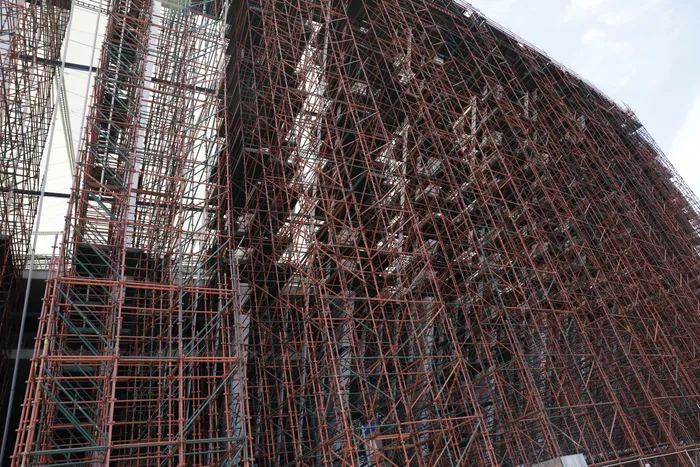
Structural enhancements are under way at the Moses Mabhida Stadium, preparing for the next generation of events.
Image: Doctor Ngcobo / Independent Newspapers
Mkhize said they must ensure that while addressing emergency issues to make the stadium safe, operations can continue.
She said they have been attending to cracks in the columns, dealing with cracking podium slabs that allowed rain to pour inside the facility, and addressing extensive steel corrosion that compromised our roof structure.
The rainfall also resulted in mechanical failures, specifically impacting the piping and electrical systems. Additionally, the corroded facade, where the cladding was no longer structurally sound, also needed attention. The cross beams were successfully derusted and coated.
On the Sky Car, Mkhize said it brought foot traffic to the stadium, but it had been grounded since 2017.
“Currently, as we are dealing with rehabilitation, we don’t have the money to build the Sky Car.”
Additionally, the municipality had to upgrade the turnstiles to ensure compliance and effectively manage security and access control issues.
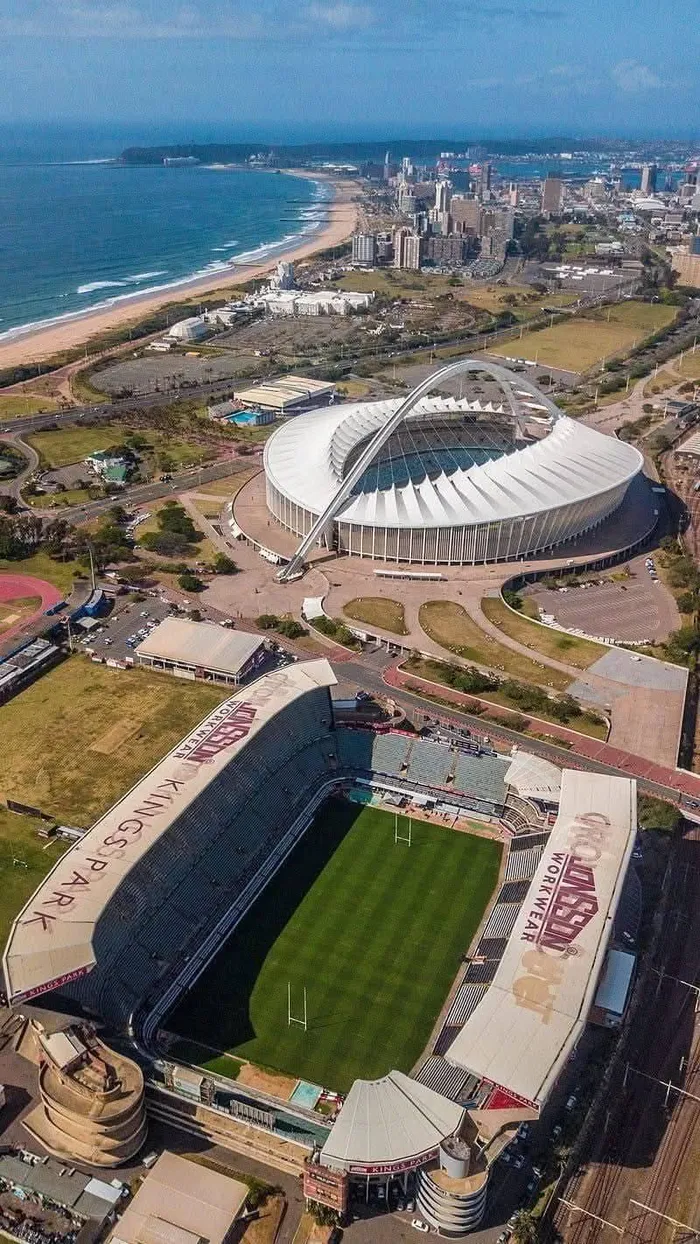
Kings Park Stadium, with the Moses Mabhida Stadium behind it.
Image: Facebook
The stadium is part of a larger sports, heritage, and entertainment precinct, which includes Kings Park Stadium, Kings Park Athletic Stadium, and Kings Park Pool (also undergoing rehabilitation).
Invest Durban’s Russell Curtis, speaking about the Presidential eThekwini Working Group work stream number four, focused on tourism investments, said they are helping to facilitate and track more than R3.5 billion worth of private sector tourism investments within the precinct.
Focusing on the sports precinct, Curtis said it starts in the yacht marinas in the bay.
“We’ve got significant international investment interested in marina upgrades,” Curtis said.
The sports precinct runs through to the Kingsmead Cricket Stadium.
“We have the 2027 Cricket World Cup secured. Cricket South Africa has committed to invest R100 million in that stadium and precinct to upgrade,” Curtis said.
With the sports precinct continuing all the way through the Moses Mabhida Stadium vicinity, Curtis said they have seen some of the public sector investments, with the Durban Country Club as one of them.
“The Durban Country Club private investment is now approaching R50 million in private investment, upgrading the Durban Country Club.”
Focusing on tourism investments, Curtis said the fund can be extended to include Club Med, which has recently decided to triple the size of its Game Lodge investment.
He said many other investments are coming through in this precinct, whether that be Southern Sun upgrades, Beachwood, and many other opportunities.
“In the presidential work stream number four, the private sector ones, there are more than two dozen investments, R32 billion in total. And there’s about R3.5 billion that is already in the ground,” Curtis said.