

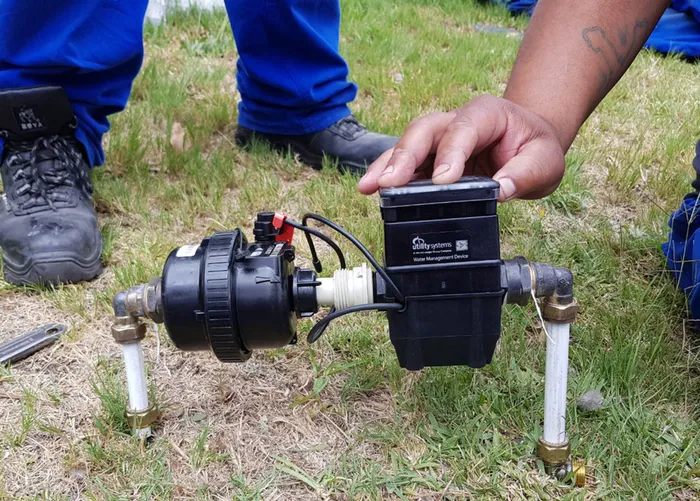
The eThekwini Municipality reveals the significant challenges faced by water and electricity meter readers.
Image: File
The eThekwini Municipality has laid bare the types of challenges water and electricity meter readers face, including wasp nests and vicious dogs, which have resulted in estimated billing.
The challenges were contained in a Finance Committee report on accounts management and billing at a council meeting in February.
The municipality stated that meter reading services were a critical component of revenue collection.
The report explained that water meters are read monthly, while electricity meters are read every third month, with the exception of business meters, which were read monthly for actual and accurate billing of consumption used.
In November 2025, a total of 55,325 bills were estimated, increasing to 61,567 in December 2025.
The municipality also found that the increase in the estimations were due to a number of meters removed on site that still existed on the eThekwini Revenue Management System.
Estimates were mainly due to locked properties, obstruction to meter access, and vicious dogs preventing access to properties.
The municipal revenue department was currently issuing notifications to customers requesting access to their properties for meter reading purposes.
“Should there be no improvement, punitive tariffs will be applied to accounts not read for a period exceeding three months from the date of notification, in accordance with the Credit Control Policy,” the municipality stated in its report.
Regarding electricity meter reading, approximately 19% of meters remain unread. The average estimation used for these unread meters was often equivalent to the practice of reading meters once every three months.
There are also 15,889 disconnected meters; however, in some instances, the municipality stated that movement suggested tampering.
Statistics in the report showed that in November 2025, there were 310,754 (64,919 estimated) PODs, and in December 2025, 312,914 (59,118 estimated) PODs.
Some of the challenges faced by meter readers also includes; no access to the meter, vacant houses, entry refused by consumer, faulty meters, foreign and faulty locks, meters bypassed, damaged, obstructed, removed and tampered with, new meters, no keys and unable to locate the meters
Dr. Jonathan Annipen, IFP councillor in eThekwini, said he was concerned about estimated billing and delayed meter reading, which he said harmed residents.
“There should be a coordinated approach. Customers in arrears must be allowed to enter into payment agreements interest-free,” he said.
Saul Basckin, ActionSA eThekwini councillor, said the report stated that billing completeness was almost 100%, yet councillors were approached daily by residents facing billing errors of tens and even hundreds of thousands of rand.
“In the same report, 19% of electricity accounts and 14% of water accounts were estimated. In real terms, that meant almost one in five residential meters were not properly read every three months. That alone made any claim of effective billing unsustainable,” he said.
Basckin said the report further records over 47,000 faulty water meters, with no real programme in place to replace them.
“Despite the introduction of online meter submissions, this report provides no data on how many readings were submitted online versus read by staff. That omission shows something was fundamentally wrong with how performance is being measured. Even more concerning, interest is being charged on incorrect and disputed accounts, sometimes for months or even years,” he said.