


Attempted murder accused Vusimuzi 'Cat' Matlala at Kgosi Mampuru Correctional Centre in Pretoria, where he appeared before the committee.
Image: Oupa Mokoena / Independent Newspapers
While the past two months of Parliament’s Ad Hoc Committee investigating the allegations made by Lieutenant-General Nhlanhla Mkhwanazi have been “very informative”, the committee will still have its work cut out for it in the new year.
This is according to the African National Congress’s Chief Whip, Mdumiseni Ntuli, who is also a member of the Ad Hoc committee.
The committee wrapped up the year’s proceedings with the testimony of controversial businessman Vusimuzi “Cat” Matlala, who was grilled extensively by members of Parliament, about not only his R500 000 cash payments to former Minister Bheki Cele, but also the raids on his home, and his connections with Lieutenant General Shadrack Sibiya.
The Ad Hoc Committee heard Matlala’s claims that former police minister Bheki Cele demanded a bribe of R1million - a sum Matlala alleges he partly paid in Woolworths bags.
Matlala, currently detained at Kgosi Mampuru Correctional Centre since his April arrest, is facing multiple serious charges, including conspiracy to commit murder and involvement in a R2 billion fraud linked to Tembisa Hospital.
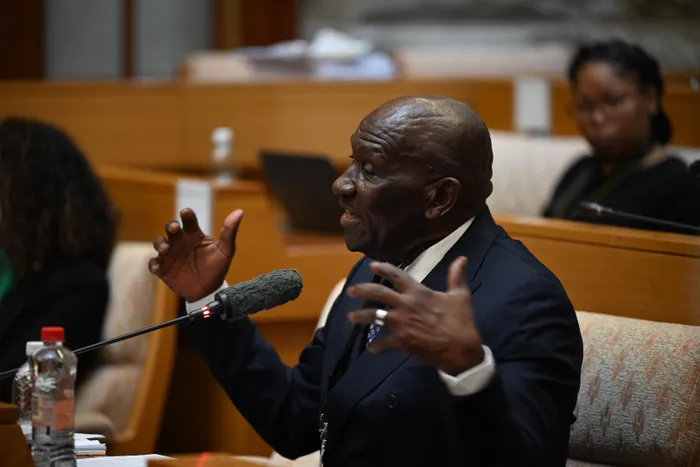
Former Police Minister Bheki Cele's also appeared before the committee. Matlala alleged that he gave Cele R500 000 in cash, which he transported in Woolies bags.
Image: Armand Hough/Independent Newspapers
Ntuli said that the testimony of Matlala was very interesting in terms of various coincidences, in which he didn’t properly provide detailed and convincing answers to the Ad Hoc Committee.
“It also seems to me that his friends and friendship are not based on a mutual shared value system between him and his friends. For instance, he knew that Mr Jerry Boshoko, one of his friends, was involved in some drug dealings, but never advised him to do away with what had the potential to endanger his own life and that of his family.
“He is clearly, and by his own admission and pattern of events, very connected to certain and perhaps a number of police officers at various levels. His experience with former Minister Cele was also telling and revealing, especially the allegations of money and cash exchanges between the two of them.
“He, Mr Matlala, emerged as a shrewd and agile man always determined to do whatever it takes to achieve his objectives,” Ntuli said.
Ntuli added that since proceedings began in October, the past two months have been “very informative about the nature of the challenges confronting the criminal justice system in our country”.
“We are particularly getting a much better understanding of the ‘divisions and infighting’ with the police, which poses a real challenge to their ability to provide effective security to the nation.
“I believe that the hearings of the Ad Hoc Committee and the Commission of Inquiry are helping the nation and parliament in particular to imagine legislative interventions required to strengthen accountability,” Ntuli said.

African National Congress’s Chief Whip, Mdumiseni Ntuli, is also a member of the Ad Hoc committee.
Image: Phando Jikelo/Parliament RSA
Political scientist at the North-West University, Professor André Duvenhage, said that he has no doubt the testimony of Matlala will give the committee a lot to work with, but he still found the testimony of Mkhwanazi to be the most useful.
“I think the most important one was still what Mkhwanazi said, and the way he defended himself. What I have seen from many people is a complete inability to deal with the questions. We have, in some cases, seen people openly not following the oath in the sense that the evidence was incorrect, and I think it is more than just a question of interpretation; it was a question of purely lying about the situation.
“In that sense, it was problematic. I have problems with the integrity of many of the people who provide evidence that including the minister of police. I really had concerns about how he motivated that he stopped the investigation into the political murders, and his reasons for that. It just didn't go well.”
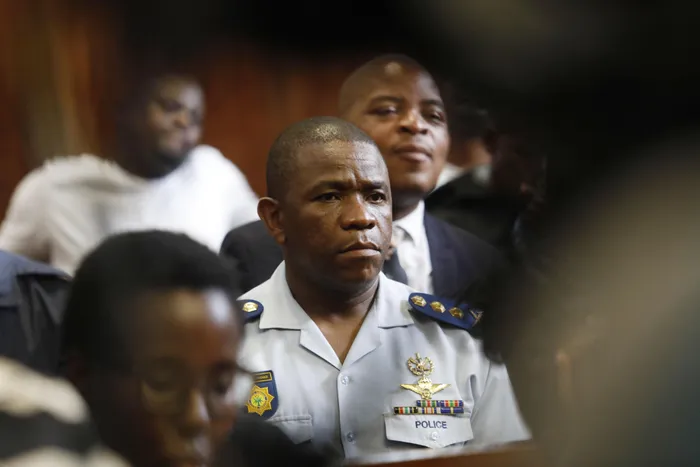
Lieutenant-General Nhlanhla Mkhwanazi.
Image: Doctor Ngcobo/Independent Newspapers
Duvenhage added he hopes the committee will come up with concrete points to take forward as they head to seek to conclude their work by 20 February 2026, after the National Assembly adopted the resolution to extend their deadline.
“You cannot just say this was a case of corruption and we are going to deal with this matter. It is important that individuals are identified, that there are forms of conduct against certain individuals on specified grounds, and I really hope that opposition parties will help to formulate the detailed strategy tactics, and play their oversight role in such a way that they make sure that whatever was decided will be implemented and that the people responsible will pay a price.”
Ntuli added that they have a few key witnesses identified by the committee, such as Lt General Dumisani Khumalo, who is the Divisional Commissioner for Crime Intelligence and National Coordinator of the PKTT, Lt General Sedona, Head of Hawks in KZN, whose name emerged in the testimony of Matlala, Paul O’Sullivan, whose name has featured predominantly in hearings given his alleged role within SAPS, Brown Mogotsi, and later on Mkhwanazi.