

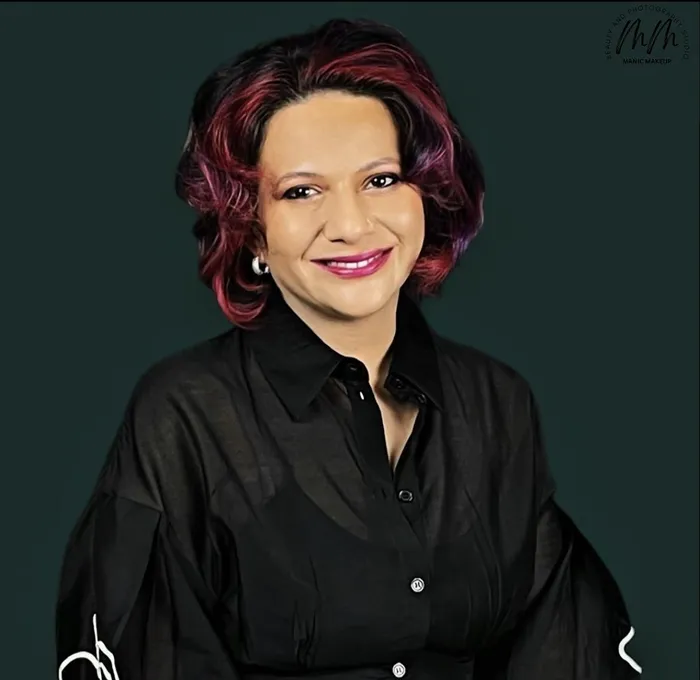
Dr Sheetal Bhoola is a lecturer and researcher at the University of Zululand, and the director at StellarMaths (Sunningdale).
Image: Supplied
The recent commentary and opinions expressed by South Africans have led many of us to wonder has there been a demise of the freedom of speech in South Africa, are we no longer a democratic nation that has a right to express opinion and criticism.
Editor Ayanda Mduli expressed his concern to South Africans about the lack of respect when an opinion or perspective is expressed especially when it comes to sensitive global dysfunctionality and violence such as the Israeli Palestinian conflict.
The conflict is sensitive because it is influenced by violent attacks, politics, religious beliefs and values and at present it has been void of basic human respect of the value of one another’s lives.
The way in which people around the world express their disapproval or agreement with the continual outbursts can be termed as freedom of speech and the right to express one’s emotions and opinions.
According to our constitution, Section 16(1) explicitly states that everyone has the right to freedom of expression, freedom of the press and other media, freedom of artistic creativity, the right to receive and impart information and ideas as well as the freedom of scientific research and academic freedom.
This clause also has limitations which stipulates that one cannot promote or glorify war and utilise speech and expressions that directly incites immediate violence and expressions that encourage hatred and prejudice based on race, ethnicity, gender and religion.
In the case of limitations being breached the judicial courts have the last word and determines what is acceptable or not based on South Africa’s democratic values.
The concepts of freedom of speech and democracy have often been closely associated and yet can be clearly misunderstood.
Our democracy has permitted many of us to be far more expressive than we have been prior to 1994, but the way in which opinions are expressed, and the utilisation of descriptive adjectives and nouns are central in being expressive in a responsible and respectable manner.
A key characteristic of South Africa's democracy is human dignity and respect for each other. The concept and applicability of human dignity is universal and primarily focus on the need for each of us to respect one another ethically, irrespective of personal opinions, biases, race, ethnicity, and religious and political beliefs.
Patterns of disrespect and misconduct have been noted amidst our political leaders in recent years on mass media platforms which have also contributed towards the process of normalisation of rude and inappropriate behaviour.
Many of us have witnessed our politicians disagree among each other in a rude and disrespectful manner. What is further disturbing is that they have also been the perpetrators of misinformation, mal-information, and the delivery of partial information.
Their behaviour has redefined impacted how we perceive disrespect and the harsh nonverbal attributes that are expressed by the individual. As a result, South Africans do not have many mentors who lead by example and teach through exemplary behaviour.
Similarly, women too have experienced disrespect in paramount ways because of the teachings of patriarchy and the belief that women are not the equal peers of the male.
The ways in which disrespect is expressed ranges from dismissive language, personal attacks, accusations without verification as well as verbally abusive language which intends to directly insult and hurt another.
Often these instances continue without the full realisation of the negative impact it has on the victim. Mass media platforms have been accurately informing citizens of such instances amidst popular and well-known individuals, but there is no discussion of the impact or steps actioned to curb this behaviour.
Ultimately, such behaviour primarily attempts to undermine their opponent's legitimacy and the needs and concerns at hand are hardly acknowledged or responded to as the focus is to unfairly delegitimise the political position of the opponent.
As we approach Women’s Month, celebrations continue, yet women historically have been victims of disrespect, and alienation in South Africa. Sometimes, women need to be cheered on for their tenacity and endurance in experiencing multiple variations of verbal abuse and disrespect from women, children and men, yet their discernment permits them to navigate these conversations and relationships.
Women too can play a pivotal role in teaching themselves and their children to identify various types of verbal and nonverbal disrespect. In such situations, it is recommended that one acknowledges the disrespect and practice acceptance to establish the point of the conversation and the disrespectful expressions or comments utilised by the perpetrator.
Thereafter the ideal stance would be for the victim to be inclusive and encourage mutual understanding and contribute towards the development of emotional safety for all persons involved in the conversation.
South Africans need to commit to becoming aware of the forms of disrespect and opt to not ignore instances that require progressive intervention so that citizens are aware of their behaviour patterns and avoid contributing towards ‘disrespect’ becoming normal and acceptable behaviour amongst us.
*The opinions expressed in this article does not necessarily reflect the views of the newspaper.
DAILY NEWS