

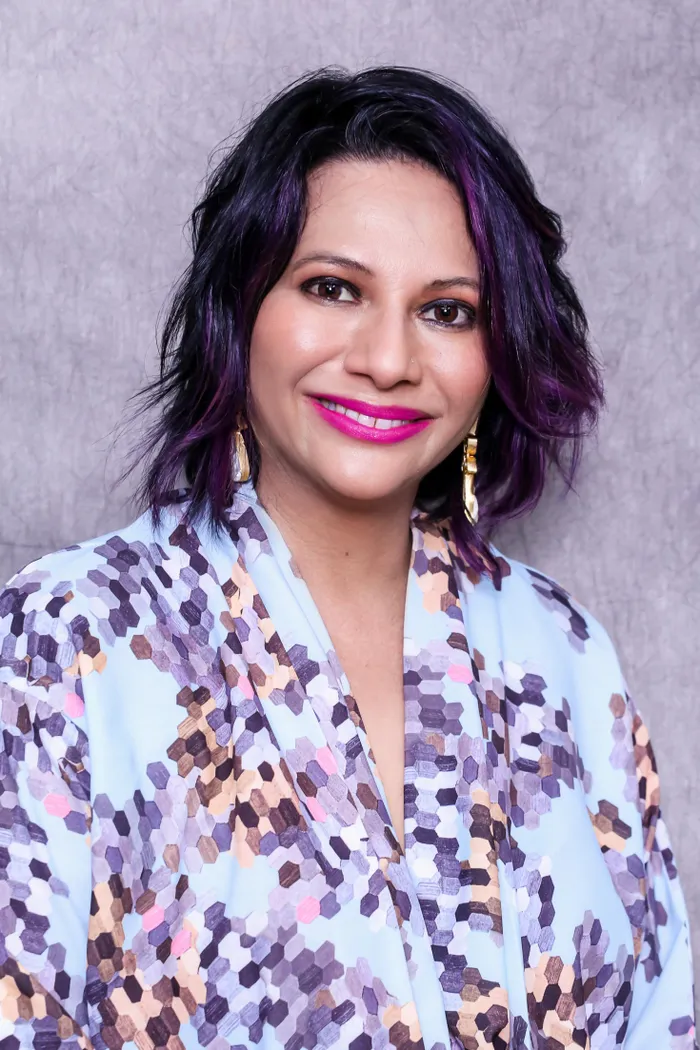
Dr Sheetal Bhoola is a lecturer and researcher at the University of Zululand, and director at StellarMaths (Sunningdale)
Image: Supplied
The recent national dialogue engagements between citizens and members of parliament have forged many to really scrutinise and critically evaluate the varying types of inequality at play within South Africa.
Years have gone by during which we have advocated for restorative and retributive justice, and we are yet to see its widespread positive impact, which should have driven political accountability in South Africa.
The democratic era should have brought restorative and retributive justice to the fore and informed people of how to comprehend the injustices of the past, what harm was done, and how to manage the pain that emerged from that, and to educate people on the importance of political accountability.
If our politicians themselves do not see the value and the need to be transparent and accountable, one ponders as to what will encourage retributive justice?
Activist Sihle Lubisi vocalised at the gathering that his voice and opinion should be valued as he is a representative of what South Africans experience in their daily lives.
The differences in lifestyles between politicians and citizens were also discussed, where one delegate clearly stipulated how politicians have bodyguards to protect them and ensure their safety, while citizens have to manage to safeguard themselves from violence and criminal activities independently every day.
Delegates spoke of young children still being raped, and the increasing number of life-threatening crimes that have become prevalent, leading to such difficult and unsafe living environments for people.
Unemployment has been reaching its peak in South Africa, and this was also acknowledged to be a contributing determinant to the escalation of criminal activities in South Africa. The purport of the national dialogue was to develop an inclusive public participatory approach in addressing the way forward to reshaping and developing South Africa’s goals so that the challenges are met.
Delegates question if these objectives were met, and there were multiple perspectives reported by journalists. Delegates indicated that they were not fully understood or heard by the government at the dialogue, and mass media platforms informed us that President Ramaphosa excused himself from the convention on Saturday and that the deputy president, Paul Mashatile, had to step in.
The president’s absence at the convention fuelled emotions of disrespect and disregard for the voices of South Africans, and delegates questioned the purpose of the national dialogue convention.
In addition, Paul Mashatile excused himself temporarily at the convention, and this too was not received well by delegates. The continual disrespect and disregard for multiple voices from working-class citizens that can potentially drive a new charter of goals and ideologies in South Africa is yet to materialise and has questioned where our human dignity has gone.
These debacles, along with numerous others, only reiterate the fact that we have reached a point in South Africa where the respect for one another has diminished. The convention was arranged to hear the input of our people, yet during the event, delegates still felt that they were unheard and ignored.
Emotions expressed included anger and disappointment in the ANC, and reports indicated that it was a difficult meeting, which was needed for South Africa. The party has been in power since 1994 and has extended racialised politics in varying ways which continually perpetuate inequality and discord in our society.
Rightfully so, they cannot escape accountability and responsibility for this, as only a sect of our society has benefitted from policies that intend to be inclusive but are, in reality, selective in growth and development.
Delegates called for a stronger judiciary to curb crime and the urgent need to address the escalating unemployment in South Africa.
Mass media platforms have been showcasing videos of our youth stating that they are struggling to find employment and that they are forced to function in unsafe and dangerous spaces in South Africa. There was a call for our politicians to visit places where the youth are, so that a perspective from the ground can be considered and included.
The national dialogue convention is built on the ideology of human dignity and inclusivity, yet we are continually robbing each other of our dignity as human beings, of our need to be respected simply because we are human, irrespective of race, class grouping, and background.
Delegates demanded action rather than verbal promises, and the African National Congress was accused of being present at the convention to garner support for the upcoming elections.
If South Africans were not heard, where have the objectives of the convention gone?
Rightfully so, even if a new approach was not developed to address the new era approaching us, the current conditions in which South Africans are exposed to should be ideally addressed.
How do we garner appropriate progress without true reflection on the national dialogue and without full inclusivity?
At conventions such as these, we need to be aware of what it entails to be respectful and disrespectful towards one another. Realising what it entails for every South African to be respected should have underpinned the national dialogue convention prior to the event.
How heard were delegates at the convention, and have our politicians really listened? Or merely fulfilled their duties by hosting the event?
*The opinions expressed in this article does not necessarily reflect the views of the newspaper.
DAILY NEWS