

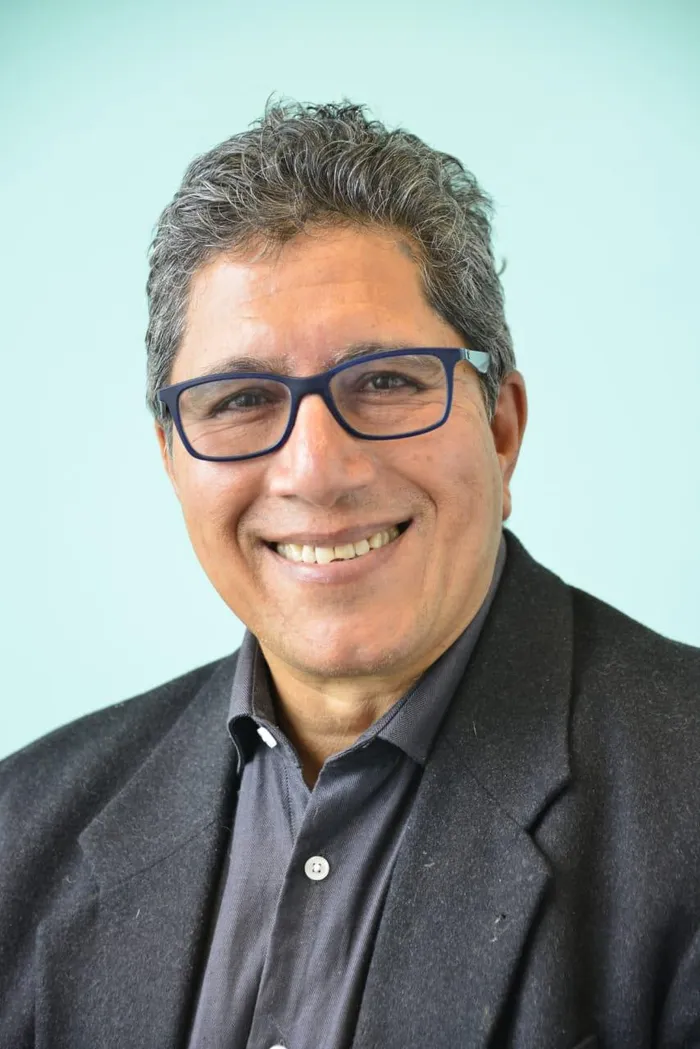
Dr Rudi Kimmie (PhD) is the Interim Director, Aerotropolis Institute Africa (AIA) at the University of KwaZulu-Natal
Image: Supplied
Climate change, ecological destruction and expanding conflict are some of the enduring challenges facing humanity globally.
Locally, in KwaZulu-Natal, we also need to add economic decline and political uncertainty. Yet despite the reification of science, technology and the modern education systems they appear inadequate to address these.
On the other hand, fauna and flora have thrived sustainably on earth for millions of years before human arrival. Natural ecosystems provide shelter, healing and perfect symbiotic design, resilience, and balance, and their silent wisdom offers the most profound curriculum of all — how to live in harmony, not dominance.
Therefore, the answer to how we live, consume and co-exist sustainably on the planet might lie in our closer relationship with the natural world.
Nurturing the value of learning from nature and integrating this into modern knowledge systems is the bold vision emerging from a collaboration between Dr Justin Pringle (Purpose-driven Engineering, Civil Engineering, UKZN) and Dr Rudi Kimmie (Aerotropolis Institute Africa, UKZN), in partnership with the Delft University of Technology (Netherlands) and KZN Wildlife.
With initial learning experiences for civil engineering students at the Pigeon Valley conservancy near UKZN’s Howard College campus, the intention is to expand the merger of natural intelligence with modern scientific inquiry.
Therefore the aim is to establish a unique learning and research space, a ‘living lab’, at the Hluhluwe-iMfolozi Park (HIP) where nature becomes both teacher and textbook and where the ensuing learning outcomes and insights sustains not only the game reserve, but beyond the fences into broader reaches of KwaZulu-Natal.
The choice of HIP as a learning and research site is due to its deep relationship with KwaZulu-Natal. Nestled in the heart of Zululand approximately 400kms from Durban, the pristine game reserve is one of the oldest in the world and home to a diversity of flora and fauna.
This natural asset also has a rich social history as it was once the ancient royal hunting ground of Zulu kings. With the proposed ‘living lab’, the game park is preparing for a new kind of pursuit. This time the hunt is not for game, but wisdom which can be gained from connection, observation, reflection and empathy with nature.
HIP already carries a legacy of learning. It was here that Dr Ian Player and Magqubu Ntombela led efforts to rescue the white rhino from extinction. This was a triumph of empathy and ecological resilience.
Not surprisingly, today the park hosts one of the world’s largest rhino populations, a living testament to what happens when humans choose to collaborate with nature rather than exploit it.
Modern humans’ challenge is how to temper scientific and technological advances in harmony with nature so that we prioritise sustainability. We should acknowledge the fact that nature has withstood and adapted to countless disasters, climate changes and human onslaughts time and time again.
And with ecological threats on the rise (Ecological Threats Report 2024), the pursuit of a more meaningful and sustainable future may actually be found in embracing and understanding the deep wisdom embodied in the natural world.
As its name denotes, a ‘living lab’ is a vibrant hub for learning engagements. As a concept it’s not new and there are different variations where it is applied across the globe.
However, the ‘living lab’ at HIP aspires to be a learning, research and reflection space where besides the pursuit of groundbreaking knowledge, the more profound intention is to rekindle human relationship and empathy with the natural world through learning and living with nature.
A ‘living lab’ at HIP will bring immense benefits to its participants, the game reserve and the local community. In the modern era of rampant technology developments, competitiveness and rising human stress, HIP’s ‘living lab’ proposes a radically simple truth; that nature has always known how to restore balance, adapt, cooperate, and co-exist.
Our human need to reconnect with our natural home is best expressed in a Sufi parable of the ney, a reed flute whose mournful song comes from being cut from its riverbank home.
Humanity, too, suffers this separation from nature. Therefore, the rise of practices like shinrin-yoku (‘forest bathing’ - a Japanese practice of immersing oneself in nature), reflects a deep yearning to reconnect and breathe again in rhythm with the Earth.
The ‘living lab’ is intended to be much more than a learning facility in the bush.
It will evolve to become an invaluable interactive space where researchers, students, communities, and international partners collaborate to co-create solutions to the most pressing challenges of our time such as climate change, sustainable energy and biodiversity preservation.
Nature solutions will be studied, researched and tested. And since nature thrives on diversity, so will this ‘living lab’.
It aims to draw on the combined multidisciplinary and interdisciplinary expertise of KwaZulu-Natal’s universities in collaboration with international partners such as TU Delft (Netherlands) and potential allies from Michigan (US) and Queensland (Australia).
Discussions around potential research projects are already underway. Some of these under discussion include: Converting alien vegetation into biofuel; designing sustainable infrastructure (at the reserve) using engineering expertise; developing local skills and boosting the regional economy through innovation and collaboration.
This will not only make HIP a hub of scientific inquiry, but also a catalyst for inclusive development, empowering local communities and restoring ecological balance.
Besides the educational value that will accrue from research there is also an economic benefit that is anticipated.
Since socio-economic growth is a dire imperative in KZN, there are economic benefits to preserving our natural assets. The ‘living lab’ initiative is also intended to elevate HIP’s tourism potential.
According to StatsSA, in 2019, biodiversity-based tourism contributed R27.7 billion to South Africa’s GDP, representing 13.3% of the broader tourism sector.
As the sector continues to rebound post-COVID lockdown, the ‘living lab’ aims to position HIP as a nexus of ecological education, innovation, and sustainable tourism.
Hence, the initiative is projected to attract thousands of new visitors, researchers, and learners to the region.
In closing, as the world faces unprecedented ecological and social crises, HIP’s ‘living lab’ is not just an academic concept; it’s an economic, ecological and social catalyst designed to empower communities while healing ecosystems.
Hluhluwe-iMfolozi Park once again stands ready to teach. Its message is timeless and profound: Learning to live begins with living to learn.
*Dr Rudi Kimmie writes in his personal capacity. The opinions expressed in this article do not necessarily reflect the views of the newspaper.
DAILY NEWS