


Ayanda Mdluli is the editor of the Daily News.
Image: Picture: David Ritchie/ Independent Newspapers
One of the jewels of Africa, Tanzania faces an unprecedented calamity following its recent election, which has claimed the lives of more than 700 people.
Once celebrated as a beacon of hope and intellectual prowess in Africa, the visions of Julius Nyerere, the nation’s founding father, now seem distant. Nyerere’s legacy of peace and communal prosperity, epitomised in the philosophy of ujamaa, is overshadowed by the current wave of violence and despair.
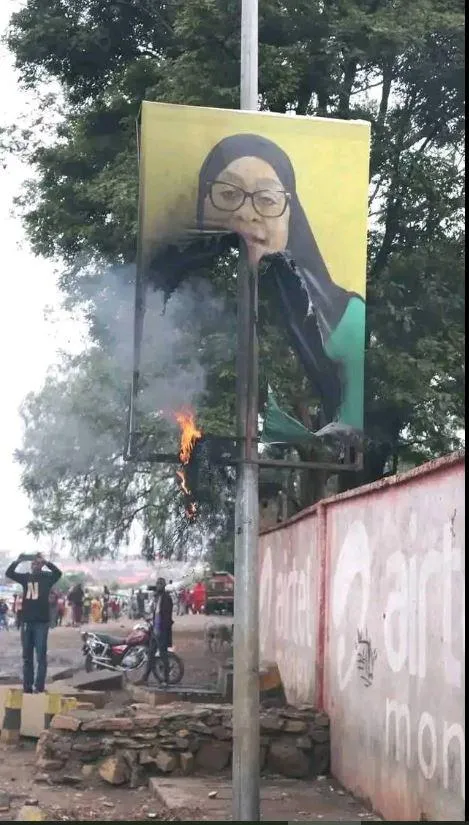
An election poster depicting presidential candidate Samia Suluhu Hassan is set alight
Image: Facebook: One Africa
This week, political tensions escalated as presidential candidate Samia Suluhu Hassan, who was declared the victor with an astonishing 98% of the vote, has faced intense scrutiny and backlash. Despite her claims that the election was "free and democratic," opposition parties quickly dismissed the results as a mockery of the electoral process.
As many challengers remained imprisoned or barred from contesting, concerns over the fairness of the election erupted, amplified by international observers' declarations regarding a lack of transparency.
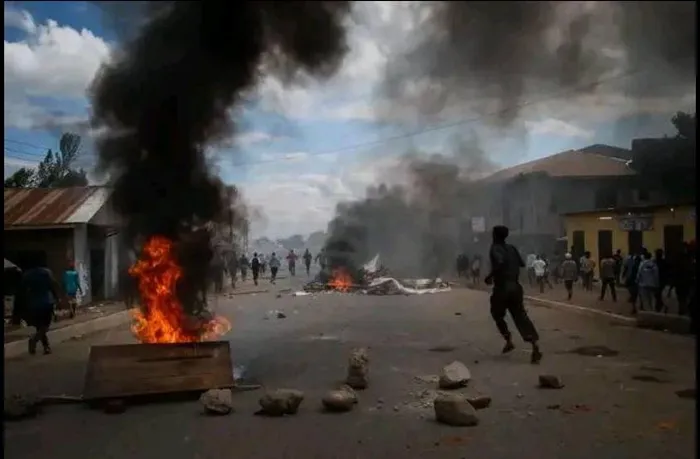
Discontent over the general elections held last week in Tanzania has resulted in widespread protests across major cities across the country, leaving hundreds of people dead. It has been alleged that the government undermined the efforts of the main opposition leaders so that current president Samia Suluhu Hassan's chances to emerge victorious would be improved.
Image: Facebook: One Africa
Historically, Tanzania has been celebrated for its peaceful nature, contrasting sharply with the acts of brutality witnessed today. The concept of ujamaa, translating to "familyhood," emerged as a significant pillar in fostering cooperative economics, allowing communities to jointly build and sustain their economic lives through shared responsibility.
This communal approach, resonating with the African proverb that "it takes a village to raise a child," once defined Tanzania's ethos, an ethos that now stands betrayed.
The grim reality unfolding across the nation paints a disheartening picture of a state forsaken by leaders wielding power without accountability. Ironically, President Suluhu Hassan chose to proclaim her victory while allegedly taking refuge in a military State House in Dodoma, betraying the very principles of security and stability that Nyerere valued and stood for.
For one, how is it that there was no public attendance or other global leaders if the elections were so free and fair? Observers worldwide, alongside local citizens, are left questioning: How has Tanzania, once a progressive leader in the African political sphere, spiralled into this chaos?
The ongoing violence threatens the future of Tanzanian society, where once health, education, and welfare were heralded as communal achievements. Today, as African media practitioners, what we have observed is that the internet has been shut down, broadcasting of news has been suspended, foreign journalists have been banned and those who dare speak out, local journalists included have been jailed.
Local journalists in our African networks have even spoken of dissenting voices being abducted, never to be heard from again. As blood continues to spill, the dreams of a peaceful and united community fade, replaced by the ever-looming shadows of despotism.
The fate of Tanzania hangs precariously in the balance, teetering on the edge of becoming yet another failed state. This tragedy has been brought to us by the very individuals who purportedly claim to serve their citizens.
Tanzania now stands at a crossroad, as over 700 lives are lost in the brutal aftermath of an election marred by controversy.
Will the teachings of Nyerere, be enough to guide the nation, which is a beacon of African intellectual excellence back to the path of peace? In this instance, Only time will tell and until then; Aluta continua!
DAILY NEWS