

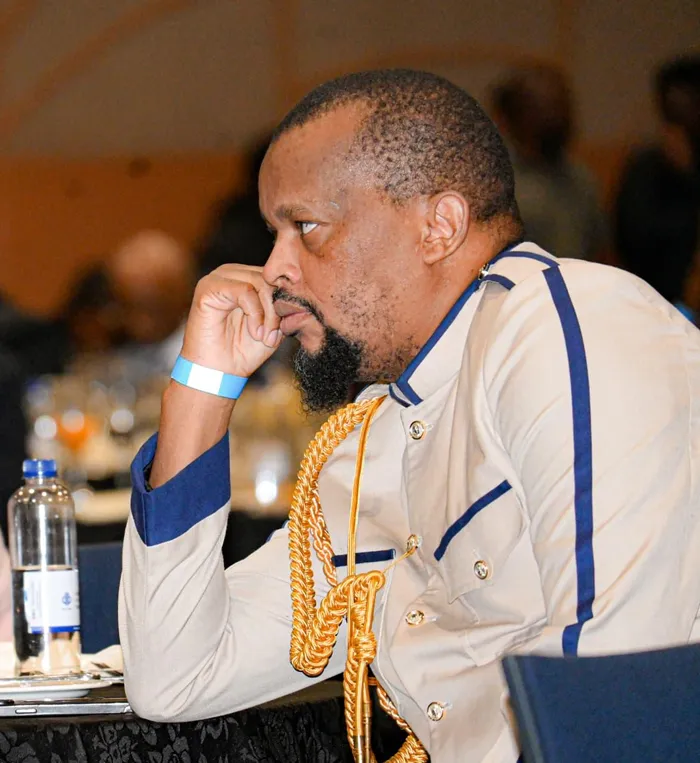
HRH Prince Africa Zulu of the Onkweni Royal House, is the chairperson of the Prince Africa Zulu Foundation Trust, and former spokesperson and head of communications for His Majesty King Misuzulu.
Image: Supplied
The discussion about the future of the name KwaZulu-Natal continues to generate strong reactions across the country. In a previous reflection, the focus centred on the historical origins of the name and the deeper cultural questions surrounding identity and memory.
It became clear that the matter extends beyond simple administrative naming and touches on the historical experience of the people whose civilisation shaped this region long before colonial arrival. The conversation, therefore, deserves thoughtful examination grounded in historical understanding rather than emotion or political misunderstanding.
Eswatini provides a relevant regional example of how restoring historical identity through a name change can strengthen national confidence without undermining diversity. The country adopted the name Eswatini to reflect the historical identity of its people while maintaining its place within the modern international community.
Despite this change, Eswatini continues to remain home to diverse communities who contribute meaningfully to the social and economic life of the nation. The example demonstrates that recognising cultural inheritance does not exclude others but rather provides a stable foundation upon which national unity can grow.
Some observers may argue that Eswatini is a sovereign country rather than a province of South Africa and therefore cannot serve as a comparable example. Such arguments overlook the demographic reality that the Zulu people themselves constitute a population exceeding twelve million citizens within the republic.
A community of such historic depth and demographic presence cannot reasonably be expected to ignore the cultural heritage shaping its identity. Others suggest that because the Zulu Kingdom experienced military defeat during colonial expansion, it forfeited any legitimate claim to historical recognition. Such reasoning misunderstands history because the dignity of a people is never permanently extinguished by military conquest or political defeat.
History reminds us that colonial authorities mobilised manpower from regions such as the Free State and areas within KwaZulu to pursue the capture of Cetshwayo kaMpande. During the conflict of 1879, imperial forces relied not only on British troops but also on auxiliaries recruited from neighbouring African communities.
Many of these auxiliaries were drawn from communities whose cooperation strengthened the colonial military effort against the Zulu Kingdom during that difficult period. Historical memory therefore demonstrates that the defeat of the Zulu Kingdom did not arise from British military strength alone. In places such as Nquthu today, communities of different linguistic backgrounds continue living peacefully alongside Zulu families across territories shaped by those historical alliances.
History also records that some Zulu princes accepted positions offered by the British colonial administration and were installed as chiefs aligned with colonial authority. Such arrangements formed part of a wider imperial strategy designed to stabilise colonial rule after the invasion of the Zulu Kingdom.
These developments inevitably created divisions within the traditional political structure and reshaped leadership patterns under the supervision of colonial administrators. For this reason, it should not be surprising that some voices today resist proposals calling for the removal of the colonial term “Natal”. For many citizens, the continued use of Natal still echoes the colonial wounds inflicted upon the people of KwaZulu during that invasion.
Another dimension of the debate deserves careful reflection. A small segment of the emerging black middle class appears to view the continued presence of the colonial term Natal as a form of cultural buffer.
For some individuals, it symbolically provides a sense of distance from the cultural expectations and traditions associated with the broader Bantu communities of the region. In this interpretation, Natal becomes more than a historical word and functions as a psychological space where identity can be negotiated outside deeper cultural obligations.
The insecurity felt by some within the emerging black middle class is therefore understandable, but it cannot ultimately justify delaying the restoration of historical identity. The recognition of a people’s cultural heritage should not be postponed simply because it unsettles those comfortable within the language of colonial geography. The dignity and identity of a nation must always stand above the personal comfort or social positioning of any particular class.
In some instances, the ambiguity surrounding the province’s identity has created opportunities that certain members of the emerging black middle class have learned to navigate to their advantage.
Within these spaces, influence and proximity to power can sometimes resemble small centres of authority operating outside traditional cultural institutions. In many cases, the defence of the colonial term Natal reflects less concern for history than the preservation of arrangements that have become personally beneficial.
To many observers, the debate about retiring the colonial term Natal is not simply a cultural discussion but also a question of political and social power. In certain circles, the proposal is quietly regarded as a potential shift in influence away from segments of the post-apartheid black bourgeoisie toward communities rooted more directly in indigenous cultural structures.
For this reason, the matter is sometimes framed as a security concern or a destabilising development within established social arrangements. Yet when examined carefully, the issue has less to do with the promises of Convention for a Democratic South Africa (CODESA) and more to do with anxieties about how historical identity might reshape existing balances of influence within society.
The way forward should therefore be guided by democratic maturity and constitutional responsibility rather than fear, speculation or the protection of sectional interests. Government should consider initiating a formal public process allowing citizens, traditional leaders, academics and civil society to express their considered views on the future name of the province.
The Future of the Name KwaZulu-Natal Deserves Thoughtful National DialogueWhether through consultation, a memorandum or another lawful democratic mechanism, the principle must remain the same: the people should be heard clearly and respectfully. In this way, the question can be resolved through national dialogue, historical honesty and democratic legitimacy.
The conclusion of this discussion must therefore be clear and unambiguous: the colonial term “Natal” should now be retired so the province carries the historically grounded name KwaZulu. In doing so, we place the dignity of South Africa first. History will ultimately judge whether this generation possessed the courage to restore clarity to the identity of a land shaped by the civilisation of the Zulu nation.
*The opinions expressed in this article do not necessarily reflect the views of the newspaper.*
DAILY NEWS