

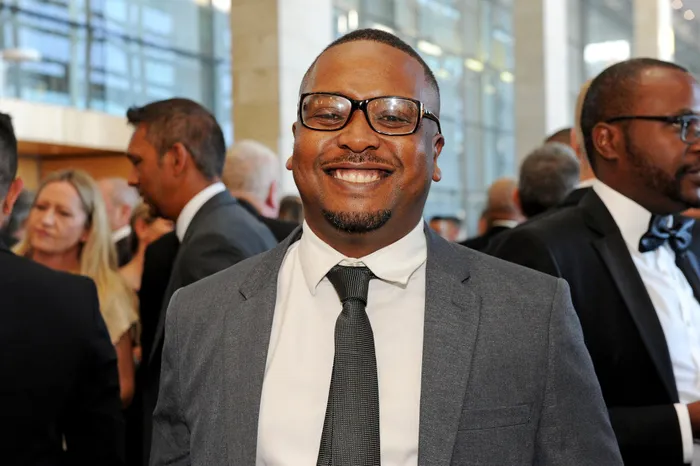
Ayanda Mdluli is the editor of the Daily News.
Image: Picture: David Ritchie/ Independent Newspapers
IN A WORLD increasingly defined by conflict and division, the recent meeting between US President Donald Trump and Chinese President Xi Jinping has been described as a turning point in modern diplomacy.
This significant encounter, witnessed globally, opens a dialogue about a pressing question: How can humanity move beyond the brink of war and towards a more peaceful coexistence?
Prior to this historic meeting, I had the privilege of dining with the Chinese Consul General in Durban, Mr Li Zhigong, and the newly appointed Deputy Consul General.
Our discussions were robust and informative, touching on the harsh realities of our world today.
Together, we raised a fundamental truth: military conflict and the imposition of global sanctions are never solutions.
My personal take from our dinner was that such strategies only inflame tensions and perpetuate a cycle of anger and retribution.
In today’s world, when you switch on the news, we find ourselves surrounded by narratives that glorify warfare and, disturbingly, make us proud of things that we should ordinarily be ashamed of, such as the tragic loss of innocent lives in places like Gaza.
Surely, the image of a dead baby should be enough for the whole world to rise up in outrage?
Instead, we have become so desensitised to such grotesque incidents that we carry on as if it is just another normal day.
With wars escalating and the looming threat of another global conflict, it becomes imperative to ask ourselves: Why do we fixate on what divides us?
We had a very big event in Durban last week, and this question echoed in my conversations with some of the other international media colleagues over lunch at the media centre.
I asked: What legacy do we wish to leave for future generations?
The essentials we seek as human beings are not complicated.
All we want is free healthcare, quality education, adequate housing, stable employment, and business opportunities for personal growth and development.
Above all, we want our governments to provide safe environments in which to nurture families and communities.
Why is it so difficult to understand that a world allowing only a select few to thrive inevitably breeds chaos, bloodshed, poverty, and hunger?
To foster an environment of peace, we must shift our focus away from negativity and strive for a world where we recognise how much we have in common.
Political affiliations and religious beliefs typically act as barriers; however, we find common ground through shared interests in the arts, travel, literature, culture, and science.
When we engage in discussions surrounding poetry, music, film, and technology, it is astounding how quickly we transform strangers into lifelong friends.
As someone who comes from a Christian background, I find myself increasingly concerned by the polarisation that often emerges from discussions about religion and fundamentalist ideologies.
Conversations around Christian fundamentalism, Zionism, and radical Islam tend to exacerbate these divisions.
Which is why it has become even more critical to explore avenues that build enduring, people-to-people relationships instead of perpetuating discord.
In today’s climate, we must actively fight against the narrative of division and embrace our shared vulnerabilities.
We are all part of the same global community, and only through unity can we hope to build a peaceful world for ourselves and for generations to come.
The dialogue must shift from conflict to cooperation, from division to solidarity, with the collective aim of building a better world.
The time for action is now; let us not waste it.
DAILY NEWS