

The historical journey of universal adult suffrage in Zimbabwe, tracing the struggles and triumphs that shaped the right to vote. Understand the implications of recent constitutional amendments on the principle of one man one vote.
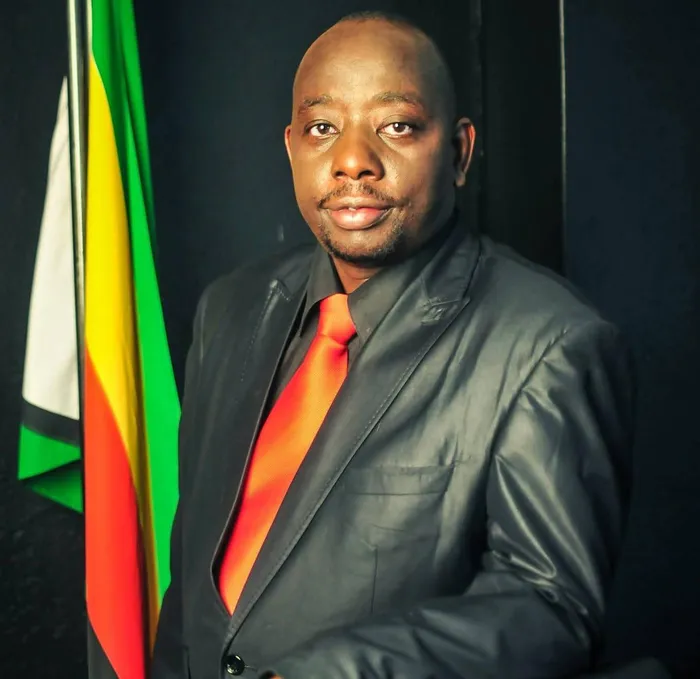
Image: Supplied
As the 90-day public parliamentary consultation process on Constitutional Amendment Bill No. 3 comes to an end today, a number of salient and contentious issues have emerged, one of which is the concept of one man, one vote, or universal adult suffrage the right to vote.
Universal adult suffrage the right of every adult citizen to vote in free and fair elections regardless of race, ethnicity, gender, or class is the cornerstone of modern democracy worldwide.
In Zimbabwe, this right was not a gift of colonial transition but the primary objective of a protracted armed struggle against settler rule.
Alongside land and freedom, it was one of the main causes of the liberation struggle.
This issue featured prominently during the constitutional amendments debate.
It became a point of serious contestation around the proposal to change the presidential electoral system to elect the President through parliament rather than by direct vote.
Critics of the proposal claimed that this change would remove the one man, one vote or universal adult suffrage the right to vote from ordinary Zimbabweans.
The factual and truthful position is that it changes how people exercise that right but does not remove it.
Zimbabweans will still be entitled to one man, one vote even if the presidential electoral system changes; they will now elect the President through their parliamentary representatives rather than directly.
People will vote for MPs, thereby placing their trust and confidence in them to elect the President through parliament.
This means their right to vote with equality remains intact, but when it comes to electing the President, they will now vote in a manner similar to that in Botswana or South Africa.
In Botswana, voters elect MPs through first-past the post, and those MPs then elect the President.
By contrast, in South Africa, they vote for political parties through proportional representation, with MPs emerging from party lists.
This system ensures that the number of seats a political party receives in parliament is directly proportional to the percentage of votes it obtains in an election.
Thus, a President can be elected by parliament, whether the MPs are elected through first-past-the-post, the Westminster system, or proportional representation.
The argument that one cannot elect a President through parliament unless there is proportional representation first is, therefore, incorrect, uninformed, and false, just as saying that electing a President through parliament takes away one man, one vote from the people.
The history, development, and realisation of universal adult suffrage in Zimbabwe is a story of transition from a racially exclusionary system to a constitutional democracy, punctuated by intense political struggles to define the inclusivity of that vote.
For nearly a century, Rhodesia (Zimbabwe) operated under a political system designed to perpetuate white minority rule.
The qualified franchise was historically restricted through education, property ownership, and income qualifications.
These qualifications were structured to systematically disenfranchise the indigenous African population.
Even when some African voting was permitted, it was within a "two-roll" system designed to ensure that the small white population retained control over the vast majority.
The struggle for universal suffrage gained momentum in the 1950s and 60s, driven by nationalist parties like the Southern Rhodesia African National Congress, National Democratic Party, Zapu, and then Zanu, who adopted the slogan "one man, one vote," meaning universal adult suffrage or the right to vote.
This concept and its attendant mantra were about the right to vote, whether through electing a Prime Minister as was the case in Zimbabwe from 1980 to 1987 or a President from 1987 to 1990 through parliament or direct elections, as happened from 1990 onwards.
This demand in Rhodesia was met with severe authoritarian state repression, including the banning of parties, detention of leaders, and strict police control over civil and political liberties.
The failure of early constitutional negotiations with the Rhodesian Front government under Ian Smith led directly to the intensification of the liberation war from the mid-1960s.
The struggle was waged with the specific objective of regaining political rights and the right to vote, which were viewed as essential to reclaiming lost land and dignity.
The one man, one vote principle was at the centre of the struggle, signifying the right to vote or universal adult suffrage, where everyone's vote carries equal weight and impact through free and fair elections.
The issue of which electoral system was to be used after the struggle was a matter of future choice and debate.
The choice of the electoral system should naturally not violate the right to vote.
While a cosmetic attempt at universal suffrage occurred in 1979 under the Internal Settlement that led to "Zimbabwe-Rhodesia," this did not meet the demands of the liberation movement or gain international recognition, as it still left significant power in the hands of the white minority.
The true historic turning point was the 1979 Lancaster House Agreement.
This negotiated settlement forced a return to British rule during the transition, followed by the adoption of a new constitution that enshrined the principle of universal adult suffrage for all citizens over 18, regardless of race, class, gender, or income. In March 1980, the first genuinely democratic election was held.
Millions of Africans, many of whom had never voted before, participated. Zanu PF, led by Robert Mugabe, won the election, marking the birth of Zimbabwe on April 18, 1980, and the formal implementation of the "one man, one vote" principle.
Since 1980, universal adult suffrage has been enshrined in the constitution; however, its practical application and expression have faced continuous challenges. Initially, Zimbabweans elected the Prime Minister through parliament.
Zimbabwe then transitioned from a parliamentary system to an executive presidency in 1987, before electing its President.
This change was not a result of popular demand but part of Mugabe's power consolidation and retention plan driven by his one-party state agenda. This marked the origins of the current imperial executive presidency in Zimbabwe.
Initially, Zimbabwe had a ceremonial presidency with a six-year tenure. It then moved to an executive presidency, which was also six years. In 2008, the executive presidency was changed to five years, aligning it with the life of parliament to ensure they ran coterminously.
To ensure that the tenure of parliament, which was due to end in 2010, was cut by two years to align it with the presidential term ending in 2008 from 2002.
The current 2013 constitution reaffirmed universal suffrage as a pillar of democracy and established a more robust framework for human rights.
It significantly improved the framework for electoral participation, including the establishment of an independent Zimbabwe Electoral Commission. Despite the legal right to vote, the implementation of that right has been fraught with challenges.
The 2002 and 2008 elections were marred by severe political violence and intimidation, impacting the freeness and fairness of the vote.
Furthermore, questions have frequently been raised regarding the enfranchisement of the diaspora, with many citizens living outside Zimbabwe struggling to participate in elections. During the current constitutional amendments, there will be some consequential legal changes later to ensure the diaspora vote.
This has been welcomed by many, as millions of Zimbabweans in the diaspora are currently not allowed to vote despite contributing billions to the economy back home through financial remittances.
In recent years, the focus of the electoral struggle in Zimbabwe has shifted to the protection of the suffrage rights won in 1980.
The current debate about one man, one vote revolves around the contentious amendments to the constitution, such as proposed changes to the method of electing the President, with critics arguing that moving away from direct public votes could de facto diminish the value of the universal suffrage achieved during the struggle.
However, proponents argue that this does not diminish universal adult suffrage, as seen in Botswana, South Africa, India, Germany, the United Kingdom, the United States, and other progressive countries, even if they are in the minority in the world.
Approximately 110 countries elect their Presidents directly through popular vote, while around 51 countries use indirect election systems.The journey to universal adult suffrage in Zimbabwe is a fundamental part of the nation’s history.
It was realised through the sacrifices of the liberation war, transitioning the country from a closed, racist franchise to a democratic system where everyone's vote is equal and has the same impact the real and true meaning of one man, one vote.
While the right to vote for all is now legally and constitutionally secured, the ongoing struggle for democracy is defined by the continuing efforts of its citizens to ensure that this right is meaningful, free from intimidation, and fully reflective of the popular will.
The current demands for reforms are always guided by the understanding that universal adult suffrage, often described as the cornerstone of modern democratic systems, represents the principle that all adult citizens, regardless of wealth, income, gender, social status, race, or ethnicity, possess the right to vote in public elections.
It is the transition from a restricted franchise where voting was a privilege of a few to an inclusive right of the many.
As a foundational element of democracy, it ensures that government authority is derived from the will of the people.
Universal suffrage means that it is often paired with "equal suffrage," meaning every citizen has one vote and all votes carry equal weight.
It implies that no one can vote on another’s behalf and that voting is a personal political right aimed at fostering a truly representative government.
The international community has firmly established universal suffrage as a fundamental human right.
The Universal Declaration of Human Rights, Article 21, states that "the will of the people shall be the basis of the authority of government," to be expressed in periodic and genuine elections by universal and equal suffrage.
The International Covenant on Civil and Political Rights treaty further reinforces this right, affirming that every citizen has the right to vote and be elected without unreasonable restrictions such as race, gender, property, class, or education.
While formally adopted by most countries, its practice faces various obstacles and is not entirely universal in every context, including in Zimbabwe.
True universality is often hindered by issues like voter registration requirements, intimidation, lack of voter education, or unequal access to identification, especially in developing democracies or for those in the diaspora.
Artificial intelligence and biometric systems are increasingly used for voter registration and verification to ensure integrity; however, they also pose risks of cybersecurity threats and technological surveillance.
Universal adult suffrage is more than a checkbox in democratic theory; it is a vital, living process that transforms subjects into citizens.
As affirmed by UN instruments and national constitutions, it is a non-negotiable right for ensuring a just, equitable, and representative society.
While challenges in practice exist, particularly regarding access and integrity, universal suffrage remains the key differentiator between exclusionary authoritarianism and participatory democracy.
Just like in every reasonably democratic society, the one man, one vote right is non-negotiable and must and indeed does remain intact in Zimbabwe.
🔴 Kelvin Jakachira is a senior Zimbabwean journalist who works for The NewsHawks. He has previously worked for the Zimbabwe Independent, Daily News, ZiiFM Stereo, and Financial Gazette.