

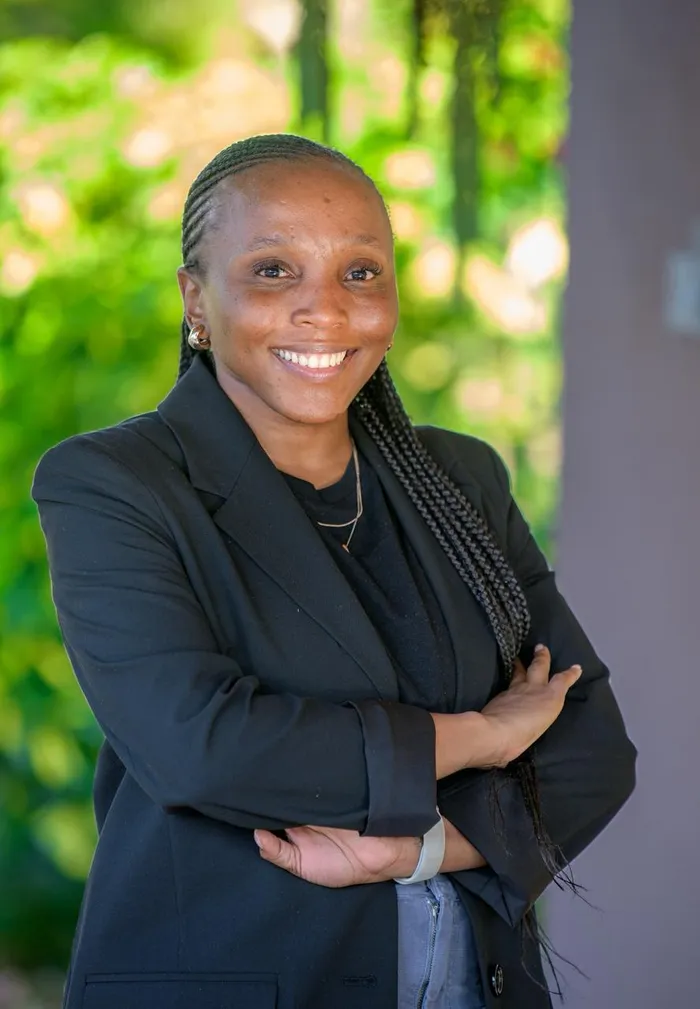
The Zimbabwe Council of Churches raises critical concerns about the Constitution of Zimbabwe (Amendment No. 3) Bill, 2026, questioning the consistency of their advocacy and the historical context of their engagement in constitutional matters.In Picture: Gcotyelwa Jimlongo is a Political Campaigns Researcher at the Political Campaigns Resource Hub.
Image: Supplied
When the Zimbabwe Council of Churches (ZCC) told Parliament that the Constitution of Zimbabwe (Amendment No. 3) Bill, 2026, is “constitutionally, morally, and democratically compromised,” it delivered one of the clearest and most forceful statements the country’s major church bodies have ever made on constitutional matters.
This is welcome. Yet the very strength of their current stance invites a deeper, more honest question: Is this the flowering of a steady prophetic tradition, or merely the latest chapter in a long pattern of bold starts followed by quiet retreats?
The three institutions at the centre of this story—the Zimbabwe Catholic Bishops’ Conference (ZCBC), the Zimbabwe Heads of Christian Denominations (ZHOCD), and the ZCC—carry genuine moral authority.
The ZCBC, established by Roman decree in 1969, is one of Zimbabwe’s oldest organised church voices.
The ZHOCD brings together the ZCBC, ZCC, Evangelical Fellowship of Zimbabwe, and the Union for the Development of Apostolic Churches in Zimbabwe Africa so that Christians can speak with one voice on national issues.
The ZCC itself represents thirty-two Protestant denominations and reaches at least three million citizens.
These are not fringe actors; they are rooted, respected institutions with a legitimate place in Zimbabwe’s public life.
However, legitimacy is not the same as consistency.
When we examine the churches’ record across four decades of constitutional change, a troubling pattern emerges—one of engagement that advances when the waters are calm and retreats the moment the boat begins to rock.
Consider the foundational irony. In 1987, Constitution Amendment No. 7 Act abolished the Prime Minister’s office and created the powerful Executive Presidency that still shapes our politics today. Two years later, Amendment No. 9 Act removed the second chamber of Parliament.
These changes laid the very groundwork for the “Imperial Executive” that the churches now rightly criticise. Yet neither the ZCBC nor the ZCC raised a significant public voice against them.
The early post-independence government enjoyed immense moral legitimacy after the liberation struggle, and church-state relations were largely cooperative. Still, the silence was deafening.
The constitutional architecture that the churches today call compromised was, in fact, built while they stood aside.
A decade later, in 1997, the ZCC helped launch the National Constitutional Assembly (NCA), a broad citizens’ movement that ultimately defeated the government in the 2000 referendum on a new Constitution drafted by the Constitutional Commission.
That was a genuine moment of courage. However, as the NCA gained momentum and the political temperature rose, the ZCC stepped back.
A church leader in Sara Dorman's ‘Rocking The Boat? In ‘Church-NGOs And Democratisation In Zimbabwe’ captured the dilemma perfectly: “As churches, we had to take issues that don’t raise too much dust or rock the boat too much—but the boat was rocking.”
The retreat was conscious. Its consequence was painful.
The vacuum helped pave the way for the violence and polarisation of 2000 and beyond, during which the churches again fell largely silent.
By contrast, the churches played a constructive role in the 2009–2013 Constitution-making process under the Government of National Unity.
Through the influential 2006 “Zimbabwe We Want” document and vigorous mobilisation of congregations during the COPAC outreach, they helped secure the participatory 2013 Constitution. That achievement is real and should be honoured.
Yet today, the same bodies invoke the legitimacy of that very Constitution as the standard by which they judge the Constitution of Zimbabwe (Amendment No. 3) Bill, wanting.
The irony is unmistakable: institutions that once helped legitimise the current framework now use it to challenge further changes.
The 2019 ZHOCD pastoral letter offered yet another illustration of the pattern. Church leaders called for a seven-year “national Sabbath” on political contestation—an extraordinary proposal to suspend elections and rebuild trust.
When the idea met fierce criticism, they quietly withdrew it. Once again, a bold theological intervention gave way to retreat the moment the waves grew high.
This is not the record of a consistently prophetic voice. It is the record of a contingent actor—effective when conditions are favourable or pressure is low, but prone to withdraw when political costs rise.
The churches’ engagement has too often been reactive rather than sustained, episodic rather than disciplined, and vulnerable to internal divisions or external co-optation.
None of this history disqualifies the ZCC, ZCBC, or ZHOCD from speaking boldly in 2026. On the contrary, their advocacy on the Amendment No. 3 Bill is understandable. But credibility is not automatic. It must be earned and then defended.
The decisive test is not whether the churches criticise the Bill today, but whether they possess the institutional discipline, political independence, and historical self-awareness to hold that line when the inevitable pressure to retreat arrives—as history shows it always does.
Zimbabwe stands at a crossroads. The boat is rocking once more. This time, let the churches refuse to let it drift back into the shallows of silence or the shallows of political correctness.
Let them embrace, with unwavering resolve, the God-given prophetic and non-partisan role they have sometimes glimpsed but never fully sustained.
The future of constitutional democracy in our country may well depend on whether, this time, they keep the boat steady and steer it toward deeper waters of justice, accountability, and genuine people-driven governance. The moment demands nothing less.
Gcotyelwa Jimlongo is a Political Campaigns Researcher at the Political Campaigns Resource Hub, a subsidiary of the International Centre for Political Campaigns