

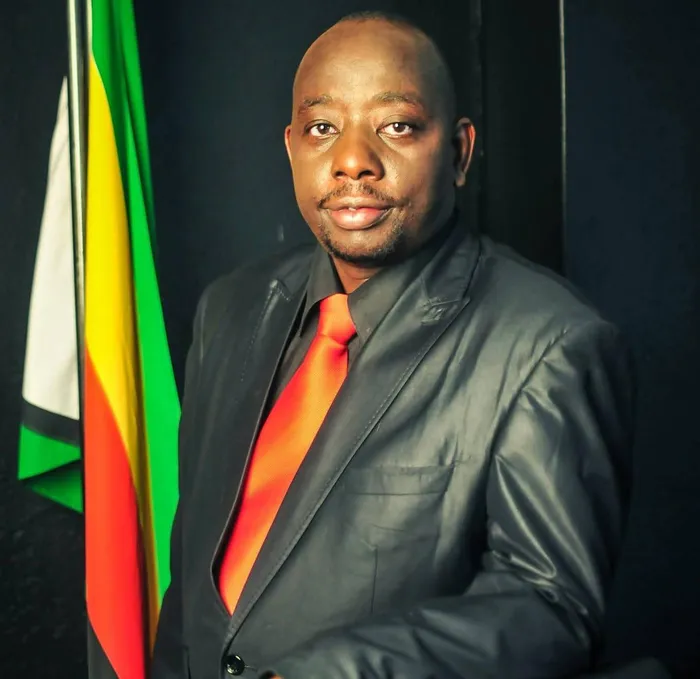
Explore the critical debate surrounding Zimbabwe's Constitutional Amendment Bill No. 3, which questions the validity of direct presidential elections versus a parliamentary system.. In Picture: Kelvin Jakachira
Image: Supplied
As the debate on Zimbabwe's Constitutional Amendment Bill No. 3 (CAB3) continues and heads to parliament following the recently concluded parliamentary public consultation process, one of the key issues is whether the country should maintain a direct presidential election model or shift to a parliamentary system where the president is elected by the legislature.
This discussion extends beyond the question of whether a referendum should be held or whether parliament has the legal authority to make constitutional amendments.
It now revolves around engaging with the reality of the situation, whether right or wrong in terms of process.
The purpose of the debate should not be to win an argument but to shed light and insight on public discourse, helping the people, voters, and legislators make informed and better decisions throughout the process.
The architecture of executive election systems is not a neutral administrative variable; it is one of the most consequential decisions in constitutional design, shaping the legitimacy of executive power, the dynamics of executive-legislative relations, and the long-term trajectory of democratic consolidation.
When states choose between direct and indirect elections, they are making a foundational choice about how power is sourced, constrained, and transferred. In the current CAB3 debate, critics of the bill and those advocating for Zimbabwe to retain a direct presidential election system have employed a numerical argument: approximately 110 countries in the world directly elect their president, compared to only 51 that do so indirectly.
Their argument suggests that the global majority therefore vindicates the direct model as the democratic standard in contrast to electing a president through parliament. This opinion-editorial tests that argument.
While it accepts the 110/51 count, which, as this research shows, is a defensible and methodologically sound figure, it disaggregates the 110 (strictly speaking, 108) to reveal what that majority entails and demonstrates that the majority of countries with direct presidential elections are, in fact, authoritarian states and dictatorships.
Contemporary Zimbabwean history illustrates this point.
The current direct presidential election system is clearly rooted in the 1987 Unity Accord between Zanu and Zapu, in the context of the Matabeleland atrocities and the late former president Robert Mugabe's one-party-state agenda.
The current direct presidential election system and the imperial presidency were not products of popular will or democratic aspiration; far from it, they are relics of the one-party state agenda and Mugabe's power consolidation and retention plan.
Whether Zimbabwe retains the current presidential system or transitions to a parliamentary model is not the primary issue; rather, it is essential to show that the mere fact that most countries elect their leaders via direct elections does not inherently make them more democratic or reflect international best practices.
When the 110 direct-election states are unpacked by history, region, and regime type, the overwhelming majority are former military regimes, former one-party states, former socialist states, or current authoritarian systems.
The evidence is overwhelming: the direct presidential election model is not the hallmark of liberal democracy. Historically and statistically, it is the preferred institutional design of dictatorships in transition.
The Mugabe example and legacy fit this narrative.
Mugabe sought the direct presidential election system for himself in 1987 when he introduced it through the Lancaster House Constitution Amendment No. 7.
In 2013, Mugabe and the late founding MDC leader Morgan Tsvangirai conspired to retain the direct presidential system with a national referendum as a rubber stamp.
While some may wish to pretend otherwise for immediate convenience and to win the current debate, the truth is that the 2013 Constitution was an elite political pact and compromise rather than a flawless reflection of grassroots popular will.
Just like its historical constitution and constitutional amendment predecessors in 1979 and 1987, its creation and adoption were driven by necessary negotiations between opposing political parties.
It was a negotiated marriage of convenience between the ruling Zanu PF and the two MDC formations or factions.
While civil society groups like the National Constitutional Assembly pushed for deep reform, the final document was heavily shaped by a give-and-take among political elites, resulting in provisions that balanced democratic institutions with retained presidential powers.
Comparing these three landmark Zimbabwean agreements reveals several shared characteristics: compromise, concessions, and a balance of interests. In 2013, the people were mobilised by political parties to make stage-managed submissions and to vote for the product of this choreographed process.
That is the truth of what happened. Anything else is revisionist, being economical with the truth, or simply a misrepresentation, if not deceit and falsehood.
This opinion-editorial is structured in six parts: verification and methodology of the 110/51 count; disaggregation of the direct-election group by region and regime history and type; analysis of the indirect-election group; a specialised analysis of the Commonwealth of Nations; the specific case of Zimbabwe; and an analytical synthesis assessing the thesis against the strongest counter-arguments.
The figures of approximately 110 countries utilising direct presidential elections and 51 countries employing indirect elections are consistent with a rigorous, bottom-up classification of all 193 United Nations member states, conducted for this op-ed. The count rests on three explicit methodological decisions that are necessary for internal consistency.
First, the universe of comparison is republican states only. Monarchies, whether absolute or constitutional, are excluded from both the direct and indirect counts.
A monarchy is not a presidential system of any kind. Whether it is the United Kingdom's Westminster model or Saudi Arabia's absolute sultanate, the executive is not derived from a presidential election.
Excluding the 41 monarchies from the 196 states surveyed leaves a universe of 155 republican and party-state systems.
Second, party-states, such as China, Vietnam, Laos, Cuba, North Korea, Eritrea, and Afghanistan, among others, are classified as indirect.
Their national assemblies or party congresses formally elect or confirm the head of state through a legislative mechanism, even if the process is non-competitive.
This is the correct comparative classification: the mandate is not derived directly from universal popular suffrage.
Third, Angola and Guyana are classified as indirect-election systems; hence, the accurate count is 108. In both countries, the president is the leader of the party that wins the majority of parliamentary seats, determined by popular vote.
The popular mandate directly triggers the presidential appointment. The count is therefore methodologically robust and internally consistent.
The Zimbabwean opposition and civil society argument, supported by some analysts and lawyers, treats the 110 as a homogeneous democratic bloc in their endorsement of direct election. Yet disaggregation reveals the opposite.
The 110 is not a coalition of democracies; in its dominant composition, it is a record of authoritarianism.
Latin America, with 19 states, represents the global epicentre of pure presidentialism, and its embrace of direct presidential elections is inseparable from its experience of bureaucratic-authoritarian military regimes during the Cold War era.
Following the democratic transitions of the 1980s and 1990s, constitutional framers sought to establish executives with direct popular mandates specifically to counterbalance the residual institutional power of the armed forces and prevent military veto over civilian politics.
The Latin American transitions were not organic democratic evolutions. In Brazil, the 1984 Diretas Já movement saw millions take to the streets demanding direct elections precisely because the military regime had used indirect electoral mechanisms to insulate itself from popular accountability.
In Chile, the directly elected executive inherited from the Pinochet constitution was gradually purged of its unelected military senators. In Argentina, the indirect electoral college was replaced by a direct qualified plurality system in the 1994 Pacto de Olivos.
In Uruguay, described in contemporaneous reporting as a country with one of the highest per capita rates of political prisoners in the world during the 1973 to 1985 military government, the armed forces extracted amnesty concessions in exchange for permitting the restoration of civilian rule via direct election.
Of the 19 Latin American directly elected presidencies, 18 have a significant military, one-party, or authoritarian heritage.
The sole exception, Costa Rica, is notable precisely because it abolished its army in 1948 and has maintained civilian democratic continuity ever since.
Coming closer to home, Africa contributes the single largest bloc to the direct-election count, with 43 states.
The historical explanation is consistent across the continent. Following independence, largely in the 1960s, most African leaders, some of whom were supported in their liberation struggles by the Soviet bloc, argued that multiparty democracy would exacerbate ethnic and regional divisions, thus institutionalising single-party systems in the name of national unity.
By the late 1980s, facing severe economic stagnation, structural adjustment pressures, and the withdrawal of Cold War largesse, these one-party governments were forced to liberalise, particularly after the collapse of the Berlin Wall and the disintegration of the Soviet Union.
The mechanism of liberalisation was, in nearly every case, the adoption of direct presidential multipartyism.
As documented in the Friedrich Ebert Stiftung-published study, Transitions Without Consolidation(1994), the African democratisation wave of the early 1990s was characterised by transitions that were managed rather than genuine; incumbent one-party apparatuses retained the centralised presidential structures they had built and simply rebranded them as multiparty direct elections.
The result, extensively documented by the Electoral Institute for Sustainable Democracy in Africa, was the emergence of dominant-party systems in which direct elections reproduced incumbent hegemony rather than enabling executive turnover.
Of the 43 African direct-election states, all but Namibia, which was born as a multiparty democracy in 1990 yet remains under SWAPO's unbroken dominant-party control, have a documented history of single-party or military authoritarian governance. The African bloc alone accounts for 39% of all direct-election states globally.
The explanation lies in the one-party state agenda and the imperial presidency aspirations of its authoritarian leaders. This narrative also applies to Zimbabwe.
The direct presidential election system in Zimbabwe is not a product of popular demand and will, but rather an authoritarian design.
Further research shows that Asian presidential and semi-presidential systems present a highly variable landscape, though the dominant pattern is consistent with the global trend: where direct presidential elections exist, they are most often the product of transitions from military or one-party authoritarian regimes.
South Korea provides the clearest success story. Following decades of military rule under Park Chung-hee and Chun Doo-hwan, the 1987 June Democracy Movement forced constitutional revisions restoring direct presidential elections.
This transition permanently removed the military from executive decision-making and anchored South Korea's subsequent democratic consolidation.
The Philippines followed a similar trajectory after the 1986 People Power Revolution that ended the Marcos martial law regime.
Indonesia's 2004 constitutional amendment establishing direct presidential elections came after the collapse of Suharto's three-decade 'New Order' military government.
Elsewhere in Asia, across 20 states, the legacy of authoritarianism has disrupted rather than produced direct electoral mechanisms.
Myanmar's military maintained authority even through the 2010s quasi-civilian transition by retaining a constitutionally guaranteed 25% unelected parliamentary bloc, and the February 2021 coup eliminated even that restricted civilian space.
In Central Asia, bordering Eastern Europe, the post-Soviet presidencies of Kazakhstan, Uzbekistan, Turkmenistan, Tajikistan, and Kyrgyzstan are direct-election systems that are simultaneously authoritarian consolidations, where elections serve to legitimise personal rule rather than to transfer power.
In Eastern Europe, spanning 18 states, the collapse of the Soviet Union and the Eastern Bloc between 1989 and 1991 required rapid constitutional engineering across the region.
The prevalent choice among successor states was semi-presidential or presidential systems with direct executive elections.
The logic was specific to the transition moment: newly empowered democratic oppositions lacked the organisational capacity to dominate parliamentary elections, while reformed communist parties retained significant financial resources and patronage networks.
A directly elected president, potentially a charismatic figure such as Lech Wałęsa in Poland, could capture a national majority vote more readily than a fragmented opposition coalition could win a parliamentary majority.
The European Parliament's 1989–90 analysis of democratic change in Eastern Europe documents this institutional calculus explicitly.
Over time, outcomes diverged sharply. States that constrained the presidency and strengthened parliaments, such as the Baltic states, Czech Republic, Slovakia, and Slovenia, consolidated as stable democracies.
In contrast, states that concentrated power in the directly elected executive, such as Russia, Belarus, Azerbaijan, and the Central Asian republics, drifted into authoritarianism.
Georgia illustrates the trajectory in reverse: having experienced the direct-election model for three decades, its parliament voted in September 2017 to switch to the indirect parliamentary election of the president, with the first such election conducted by a 300-member electoral assembly in December 2024.
Outside the four major authoritarian-heritage clusters, a small group of established democracies and hybrid systems—10 states—use direct presidential elections. These states constitute the principal counterarguments to the thesis that direct election correlates with authoritarianism.
The 51 states using indirect election of the executive encompass a wider variety of institutional designs but are distinguished from the direct-election group by a markedly stronger association with stable, consolidated democracy.
The Freedom House data on regime type, as reported in the OpenStax Introduction to Political Science(2022), is stark: 80% of parliamentary countries are categorised as 'Free', compared to only 39% of presidential regimes and 38% of semi-presidential regimes.
Juan Linz's foundational 1990 essay "The Perils of Presidentialism" in the Journal of Democracyargued that the vast majority of stable democracies are parliamentary, and that the only presidential democracy with a long history of constitutional continuity at that time was the United States.
The indirect-election group is disproportionately concentrated among OECD member states, Commonwealth members, and the highest-ranked countries on democratic indices.
Of the 38 OECD members, approximately 31 use parliamentary or indirect systems. Of the G7, only France and the United States use direct election; Germany, Italy, Canada, Japan, and the United Kingdom do not.
The Commonwealth of Nations, with its 56 member states spanning Africa, Asia, the Americas, Europe, and the Pacific, provides the most directly relevant comparative framework for Zimbabwe's constitutional choices.
Zimbabwe was a member from independence in 1980, was suspended in March 2002, formally withdrew effective 7 December 2003, and is currently seeking readmission.
The result is unambiguous: 35 of the 56 Commonwealth members use indirect election of the head of government; 21 use direct election.
The 21 Commonwealth states that have adopted direct presidential elections are: Cameroon, Cyprus, Gabon, The Gambia, Ghana, Guyana, Kenya, Kiribati, Malawi, Maldives, Mozambique, Namibia, Nigeria, Rwanda, Seychelles, Sierra Leone, Sri Lanka, Tanzania, Togo, Uganda, and Zambia.
Removing the monarchies from this group is straightforward; there are none. Neither Eswatini nor Brunei falls into the direct-election category; both are in the indigenous monarchy group using non-electoral executive selection.
Of the 21 direct-election Commonwealth states, 13 are African former one-party states. Nigeria, The Gambia, and Namibia are the remaining African Commonwealth direct-election states.
Nigeria is characterised by alternating military juntas and multiparty republics (military rule from 1966 to 1979 and from 1983 to 1999). The Gambia operated under Yahya Jammeh's de facto autocracy from 1994 to 2017.
Namibia is the sole African Commonwealth direct-election state without a formal one-party period, though SWAPO has governed without interruption since independence in 1990.
South Africa and Botswana are the most relevant regional benchmarks for Zimbabwe's constitutional choices.
Both are Commonwealth members, both are southern African states, and both use parliamentary indirect election of the executive president.
In South Africa, the National Assembly elects the president from among its members under Chapter 5 of the Constitution.
The elected person immediately ceases to be a member of the National Assembly. The president holds executive authority but derives the mandate from parliamentary confidence, not from a direct popular vote.
In Botswana, Section 32 of the Constitution provides that the presidential candidate of the party winning a majority of National Assembly seats automatically becomes president.
If no party wins a majority, the National Assembly votes. The head of government's mandate is thus determined by parliamentary arithmetic, not by a separate direct presidential ballot.
Zimbabwe seeks to rejoin the Commonwealth. It does not seek to rejoin as one of the 16 African states in the direct-election minority, a minority composed overwhelmingly of former one-party systems.
It seeks to rejoin as part of the 35-member indirect-election majority, alongside South Africa and Botswana. Zimbabwe's direct presidential election system firmly places the country in a group of authoritarian and, in some cases, failed states.
In brief, direct presidential elections dominate global political frameworks; yet paradoxically, they are most heavily concentrated within authoritarian states and dictatorships across Africa, Latin America, and Asia.
While standard democratic theory associates direct citizen voting with popular sovereignty and robust governance, the operational reality within these macro-regions highlights a stark divergence.
Dictatorial and competitive authoritarian regimes routinely co-opt direct election typologies to simulate democratic legitimacy, institutionalise centralised executive dominance, and systematically bypass institutional checks and balances.
This comparative analysis explores how direct and indirect selection mechanisms function across varying levels of democratic consolidation, demonstrating that the structural mechanics of an election system yield profoundly different results depending on the underlying institutional ecosystem.
Ultimately, a comparative analysis reveals that the democratic utility of any selection mechanism is not dictated by the directness of the vote, but rather by the strength and autonomy of the institutional framework surrounding it.
Kelvin Jakachira is a senior Zimbabwean journalist who works for The NewsHawks. He has previously worked for the Zimbabwe Independent, Daily News, ZiiFM Stereo, and Financial Gazette.