

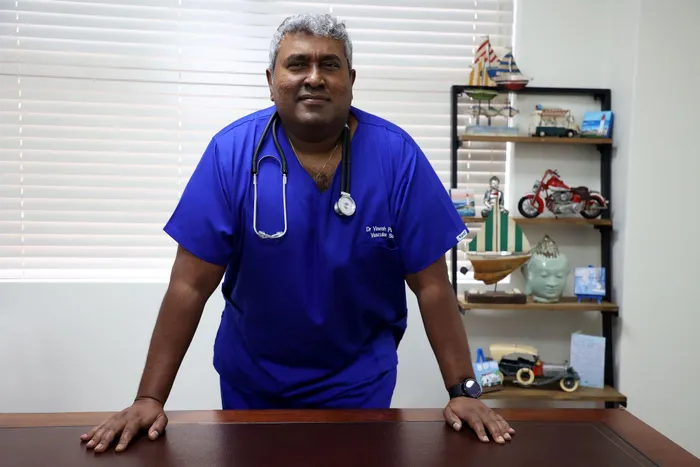
Venous disease is often overlooked and increased awareness can lead to better health outcomes, as leading vascular surgeon Dr Vinesh Padayachy shares critical insights during International Vein Week.
Image: Supplied
As South Africa joined the global community in observing International Vein Week, healthcare leaders are intensifying efforts to highlight venous disease as a significant yet frequently under-recognised public health concern.
Dr Vinesh Padayachy, a leading vascular surgeon at the Lenmed Ethekwini Hospital and Heart Centre and founding member of South African Lymphatic & Venous Society (SALVS), is calling for increased public awareness regarding venous-lymphatic conditions that affect millions but often go undiagnosed until they reach critical stages.
Venous diseases, which include varicose veins, Deep Vein Thrombosis (DVT), and chronic venous insufficiency (CVI), are far more than just aesthetic concerns. According to Dr Padayachy, these conditions are frequently overlooked because their early symptoms—such as leg heaviness, swelling, or persistent fatiguen are often dismissed as signs of ageing or everyday exhaustion.
"Awareness serves as a powerful catalyst for change," says Dr Padayachy. "It is crucial for both the public and healthcare professionals to have a deeper understanding of these diseases. Early detection and treatment can dramatically improve patient outcomes and quality of life".
In South Africa, the prevalence of venous disease is closely linked to non-communicable lifestyle factors.
Dr Padayachy highlights that conditions like hypertension, diabetes, obesity and sedentary lifestlyles significantly increase the risk of vascular complications.
If left untreated, seemingly minor conditions such as spider veins can progress to chronic venous insufficiency and debilitating venous ulcers. These wounds are painful, slow to heal, and place considerable strain on both patients and healthcare systems. In advanced cases, complications may even lead to limb-threatening conditions.
Common risk factors include:
The good news is that the field of vascular surgery has evolved rapidly. Dr Padayachy, a pioneer who performed Africa's first orbital atherectomy, emphasizes that modern treatments are increasingly minimally invasive.
"In the past, we relied on traditional surgeries with longer recovery times. Today, we have advanced tools like radiofrequency ablation and specialized microcatheters that allow us to treat blockages and faulty valves as outpatient procedures with minimal discomfort," he explains.
Ethekwini Hospital and Heart Centre encouraged the public to monitor their leg health closely.
Dr Padayachy advises maintaining an active lifestyle, wearing compression garments if at high risk, and seeking a professional evaluation if you notice persistent swelling or skin changes around the ankles.
"We envision a future where venous health is part of regular health discussions," concludes Dr Padayachy.
"Don’t wait for a wound to appear before you seek help. Proactive management today is the best way to ensure your long-term mobility and health".
For more information or to schedule a consultation, the public can reach Dr Vinesh Padayachy’s rooms at 031 581 2493.